


{{product.productLabel}} {{product.model}}
{{#if product.featureValues}}{{product.productPrice.formattedPrice}} {{#if product.productPrice.priceType === "PRICE_RANGE" }} - {{product.productPrice.formattedPriceMax}} {{/if}}
{{#each product.specData:i}}
{{name}}: {{value}}
{{#i!=(product.specData.length-1)}}
{{/end}}
{{/each}}
{{{product.idpText}}}
{{product.productLabel}} {{product.model}}
{{#if product.featureValues}}{{product.productPrice.formattedPrice}} {{#if product.productPrice.priceType === "PRICE_RANGE" }} - {{product.productPrice.formattedPriceMax}} {{/if}}
{{#each product.specData:i}}
{{name}}: {{value}}
{{#i!=(product.specData.length-1)}}
{{/end}}
{{/each}}
{{{product.idpText}}}
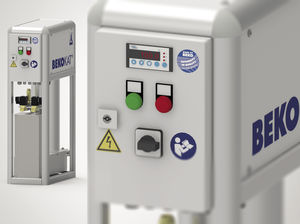

The catalytic converter BEKOKAT CC 018 produces a constant oil-free compressed air with a maximum residual oil content of hardly measurable 0.003 milligrams per cubic meter. The BEKOKAT CC 018 is designed for flow rates ...


The CATALYST CALCINATION SYSTEM (CCS) consists of a bench scale high temperature equipment including: • 2 x Modbus mass flow controllers. Up to 200 Nml/min N2 (He) and 200 Nml/min H2 (standard, option of expanding ...
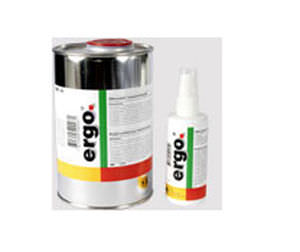

The ergo.® 4900 accelerator is usually applied to one side, seldom to both sides, at least 2 minutes before the adhesive. It must evaporate fully before the adhesive is applied. It accelerates the curing of anaerobic adhesives and is ...
Kisling


Nickel (II)-acetylacetonate in Polyetherpolyol CAS No. 3264-82-2 CB 17 Bismuth Neodecanoate 17 % CAS-No. 34364-26-6 CB 28 Bismuth 28 % Octoate CAS-No. 67874-71-9 CONTRACT & TOLL MANUFACTURING Filtration Drying (Vacuum) ...
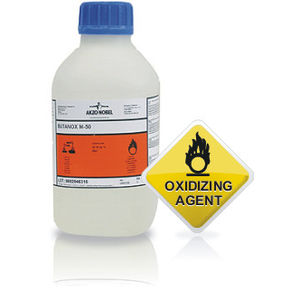

Hardeners - Catalysts Catalyst allows polyester, gelcoat and vinyl ester resins to cure by reacting with the promoter in the resin, or with heat. This starts the chemical reaction of the resin with the ...


... fluids (e.g. water produced during reduction of oxides) Comprehensive Catalyst Characterization The Micromeritics in-situ Catalyst Characterization System (ICCS) is an advanced catalyst ...


... during water decomposition in the battery, hydrogen and oxygen, are fed into the aquagen plug. By means of an integrated catalyst, these gases are recombined, and water vapor is produced. The water vapor condenses on ...


Universal catalyst for shortening of reaction times of the PUR-O-STOP Systems like PUR-O-STOP HF, FS, FS-L, FS-F
TPH Bausysteme GmbH
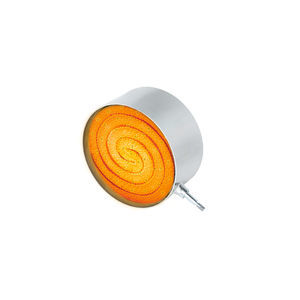

Electrically heated catalyst (EMICAT®) with integrated highly effective support catalyst. Applicable for passenger cars and LCV. FACTS & BENEFITS Rapid catalyst light off temperature ...


Hardener for primer filler UHS 2K 5:1 fast. Format Box 6 x 1L Description Fast
AUTOSYSTEMS IBERIA, S.L.
Please specify:
Help us improve:
remaining