


{{product.productLabel}} {{product.model}}
{{#if product.featureValues}}{{product.productPrice.formattedPrice}} {{#if product.productPrice.priceType === "PRICE_RANGE" }} - {{product.productPrice.formattedPriceMax}} {{/if}}
{{#each product.specData:i}}
{{name}}: {{value}}
{{#i!=(product.specData.length-1)}}
{{/end}}
{{/each}}
{{{product.idpText}}}
{{product.productLabel}} {{product.model}}
{{#if product.featureValues}}{{product.productPrice.formattedPrice}} {{#if product.productPrice.priceType === "PRICE_RANGE" }} - {{product.productPrice.formattedPriceMax}} {{/if}}
{{#each product.specData:i}}
{{name}}: {{value}}
{{#i!=(product.specData.length-1)}}
{{/end}}
{{/each}}
{{{product.idpText}}}


... requirements after a coating is applied. Reflective Coatings • Protected and enhanced metals (gold, silver, aluminum) • Inconel, chrome, nickel, and titanium • Multi-layer custom dielectric designs Anti-Reflective ...


... solution with a special antireflection Indium Tin Oxide electrically conductive coating, combined with a thickness-calibrated dielectric multilayer. Our AR-ITO coating technology by catalogue enables ...


... applications using glass top surfaces. SCHOTT offers a coating that combines durable anti-reflective and oleophobic characteristics - a breakthrough for any touch application. Anti-reflective coatings ...
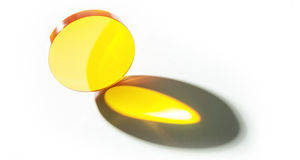

This coating is used on Zinc Selenide lenses and windows in high power laser applications where low absorption is important. Adhesion MIL-C-48497A, 08/09/1980, para 4.5.3.1 Adhesion Remark Tape Test Humidity MIL-C-48497A, ...
Umicore Electronic Materials


REO designs and produces a tremendous variety of antireflection coatings to meet a wide range of needs in terms of performance, durability, stability and cost. We particularly specialize in meeting difficult performance ...
Research Electro-Optics
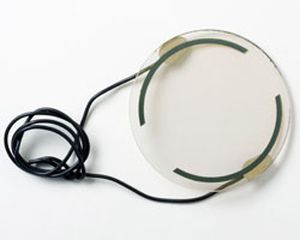
... ) Transparent Conductive coating is a mixture of 90% In2O3 and 10% SnO2 by weight. It is the most common material for transparent conductive coatings because of its two chief properties, its electrical ...
Reynard Corporation


... own equipment e.g. for asymmetrical prisms. Coated substrates are inspected and documented with a "Lambda 900" PE spectral photometer. Reflection-reducing coatings increase the light transmission of ...


... anti-reflection coating. When specifying an AR coating to suit your specific application, you must first be fully aware of the full spectral range of your system. While an AR coating ...
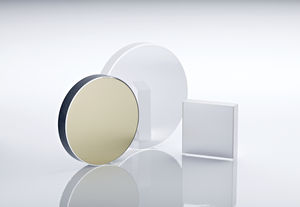

... dissipation characteristics of copper. This coating is sensitive to wavelength, angle of incidence and polarisation. Contact our multilingual technical sales team and discover how Knight Opticals high ...
Knight Optical (UK) Ltd


AR Coating AR coating means anti-reflective coating. Product Description When light comes into contact with an optical material it is transmitted, reflected and ...
Changchun Yutai Optics Co., Ltd.


... DAR. Multilayer Broadband Antireflective Coatings markedly improve the transmission efficiency of any window, lens and prism over a wide range. Rising-EO has designed and manufactured a series of WAR ...
FUZHOU RISING ELECTRO OPTICS CO.,LTD.
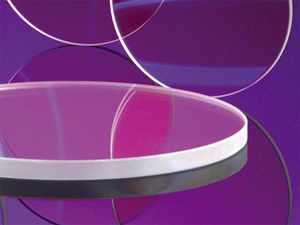

All of LASER COMPONENTS‘ AR coatings are optimized for high power lasers and are available for the wavelength range from 193 nm to 5000 nm. Both the bandwidth (depending on the wavelength) and the effectiveness of the ...
LASER COMPONENTS
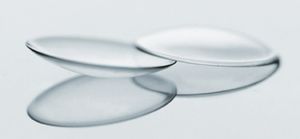

OPTAL layers are a series of thin layers used for optical coatings such as reflectors, anti-reflective, and anti-scratch solutions, to provide a wide range of solutions for photonic components. Characteristics: • ...


... processes are used to produce the coating. Gigahertz-Optik also offers the coating as a standard sales product under the product name ODP97. ODP97 is a spray ready barium sulfate & water mixture ...
Please specify:
Help us improve:
remaining