


{{product.productLabel}} {{product.model}}
{{#if product.featureValues}}{{product.productPrice.formattedPrice}} {{#if product.productPrice.priceType === "PRICE_RANGE" }} - {{product.productPrice.formattedPriceMax}} {{/if}}
{{#each product.specData:i}}
{{name}}: {{value}}
{{#i!=(product.specData.length-1)}}
{{/end}}
{{/each}}
{{{product.idpText}}}
{{product.productLabel}} {{product.model}}
{{#if product.featureValues}}{{product.productPrice.formattedPrice}} {{#if product.productPrice.priceType === "PRICE_RANGE" }} - {{product.productPrice.formattedPriceMax}} {{/if}}
{{#each product.specData:i}}
{{name}}: {{value}}
{{#i!=(product.specData.length-1)}}
{{/end}}
{{/each}}
{{{product.idpText}}}


... worldwide to provide optical windows for the most high-precision, advanced applications. For over 45 years, we specialize in bringing the most challenging optical designs to life. ZYGO ...


... , it is excellent material for severs environments. Being five times stronger than glass and heat resistant up to 2000°C, sapphire is often employed as pressure windows. • Diameter Tolerance: +0.0/- ...
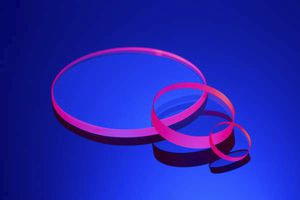
Fused silica is an ideal material for UV application and is transparent from 220nm to 4.0um. it is characterized by excellent chemical and radiation resistance, low coefficient of thermal expansion, low fluorescence, and resistance to ...

Calcium Fluoride is extremely transparent over a wide spectrum from deep UV(135nm) to far IR(9.4um), which makes it ideal for windows in very short wavelength excimer lasers. The crystal has very low refraction coatings. ...


- Ideally suited for monitoring ejection - Active zone 40, 80 or 120 mm - Dynamic evaluation - Adjustable output signal duration 10 … 300 ms


... Ir Znse Windows. In order to meet the diverse needs of customers, Zoolied provides a variety of laser materials such as zinc selenide (ZnSe) windows, germanium (Ge) windows, silicon (Si) ...
zoolied inc.

... materials such as zinc selenide (ZnSe) windows, germanium (Ge) windows, silicon (Si) windows, ( BaF2) windows, calcium fluoride (CaF2) windows; Fused ...
zoolied inc.

... Ir Znse Windows. In order to meet the diverse needs of customers, Zoolied provides a variety of laser materials such as zinc selenide (ZnSe) windows, germanium (Ge) windows, silicon (Si) ...
zoolied inc.


Windows are used to protect more expensive optical parts from harsh environments or debris. The other task of the window is to transmit radiation with minimum losses. For this reason, ...


We supply a wide range of anti-reflection coated germanium windows in a variety of shapes and sizes, both off the shelf and custom-made for your exact requirements. Germanium (Ge) is a hard, high-density, IR transmitting ...
GALVOPTICS LTD

Silicon (Si) optics are primarily used in the 1.1- 7μm range. Silicon is ideally suited for weight sensitive applications having a Density of 2.329 g/cm3 Silicon is typically used in the 3 - 5μm for Thermal Imaging Systems Our Silicon ...
GALVOPTICS LTD

Our stock N-BK7 windows are ideally suited for medical, scientific and industrial applications and are available with a MgF2 anti-reflection coating or uncoated. N-BK7 windows are often used as a protective ...
GALVOPTICS LTD
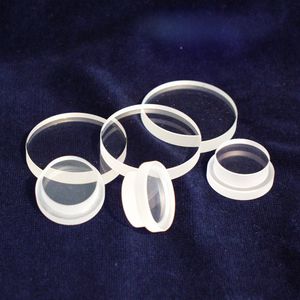

ARD-Optics manufactures standard and high quality sapphire and different glass optical windows. High quality windows are used as laser mirrors, transition optics with ...
ARD Optics
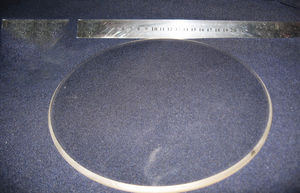
ARD-Optics manufactures big size sapphire and glass windows. The windows are rectangular (polygonal forms are available at the customer’s request) and round windows. All ...
ARD Optics
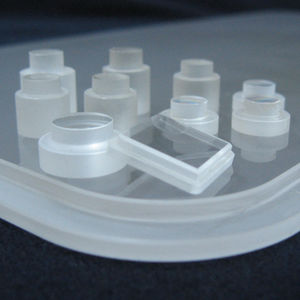
... manufactures stepped windows of different shapes, from simple round to complicated configuration at the customer’s request (round, oval, rectangular and mixed). We also manufactures sapphire windows ...
ARD Optics


... ® Optics solves problems inherent in both traditional optical schemes and cross-coupled multilayer optical schemes. Both mirrors are arranged at the most appropriate location for optimizing optical ...
Rigaku


... Examples of Products: • Plano parallel windows • Protective windows • Laser line windows that feature an antireflective coating • Optical flats • Substrates for ...
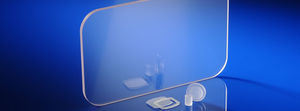
... 5,000 nm). It is capable of withstanding extreme environmental conditions and fluctuations in temperature. SCHOTT, a sapphire glass supplier, offers sapphire in processed shapes according to customer’s specifications. Advantages • ...
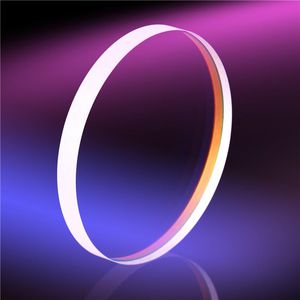

... . Dayoptics offer all kinds of windows,which are made from different materials.Windows of special sizes and materials are available upon requirement.Single layer or multiplayer anti-reflecting coatings ...
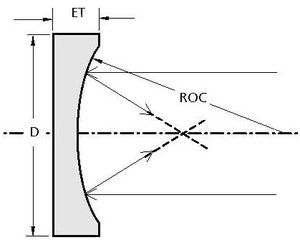

Curved laser windows made from high quality UV FS, BK7 optical materials, polished to high surface quality. Standard substrates are available with a variety of radii of concave curvature. For applications ...
EKSMA Optics
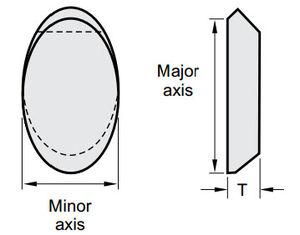
Elliptical flat mirrors bend light at precise angles with minimum wave distortion due to elongated major axis. Precision 45 degree elliptical flat mirrors are ideal for technical and astronomical applications.
EKSMA Optics
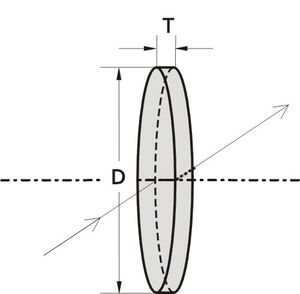
EKSMA Optics laser windows have high transmittance, low wavefront distortion and low scatter. Laser windows are made of BK7 or UV FS optical materials. BK7 glass is ...
EKSMA Optics


... Graphs tab. The Ø1" windows are available with a 1.0 mm or 5.0 mm thick substrate. The 1.0 mm thick windows are ideal for ultrafast applications or in situations where space is limited. We recommend ...
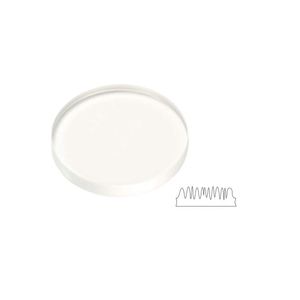

A nanostructure pattern is created on the surface of high purity fused silica windows to produce a high quality antireflection effect. Because this manufacturing process uses no thin films materials, the lens has a very ...
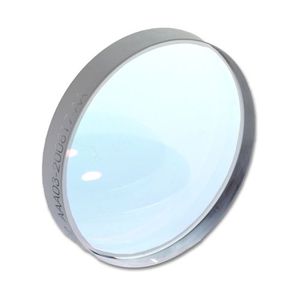

REO manufacturers high precision laser windows for applications starting at 193 nm. Windows can be manufactured from a variety of materials including sapphire, optical glasses, fused ...
Research Electro-Optics
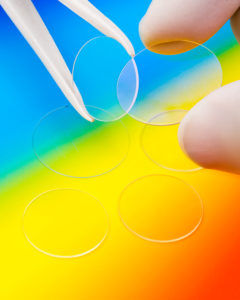
MSW Series plane parallel IR quality sapphire windows are an economical choice for a variety of optical, mechanical and electronic applications. Their high transmissions, strength, chemical inertness, ...
MELLER OPTICS


... stable beryllium windows is a good choice for X-ray applications. Be window protects the detector from contamination and damage as well as minimizes any interference with the X-ray signal being detected. ...


IR Windows Zinc Selenide(ZnSe) Windows ZnSe is used widely for IR components, windows and lenses, and applied for Thermal Imaging, FLIR, Medical systems and Co2 Laser Zinc Selenide ...
UNI Optics Co., Ltd

Windows for CO2 lasers are used either for protecting sensitive and/or expensive optics, or for separating areas with different gas pressures. In all applications, high transmittance and low absorption are needed in order ...


... applications. DuraBeryllium windows are most commonly used in EDXRF applications. Brazed DuraBeryllium windows can withstand temperatures up to 400°C in vacuum or 350°C in air. Adhesive bonded Beryllium ...


Rectangular Brewster windows are uncoated substrates used in an optical system at Brewster’s Angle, the angle at which p reflectance drops to zero. This can be calculated from: ΘB = tan-1(n) where ...
II-VI INFRARED
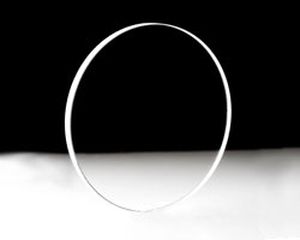
The Standard (Sapphire) Windows are manufactured from the highest quality substrates. The standard (sapphire) windows are designed to be used in precision optical systems. The optical ...
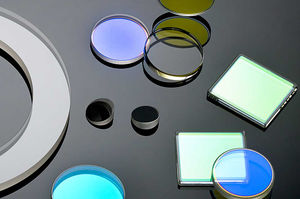

Windows are used to isolate different physical environments while allowing light to pass. A window is usually parallel and is likely to be anti-reflective coated. UPT offers all kinds of custom-made windows ...


... custom optical product. It combines optical wedge, window and spherical lens. Description Of Wedge Window With Integrated Lens This is a custom optical ...
ECOPTIK
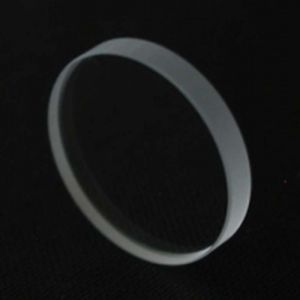

Normally windows are qualified for IR useage but can give good performance over most of the UV spectrum.
Crystran Ltd
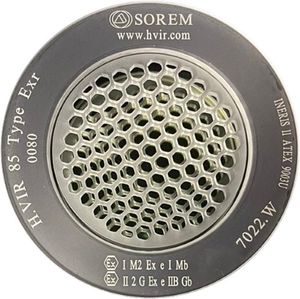

In the H.VIR range, we have designed an infrared window intended for use in explosive atmospheres according to the directive 2014/34/UE. We are currently the only infrared window with ATEX certification. ...
Wintech Groupe
Please specify:
Help us improve:
remaining