
- Home page
- buying guide
- O-ring seal
O-ring seal
O-ring seal: A technical guide
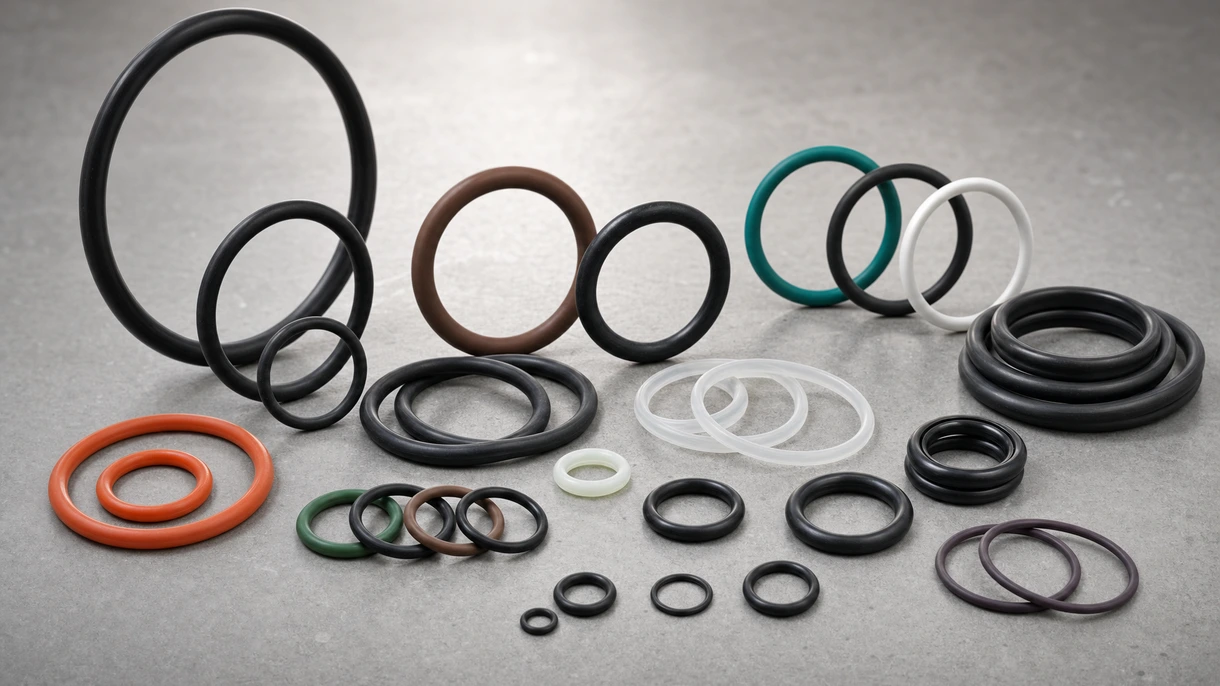
4 Criteria to choose your O-ring seal
Chemical Media Compatibility
Analyze elastomer resistance to specific hydraulic fluids, fuels, or solvents to prevent swelling, degradation, or premature seal failure.
Operating Temperature Range
Evaluate thermal stability under continuous and peak loads to maintain elasticity and prevent brittle fracture or compression set.
Dynamic Pressure Rating
Determine maximum system pressure and vacuum levels to select appropriate hardness and prevent extrusion into technical clearance gaps.
Dimensional Tolerance Compliance
Verify international standards to ensure precise groove fitment and optimal compression for leak-free industrial performance.
Available technologies and advantages
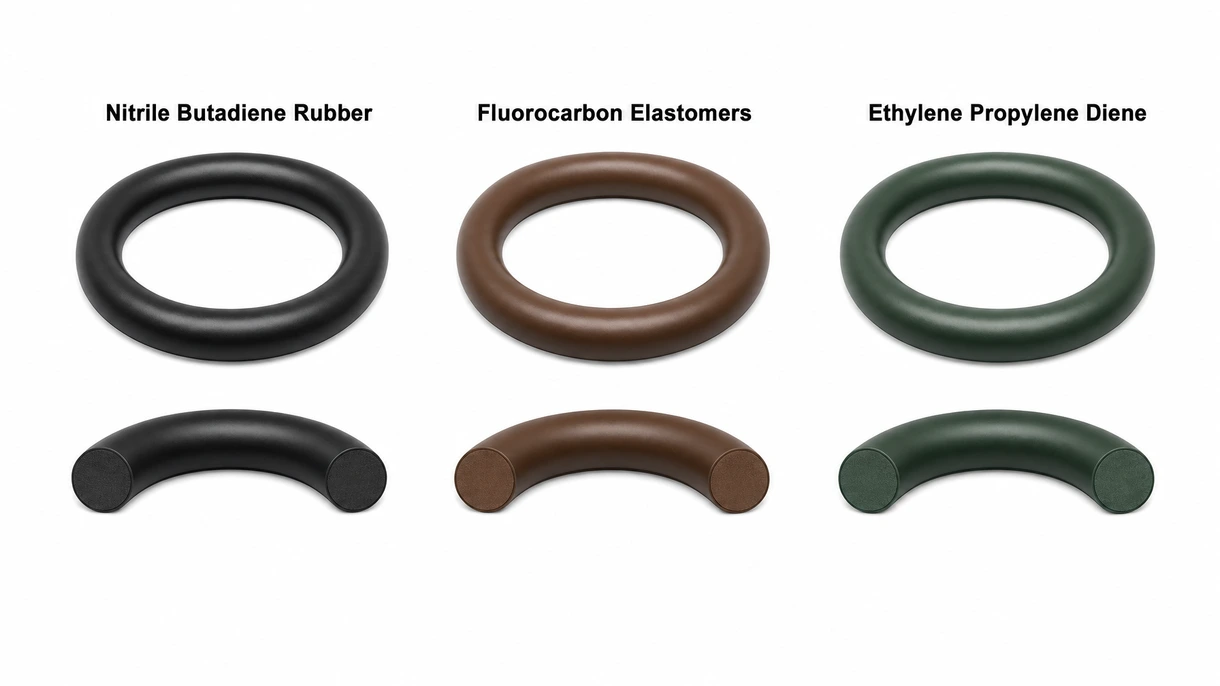
Nitrile Butadiene Rubber
Nitrile Butadiene Rubber provides cost-effective oil resistance and mechanical toughness for general-purpose hydraulic and pneumatic sealing in standard factory environments across global industrial sectors. Advantage: excellent wear resistance. Limitation: poor ozone stability. Trade-off: favors cost over environmental exposure.
Fluorocarbon Elastomers
Fluorocarbon compounds deliver superior thermal and chemical stability for aggressive fluids and high-heat processing applications where standard elastomers fail prematurely in critical infrastructure environments. Advantage: exceptional chemical inertness. Limitation: high cost. Trade-off: prioritizes safety over initial expenditure.
Ethylene Propylene Diene
Ethylene Propylene Diene is engineered for steam and outdoor exposure, maintaining structural integrity against UV degradation and polar solvents in industrial construction and water systems. Advantage: outstanding aging resistance. Limitation: oil incompatibility. Trade-off: focuses on environmental resilience.
Perfluoroelastomers
Perfluoroelastomers provide near-universal chemical resistance for the most demanding semiconductor and chemical processing environments where seal failure results in catastrophic financial or operational losses. Advantage: unmatched chemical compatibility. Limitation: extreme acquisition price. Trade-off: justifies costs for downtime prevention.
6 expert tips
Standardize on global dimensions to ensure availability and simplify inventory management across international production and manufacturing facilities.
Prioritize compound certifications like food grade standards when specifying seals for food and beverage production equipment lines.
Validate compression set values under actual working temperatures to guarantee long-term sealing performance and minimize unplanned maintenance cycles.
Implement strict storage protocols including UV protection and temperature control to prevent elastomer aging and maintain seal shelf life.
Calculate extrusion gaps precisely to determine if back-up rings are necessary for high-pressure hydraulic systems exceeding standard limits.
Source from manufacturers with international quality systems to ensure batch consistency and technical traceability in critical industrial operations.
Always verify the technical certification to ensure compliance with local building safety standards and long-term durability.
Innovations and Trends
Integrated conductive particles allow real-time monitoring of seal wear and degradation through resistance changes in automated industrial systems.
Advanced polymer or plasma treatments reduce breakout friction and stick-slip effects in high-speed pneumatic and robotic motion actuators.
Development of high-performance seals using renewable feedstocks helps manufacturers meet sustainability targets without compromising critical technical performance.
Additive manufacturing printed elastomer seals enable rapid prototyping and custom geometries for specialized low-volume industrial equipment and legacy machines.
*Prices are pre-tax. They exclude delivery charges and customs duties and do not include additional charges for installation or activation options. Prices are indicative only and may vary by country, with changes to the cost of raw materials and exchange rates.
About DirectIndustry
DirectIndustry is a marketplace that offers B2B players a complete experience, from product sourcing to purchase. DirectIndustry is an entity of VirtualExpo Group.
Are you a buyer?
Are you a supplier?
About Us
- VirtualExpo Group
- Our Partners
- Recruitment
- Testimonials