
- Home page
- buying guide
- mass flow meter
mass flow meter
mass flow meter: A technical guide
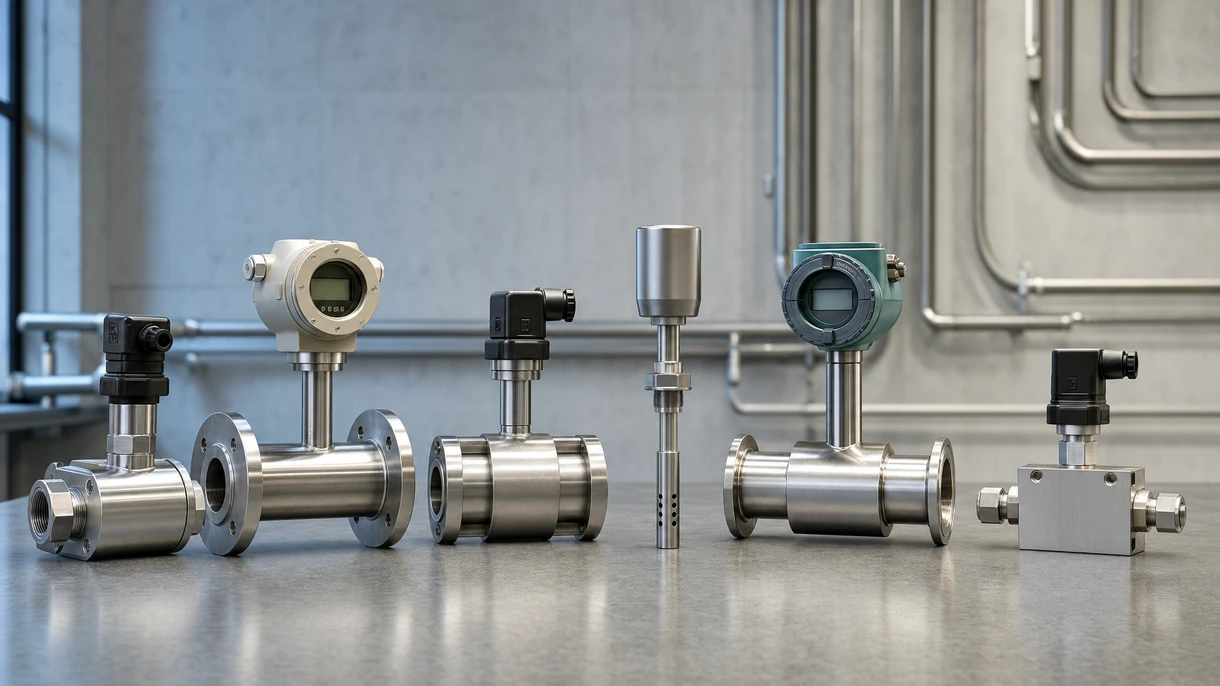
4 Criteria to choose your mass flow meter
Measurement accuracy and repeatability
Essential for custody transfer and precise chemical dosing where even minor deviations result in significant financial or quality losses.
Fluid properties and compatibility
Corrosive, viscous, or abrasive media require specific wetted materials like Hastelloy to ensure long-term sensor integrity and safety.
Turn-down ratio requirements
Defines the range over which the meter maintains accuracy, critical for processes with highly variable flow rate fluctuations.
Process temperature and pressure
Extreme operating conditions necessitate robust construction and thermal compensation to prevent measurement drift or catastrophic mechanical component failure.
Available technologies and advantages
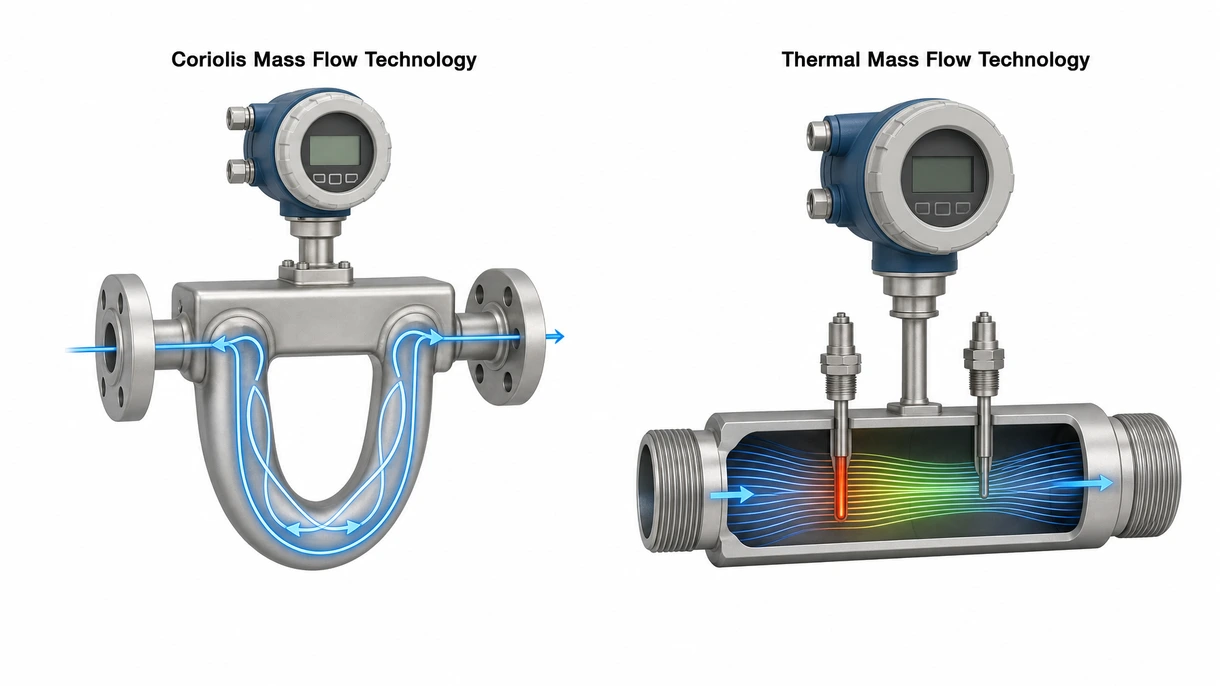
Coriolis Mass Flow Technology
Utilizing inertia for direct mass measurement, these devices provide high accuracy across varying density and viscosity without requiring additional pressure or temperature compensation. High accuracy and multi-variable data outputs provide excellent process control, yet high capital expenditure and vibration sensitivity necessitate careful site evaluation.
Thermal Mass Flow Technology
Measuring heat dissipation from a heated sensor probe, these meters are optimized for gas applications and offer exceptional sensitivity at very low flow rates. No moving parts ensure reliability and low pressure drop saves energy, but clean gas requirements limit use in dirty or wet environments.
6 expert tips
Prioritize Coriolis technology for high-value custody transfer applications to ensure maximum financial precision and minimize billing disputes globally.
Verify the technical certification to ensure compliance with local building safety standards and long-term durability.
Evaluate total cost of ownership including maintenance intervals and calibration frequency rather than focusing solely on initial acquisition.
Select digital communication protocols like HART or EtherNetIP to enable seamless integration with existing industrial automation and control.
Inspect installation requirements regarding straight pipe runs to avoid measurement inaccuracies caused by turbulent flow or mounting constraints.
Ensure material traceability for all wetted parts to comply with strict industrial safety and quality management system standards.
Innovations and Trends
Provide real-time sensor health monitoring, reducing the need for physical calibration and minimizing process downtime.
Allows remote monitoring and predictive maintenance analytics for geographically dispersed manufacturing assets.
Now filter out process noise and vibrations, significantly improving accuracy in harsh industrial environments.
Enables high-precision gas flow measurement in compact automated production lines with limited installation space.
*Prices are pre-tax. They exclude delivery charges and customs duties and do not include additional charges for installation or activation options. Prices are indicative only and may vary by country, with changes to the cost of raw materials and exchange rates.
About DirectIndustry
DirectIndustry is a marketplace that offers B2B players a complete experience, from product sourcing to purchase. DirectIndustry is an entity of VirtualExpo Group.
Are you a buyer?
Are you a supplier?
About Us
- VirtualExpo Group
- Our Partners
- Recruitment
- Testimonials