
- Home page
- buying guide
- insert milling cutter
insert milling cutter
insert milling cutter: A technical guide
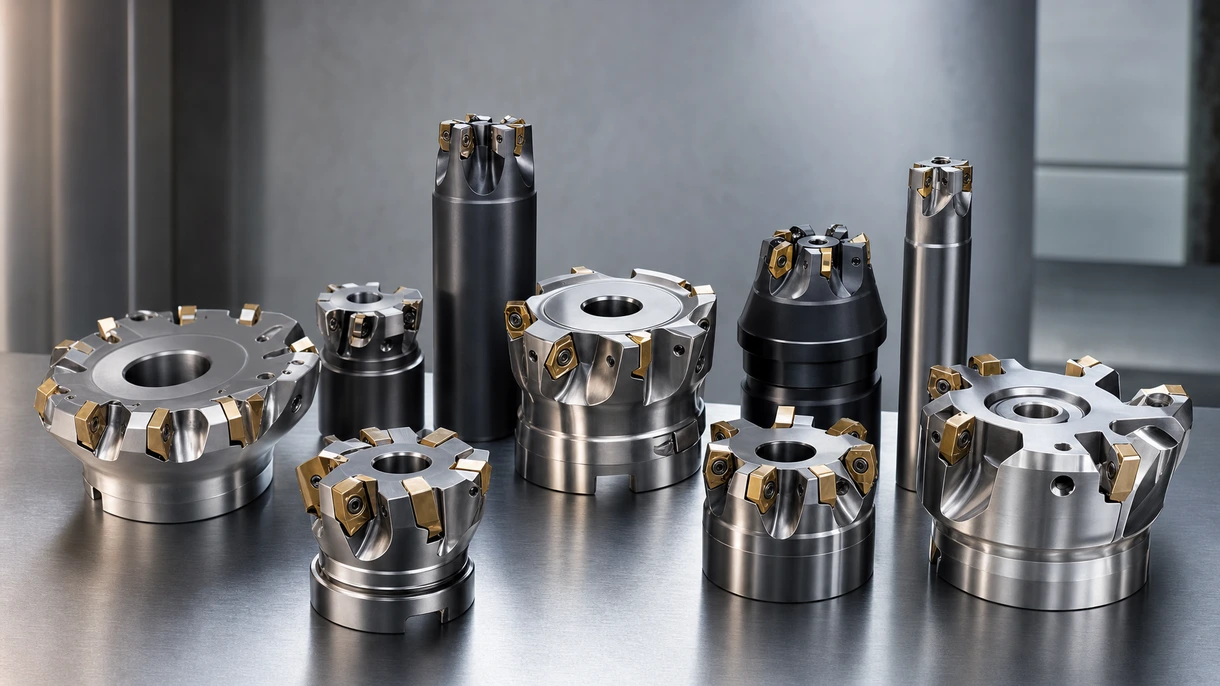
4 Criteria to choose your insert milling cutter
Material substrate and coating
Influences thermal stability and tool life when machining hardened steels or high-temperature alloys at elevated cutting speeds.
Indexing repeatability and precision
Ensures minimal runout and consistent dimensional accuracy across multiple insert edges to maintain tight tolerances in mass production.
Cutting geometry optimization
Determines chip evacuation efficiency and power consumption during heavy-duty roughing or high-speed finishing operations in various milling applications.
Clamping system stability
Prevents insert movement under high radial forces, reducing vibration risk and ensuring surface finish quality during aggressive metal removal.
Available technologies and advantages
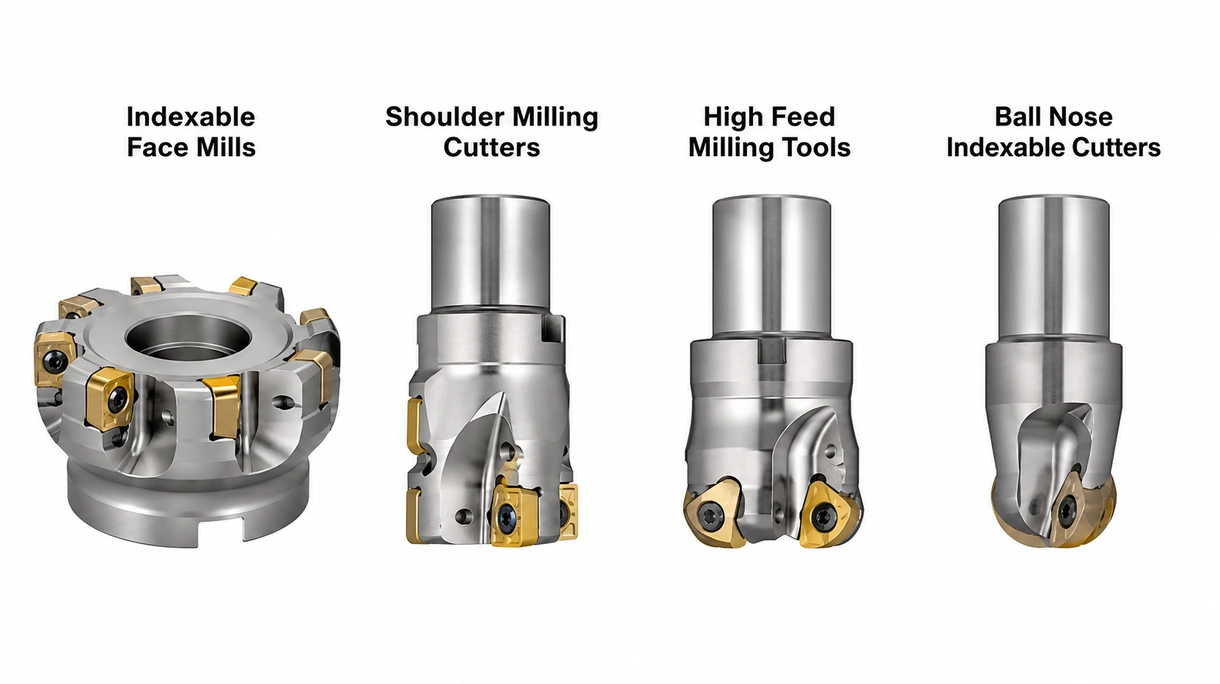
Indexable Face Mills
Designed for large surface metal removal using multiple inserts. They offer high material removal rates but require substantial machine rigidity and horsepower to maintain stability.
Shoulder Milling Cutters
Engineered for creating ninety-degree walls and precise steps. These tools balance versatility with structural stiffness, though they often face limitations in deep-cavity chip evacuation.
High Feed Milling Tools
Optimized for shallow depths at extremely high feed rates per tooth. They reduce axial pressure on the spindle but are unsuitable for deep-side wall finishing tasks.
Ball Nose Indexable Cutters
Utilized for three-dimensional contouring and complex mold surfaces. They provide excellent flexibility for curved geometries, yet require careful step-over calculations to avoid poor surface finishes.
6 expert tips
Evaluate the tool body rigidity against your machine spindle power to ensure vibration-free performance during high-torque milling operations.
Calculate the total cost per edge by factoring in insert durability rather than prioritizing the initial tool purchase price.
Match specific insert grades to the thermal conductivity of your workpiece material to optimize heat dissipation and tool longevity.
Select modular milling systems to reduce inventory costs while maintaining flexibility for various machining depths and reach requirements.
Prioritize internal coolant delivery systems to improve chip evacuation and prevent thermal cracking in high-speed stainless steel machining.
Always verify the technical certification to ensure compliance with local building safety standards and long-term durability.
Innovations and Trends
Digital twin integration allows for precise simulation of cutting forces, reducing physical testing time and preventing tool breakage.
Cryogenic cooling compatibility enables machining of titanium alloys with significantly reduced thermal wear and increased cutting speed parameters.
Polycrystalline diamond inserts for non-ferrous metals provide extreme hardness, ensuring sub-micron surface finishes and extended tool life cycles.
Additive manufactured tool bodies feature internal cooling channels that optimize flow, reducing temperature by twenty percent during heavy roughing.
*Prices are pre-tax. They exclude delivery charges and customs duties and do not include additional charges for installation or activation options. Prices are indicative only and may vary by country, with changes to the cost of raw materials and exchange rates.
About DirectIndustry
DirectIndustry is a marketplace that offers B2B players a complete experience, from product sourcing to purchase. DirectIndustry is an entity of VirtualExpo Group.
Are you a buyer?
Are you a supplier?
About Us
- VirtualExpo Group
- Our Partners
- Recruitment
- Testimonials