
- Home page
- buying guide
- piston compressor
piston compressor
piston compressor: A technical guide
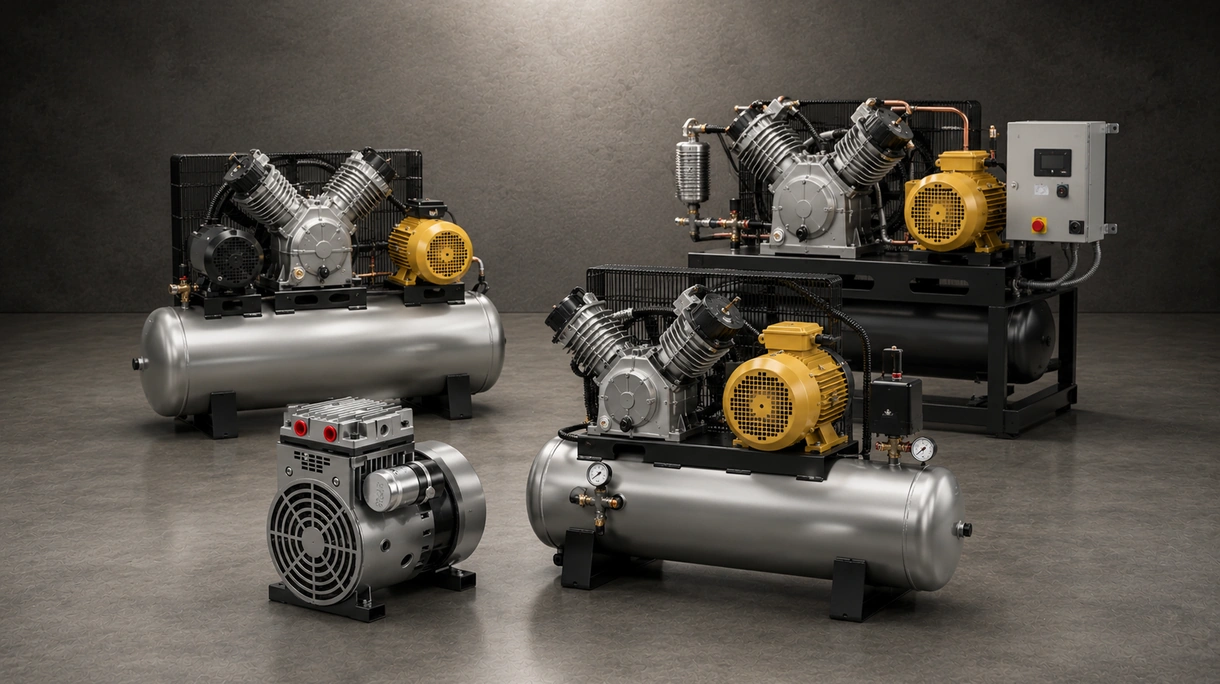
4 Criteria to choose your piston compressor
Operating Pressure Requirements
Pressure must match tool ratings to ensure operational efficiency while preventing premature component failure from excessive or insufficient force.
Duty Cycle Capacity
Defining whether the system operates intermittently or continuously prevents motor burnout and ensures the machine remains within thermal limits.
Air Quality Standards
Selecting between oil-lubricated or oil-free models determines compliance with food safety or sensitive electronic manufacturing environment cleanliness protocols.
Maintenance Lifecycle Costs
Evaluating accessibility of wear parts and long-term service intervals directly affects the total cost of ownership and uptime.
Available technologies and advantages
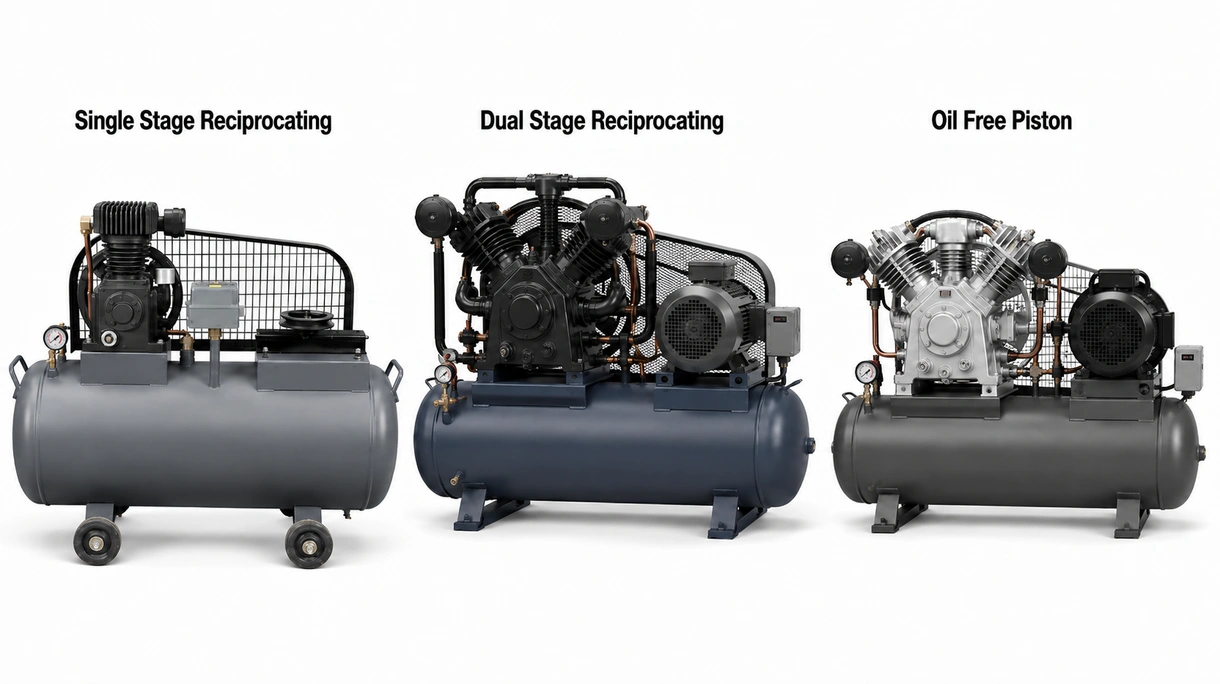
Single Stage Reciprocating
Single Stage Reciprocating offers low acquisition costs but limited duty cycles, making it unsuitable for continuous heavy industrial production despite its portability.
Dual Stage Reciprocating
Dual Stage Reciprocating provides superior pressure and efficiency for heavy usage, though it requires significant space and higher initial capital investment.
Oil Free Piston
Oil Free Piston eliminates air contamination risks for sensitive processes but typically has higher maintenance costs and shorter service intervals.
6 expert tips
Analyze peak air demand rather than average usage to avoid undersizing compressors and causing frequent costly production shutdowns.
Prioritize cast iron construction over aluminum for the pump housing to ensure superior heat dissipation and mechanical longevity.
Verify the receiver tank capacity exceeds the maximum expected surge flow to stabilize system pressure and reduce motor starts.
Inspect local voltage stability and motor protection ratings to prevent electrical failures during high-torque startup phases in industrial grids.
Select models with integrated aftercoolers to reduce moisture content before air enters the distribution piping, protecting downstream pneumatic tools.
Always verify the technical certification to ensure compliance with local building safety standards and long-term durability.
Innovations and Trends
Variable speed drives adjust motor output to match real-time demand, significantly reducing energy consumption and mechanical wear.
IoT monitoring sensors provide real-time vibration and temperature data to enable predictive maintenance and prevent catastrophic failures.
Advanced ceramic coatings on cylinders reduce friction and heat generation, increasing the operational lifespan and efficiency of components.
Stringent carbon regulations drive the adoption of low-emission motors and more efficient cooling systems to meet sustainability standards.
*Prices are pre-tax. They exclude delivery charges and customs duties and do not include additional charges for installation or activation options. Prices are indicative only and may vary by country, with changes to the cost of raw materials and exchange rates.
About DirectIndustry
DirectIndustry is a marketplace that offers B2B players a complete experience, from product sourcing to purchase. DirectIndustry is an entity of VirtualExpo Group.
Are you a buyer?
Are you a supplier?
About Us
- VirtualExpo Group
- Our Partners
- Recruitment
- Testimonials