
- Home page
- buying guide
- pocket filter
pocket filter
pocket filter: A technical guide
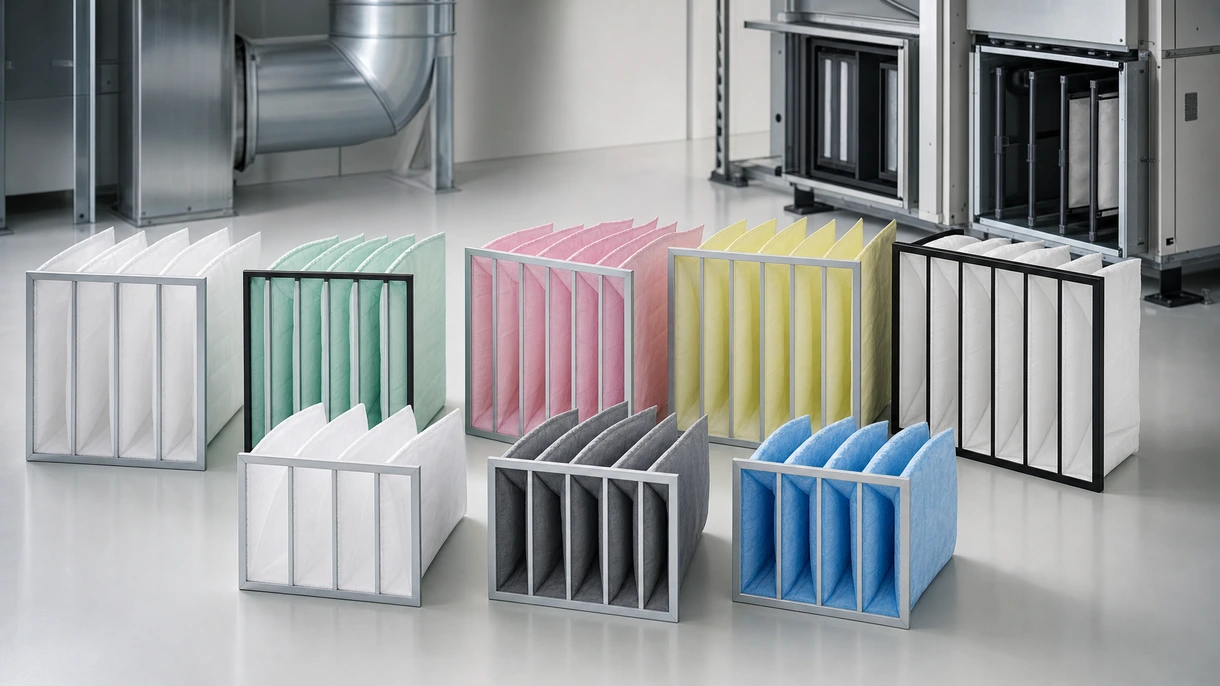
4 Criteria to choose your pocket filter
Initial Pressure Drop
Determines energy consumption and fan power requirements during the early stages of the filter service life cycle.
Dust Holding Capacity
Defines the interval between replacements and influences the total cost of ownership through labor and waste costs.
Filtration Efficiency Grade
Ensures compliance with international or American filtration standards for protecting sensitive production machinery and personnel.
Burst Pressure Resistance
Guarantees structural integrity under high airflow surges, preventing filter collapse and potential downstream system contamination.
Available technologies and advantages
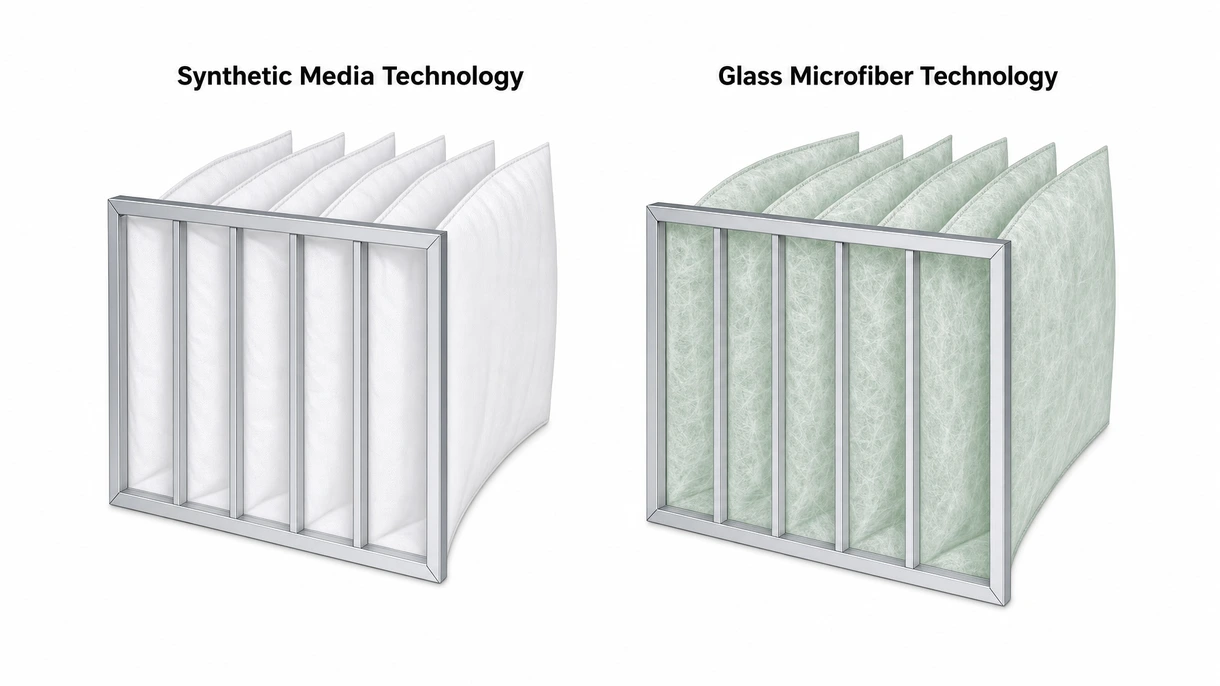
Synthetic Media Technology
Multi-layered polymer fibers provide high mechanical strength for heavy-duty industrial air intake systems requiring high moisture resistance. This media ensures durability in humid environments where glass fails, but often involves higher initial pressure drop and reduced fine particle capture.
Glass Microfiber Technology
Glass microfiber technology utilizes dense ultra-fine fiber matrices to achieve superior particle retention with very low initial resistance. This construction provides excellent energy efficiency yet remains fragile and susceptible to damage from moisture or physical handling during maintenance cycles.
6 expert tips
Prioritize filters meeting high fine particle ratings to maximize protection of critical industrial machinery and internal air quality.
Select aerodynamic header designs to minimize turbulence and reduce energy consumption across the entire ventilation system life cycle.
Evaluate total cost of ownership by calculating energy usage against initial purchase price and disposal frequency requirements.
Always verify the technical certification to ensure compliance with local building safety standards and long-term durability.
Request certified laboratory test reports to validate manufacturer performance claims under specific industrial operating conditions and airflow volumes.
Standardize pocket dimensions across the facility to simplify inventory management and reduce emergency procurement costs for maintenance teams.
Innovations and Trends
Ensures maximum surface area utilization and prevents filter bypass during variable air volume system operation.
Enables real-time pressure monitoring and predictive maintenance scheduling to prevent unexpected production downtime incidents.
Reduce the carbon footprint of industrial facilities while maintaining high particle retention efficiency standards.
Provide active protection against biological contaminants in high-density food processing and pharmaceutical manufacturing environments.
*Prices are pre-tax. They exclude delivery charges and customs duties and do not include additional charges for installation or activation options. Prices are indicative only and may vary by country, with changes to the cost of raw materials and exchange rates.
About DirectIndustry
DirectIndustry is a marketplace that offers B2B players a complete experience, from product sourcing to purchase. DirectIndustry is an entity of VirtualExpo Group.
Are you a buyer?
Are you a supplier?
About Us
- VirtualExpo Group
- Our Partners
- Recruitment
- Testimonials