
- Home page
- buying guide
- panel filter
panel filter
panel filter: A technical guide
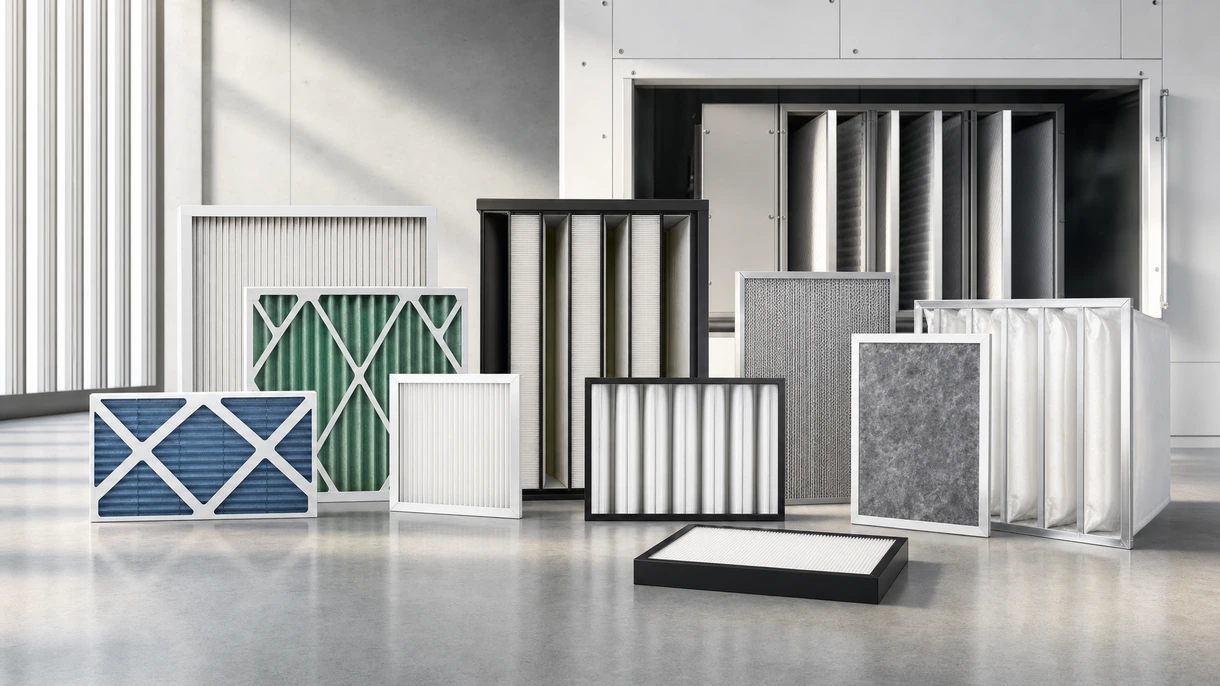
4 Criteria to choose your panel filter
Filtration efficiency rating.
Ensures compliance with international standards to protect sensitive downstream equipment and maintain the required air quality for production.
Initial pressure drop.
Lower resistance reduces energy consumption by decreasing the load on fans while maintaining the required airflow for industrial ventilation.
Dust holding capacity.
Determines the service life interval before replacement is necessary, directly impacting maintenance labor costs and filter disposal expenses.
Frame structural integrity.
Prevents bypass air leakage and media collapse under high humidity or varying pressure conditions in demanding heavy-duty environments.
Available technologies and advantages
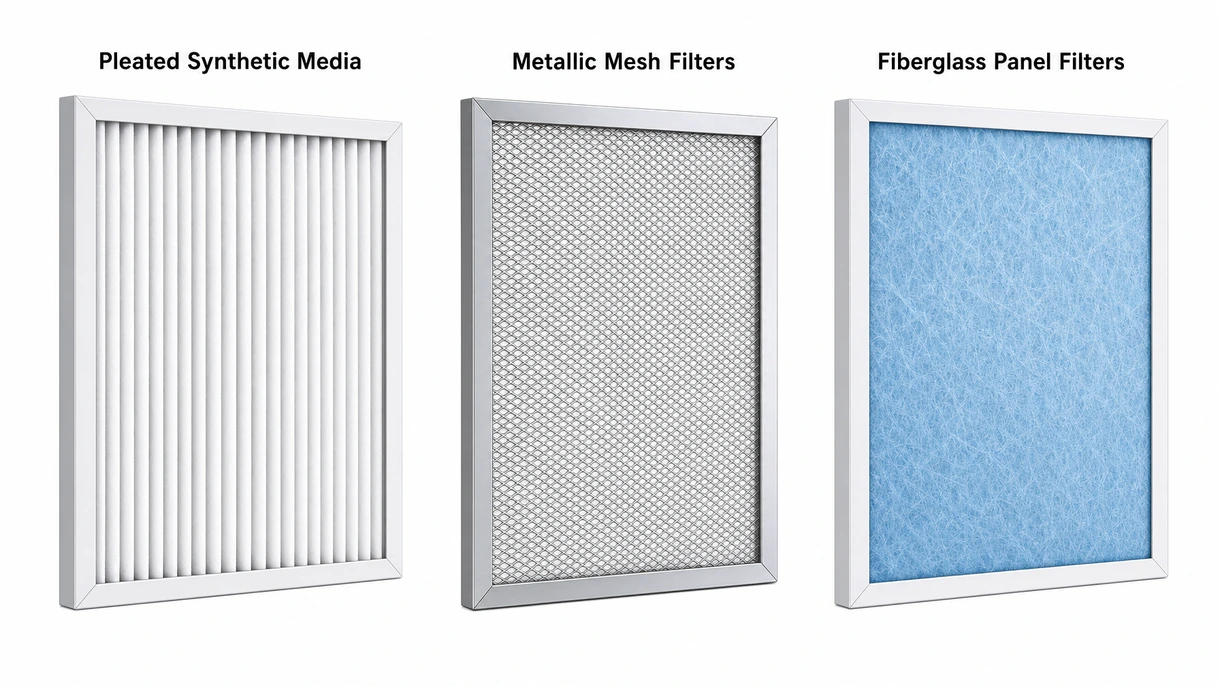
Pleated Synthetic Media.
These filters utilize folded synthetic fibers to increase surface area, providing high efficiency and low pressure drop for general ventilation. Advantages include high dust capacity while limitations involve higher unit costs.
Metallic Mesh Filters.
Constructed from layers of galvanized steel, these washable units capture large particles and grease in harsh environments. Advantages include extreme durability while limitations involve lower efficiency for fine particulates.
Fiberglass Panel Filters.
Composed of spun glass fibers reinforced with a scrim, these cost-effective filters are primarily used for basic dust protection. Advantages include low cost while limitations involve risks of fiber shedding.
6 expert tips
Always verify the technical certification to ensure compliance with local building safety standards and long-term durability.
Calculate total cost of ownership by prioritizing energy efficiency over initial purchase price for long-term industrial operational savings.
Match filtration efficiency precisely to equipment requirements to avoid unnecessary fan power consumption caused by excessive over-filtration during operation.
Inspect frame seals for airtight fitment to eliminate bypass leakage which compromises the integrity of critical downstream industrial components.
Utilize differential pressure monitoring to schedule replacements based on actual dust loading rather than arbitrary fixed calendar time intervals.
Source filters with moisture-resistant media for humid industrial air intakes to prevent microbial growth and physical filter structural degradation.
Innovations and Trends
Applying sub-micron fibers significantly improves capture efficiency for fine particulates while keeping the airflow resistance remarkably low for energy.
Embedded chips automate filter lifecycle monitoring to ensure timely replacements based on real-time operational data rather than fixed schedules.
Developing biodegradable frames and media meets corporate sustainability targets without compromising the technical performance or mechanical strength of filtration.
High-precision sensors integrated into filter frames provide continuous pressure data to optimize energy usage and maintenance timing.
*Prices are pre-tax. They exclude delivery charges and customs duties and do not include additional charges for installation or activation options. Prices are indicative only and may vary by country, with changes to the cost of raw materials and exchange rates.
About DirectIndustry
DirectIndustry is a marketplace that offers B2B players a complete experience, from product sourcing to purchase. DirectIndustry is an entity of VirtualExpo Group.
Are you a buyer?
Are you a supplier?
About Us
- VirtualExpo Group
- Our Partners
- Recruitment
- Testimonials