
- Home page
- buying guide
- milling cutter
milling cutter
milling cutter: A technical guide
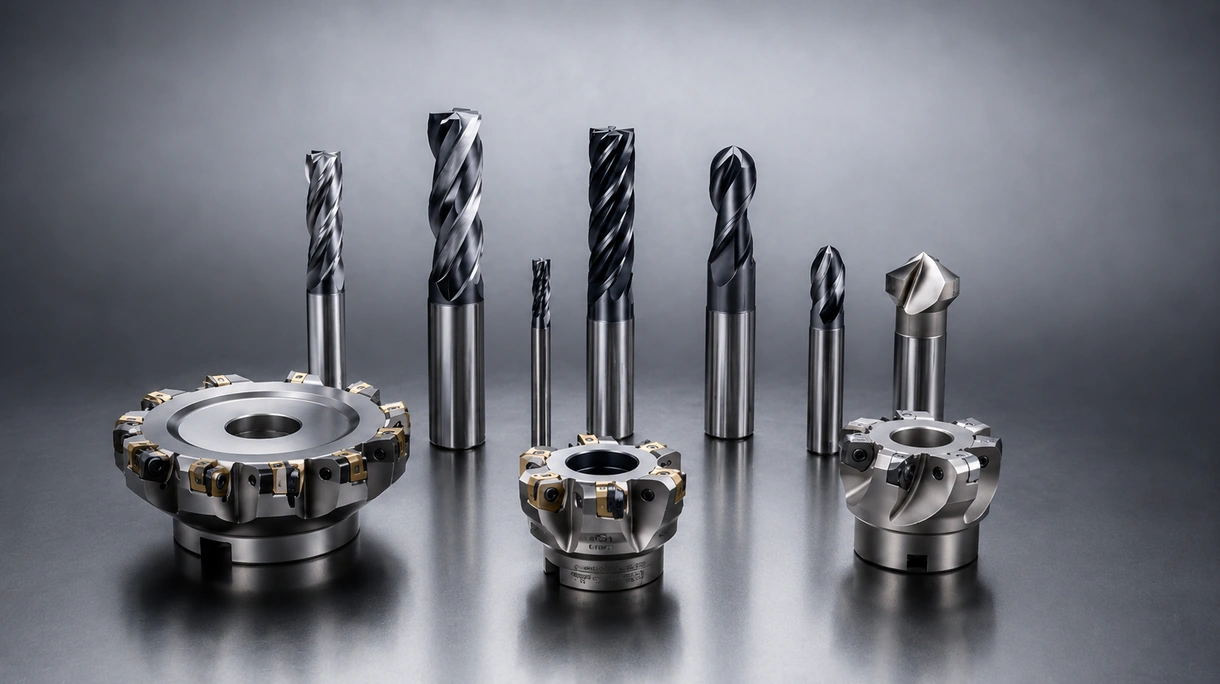
4 Criteria to choose your milling cutter
Substrate material composition
Evaluation of carbide grades or high speed steel ensures tool longevity and heat resistance during high speed machining operations.
Coating chemical properties
Advanced PVD or CVD coatings reduce friction coefficients and heat transfer, directly extending service life in abrasive materials.
Geometry and flute configuration
Specific helix angles and flute counts optimize chip evacuation and surface finish quality for diverse workpiece material types.
Rigidity and runout tolerance
Precision shank diameter and tight concentricity limits prevent vibration, ensuring dimensional accuracy and preventing premature spindle bearing wear.
Available technologies and advantages
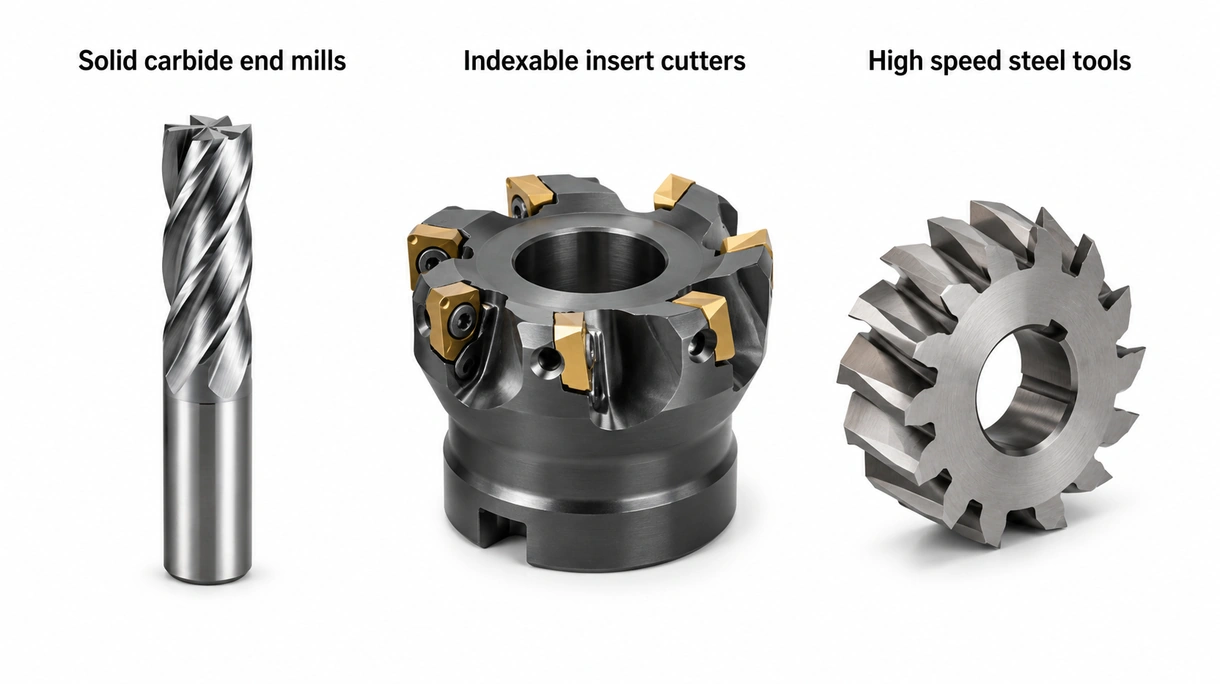
Solid Carbide End Mills
These tools feature monolithic tungsten carbide construction offering maximum rigidity and heat resistance for high precision finishing tasks in CNC environments.
Carbide Performance Trade-offs
Solid carbide provides superior surface finish and tool life, while limitations include extreme brittleness and high costs for large diameters.
Indexable Insert Cutters
Indexable systems utilize replaceable carbide tips mounted on steel bodies to handle heavy duty roughing and large diameter facing operations efficiently.
Insert Operational Trade-offs
Replaceable inserts offer reduced cost per edge and high versatility, but face limitations in precision and rigidity versus solid tools.
High Speed Steel Tools
High speed steel cutters contain cobalt alloys providing toughness and fracture resistance for manual machining or setups with unstable workholding conditions.
Cobalt Steel Trade-offs
Cobalt alloys provide cost effectiveness for low volume batches, though trade-offs include lower thermal stability and slower cutting speeds.
6 expert tips
Prioritize premium carbide grades to ensure tool longevity and maximize metal removal rates during high volume production operations.
Evaluate coating thickness and adhesion properties to maintain thermal stability during high speed dry machining of hardened steel components.
Select variable helix geometries to dampen harmonics and prevent chatter while maintaining high precision on unstable workpiece setups.
Implement modular shank systems to reduce inventory costs and improve changeover efficiency across various CNC milling machine platforms.
Analyze flute geometry for chip evacuation efficiency to prevent tool breakage and maintain consistent surface finish quality levels.
Always verify the technical certification to ensure compliance with local building safety standards and long-term durability.
Innovations and Trends
Utilizes liquid nitrogen to dissipate heat rapidly, increasing tool life by fifty percent in aerospace alloys.
Enable dry machining of non-ferrous materials, significantly reducing environmental waste from traditional coolant management systems.
Incorporate internal mass-spring systems to eliminate harmonic vibrations, allowing for higher feed rates and precision.
Uses embedded sensors to track real-time wear data, preventing catastrophic failure and optimizing industrial replacement cycles.
*Prices are pre-tax. They exclude delivery charges and customs duties and do not include additional charges for installation or activation options. Prices are indicative only and may vary by country, with changes to the cost of raw materials and exchange rates.
About DirectIndustry
DirectIndustry is a marketplace that offers B2B players a complete experience, from product sourcing to purchase. DirectIndustry is an entity of VirtualExpo Group.
Are you a buyer?
Are you a supplier?
About Us
- VirtualExpo Group
- Our Partners
- Recruitment
- Testimonials