
- Home page
- buying guide
- AC gear-motor
AC gear-motor
AC gear-motor: A technical guide
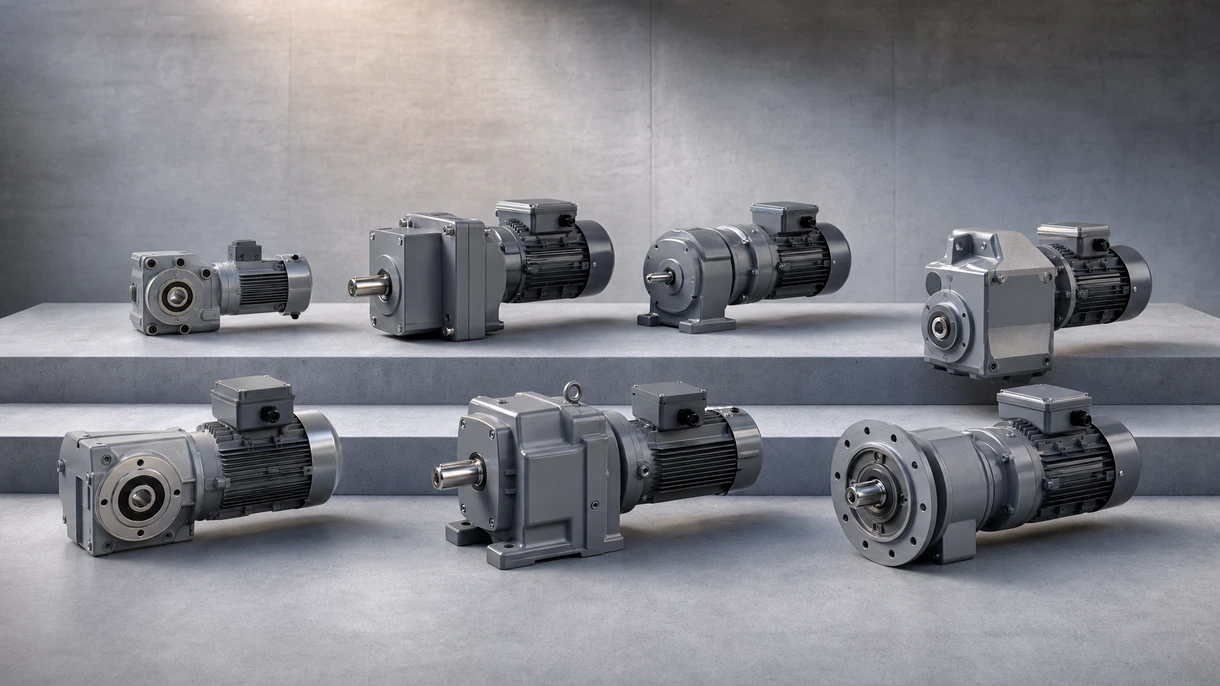
4 Criteria to choose your AC gear-motor
Output torque requirements
Ensure the motor overcomes starting inertia and maintains constant speed under variable loads without thermal overloading or stalling.
Service factor rating
Selecting a high factor accommodates shock loads and cyclic stress in demanding industrial conveyor system applications for reliability.
Gearbox efficiency ratio
Helical or planetary stages minimize energy loss and heat generation compared to high-ratio worm gears in continuous operations.
Ingress protection rating
High protection ratings are essential for washdown environments or dusty industrial zones to prevent internal electrical or mechanical failure.
Available technologies and advantages
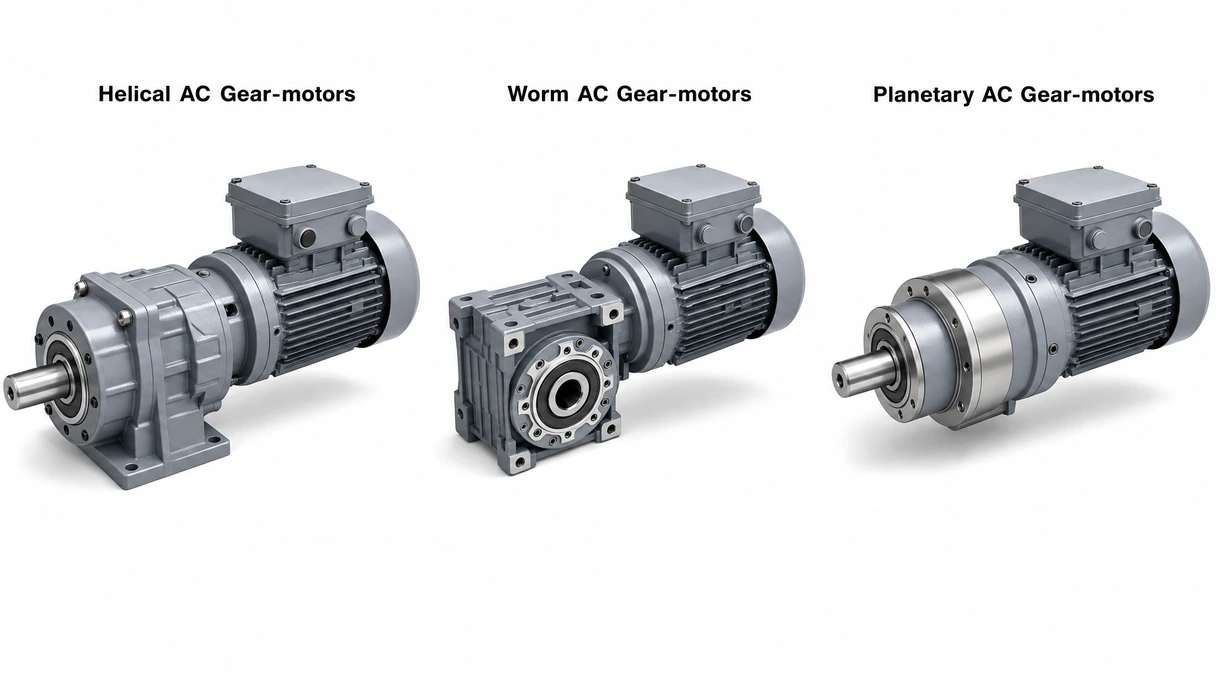
Helical AC Gear-motors
These units offer high efficiency by using angled teeth that engage gradually for smooth, quiet, and high-torque power transmission across stages.
Helical AC Gear-motors
Advantages include superior durability and high load capacity, while limitations involve larger axial footprints compared to compact right-angle configurations.
Worm AC Gear-motors
This technology utilizes a perpendicular shaft arrangement providing high reduction ratios and self-locking capabilities in a very compact housing.
Worm AC Gear-motors
These units are cost-effective for low-duty cycles but suffer from lower thermal efficiency and significant sliding friction losses.
Planetary AC Gear-motors
Multiple gears share the load around a central sun gear to provide exceptional torque density and precision in small spaces.
Planetary AC Gear-motors
They offer superior power-to-weight ratios but involve higher manufacturing complexity and costs compared to standard inline helical systems.
6 expert tips
Verify phase compatibility and voltage stability to ensure motor longevity and prevent premature winding failure in heavy industrial grids.
Select premium efficiency rated motors to significantly reduce long-term operational costs and meet European and American energy regulations.
Prioritize modular mounting options to simplify integration into existing production lines and reduce downtime during maintenance or replacement phases.
Assess the thermal dissipation capacity of the housing to prevent overheating during continuous operation in enclosed industrial spaces.
Confirm that the gearbox lubricant type matches the specific ambient temperature range of your facility to avoid viscosity issues.
Inspect the shaft material and diameter to ensure it withstands the radial loads required by your specific handling system.
Always verify the technical certification to ensure compliance with local building safety standards and long-term durability.
Innovations and Trends
Allows for precise speed control and reduced wiring complexity while improving overall system energy efficiency significantly.
Utilizes embedded sensors to track vibration and temperature for predictive maintenance and reduced unplanned industrial downtime.
Extend service intervals and improve gear efficiency by reducing internal friction and heat across wide temperatures.
Designs utilize advanced metallurgy to provide greater output power within smaller footprints for modern robotics applications.
*Prices are pre-tax. They exclude delivery charges and customs duties and do not include additional charges for installation or activation options. Prices are indicative only and may vary by country, with changes to the cost of raw materials and exchange rates.
About DirectIndustry
DirectIndustry is a marketplace that offers B2B players a complete experience, from product sourcing to purchase. DirectIndustry is an entity of VirtualExpo Group.
Are you a buyer?
Are you a supplier?
About Us
- VirtualExpo Group
- Our Partners
- Recruitment
- Testimonials