
- Home page
- buying guide
- pneumatic press
pneumatic press
pneumatic press: A technical guide
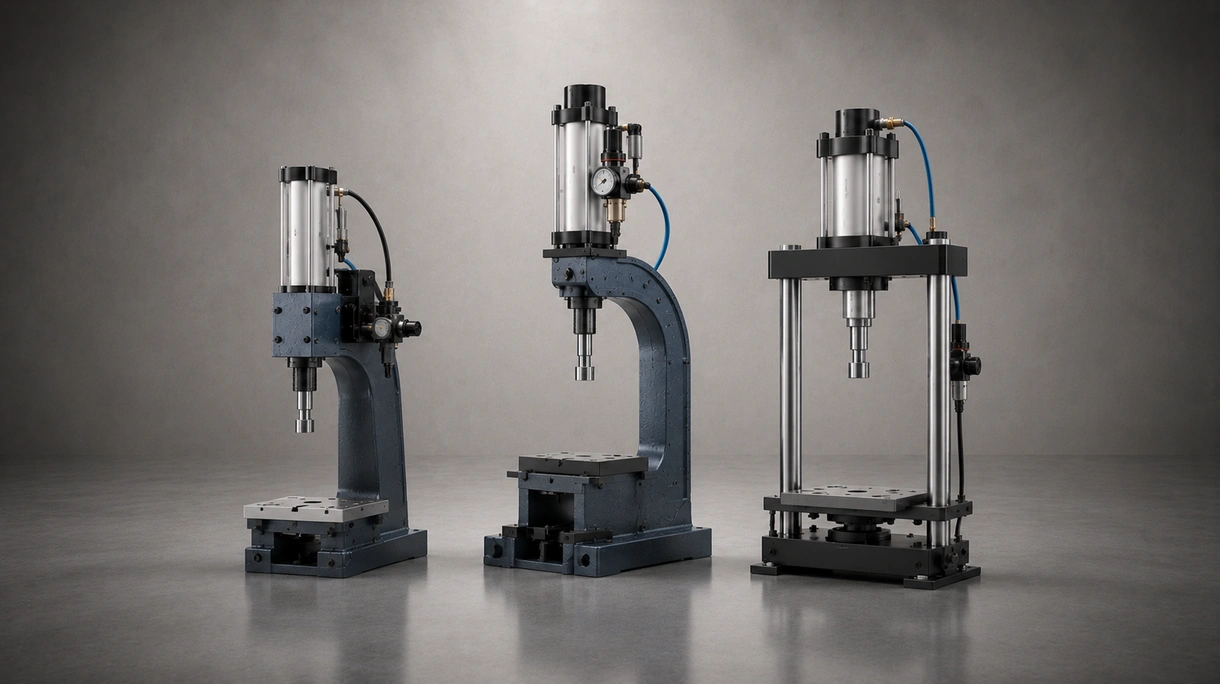
4 Criteria to choose your pneumatic press
Maximum stroke force capacity
Ensures the cylinder delivers sufficient tonnage to deform materials without stalling or causing structural fatigue during high-volume cycles.
Precision cycle speed control
Regulates valve response and airflow to maintain high-speed throughput while ensuring consistent depth accuracy for repetitive assembly tasks.
Frame structural rigidity rating
Prevents deflection under peak loads to maintain tool alignment, reducing premature die wear and ensuring tight tolerance compliance.
Integrated safety system level
Incorporates two-hand controls and light curtains to meet industrial safety standards, preventing operator injury during manual loading operations.
Available technologies and advantages
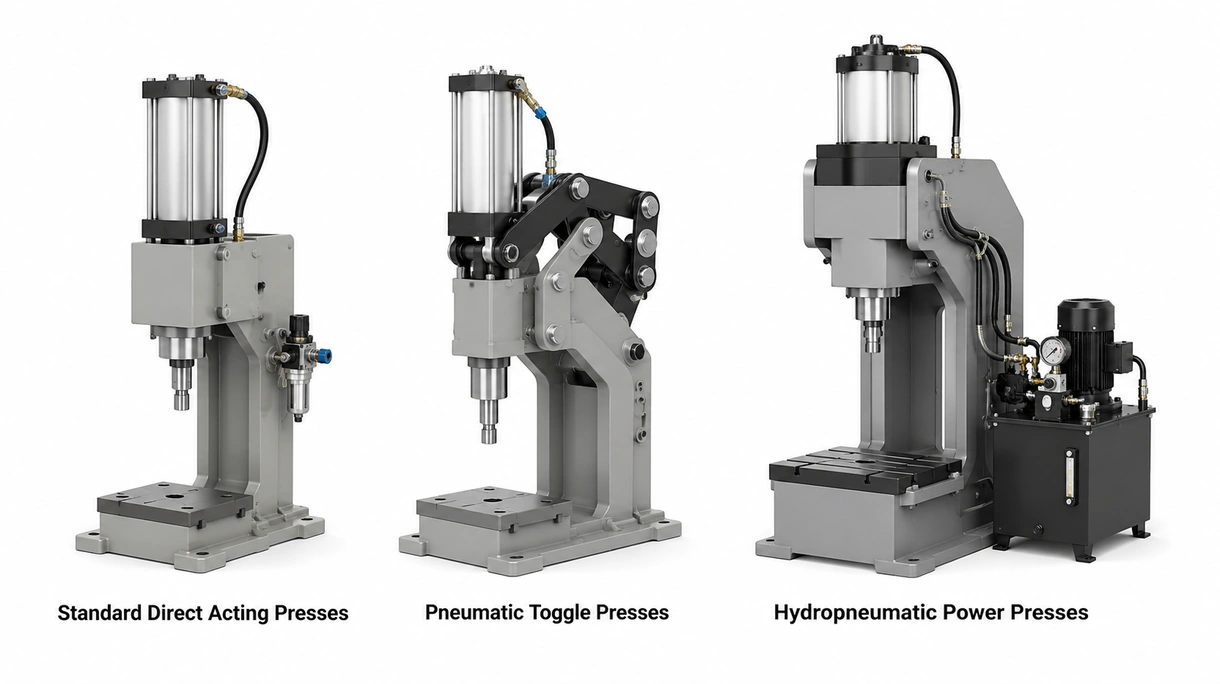
Standard Direct Acting Presses
These units apply force directly via the piston stroke for rapid assembly. Advantages include simplicity and high speed, but they lack the tonnage required for heavy metal deformation tasks.
Pneumatic Toggle Presses
Mechanical leverage amplifies pneumatic force at the stroke end, delivering high tonnage for short travel. They excel in punching but require precise tool setup due to varying force delivery.
Hydropneumatic Power Presses
Combining air speed with hydraulic power, these systems provide high force only when needed. They offer energy efficiency and high tonnage but entail higher initial costs and mechanical complexity.
6 expert tips
Validate the duty cycle ratings to ensure the pneumatic components withstand continuous operation without thermal or seal degradation.
Prioritize modular frame designs that allow for easy integration of automated feed systems and specialized custom tooling components.
Evaluate the air consumption metrics against existing compressor capacity to avoid pressure drops that compromise consistent force delivery.
Confirm the inclusion of precision depth stops to guarantee repeatable accuracy across large production batches of sensitive parts.
Assess the availability of local spare parts and technical support to minimize downtime during critical manufacturing production schedules.
Always verify the technical certification to ensure compliance with local building safety standards and long-term durability.
Innovations and Trends
Real-time sensors capture force-displacement data to ensure zero-defect production and automate quality documentation for audit trails.
Specialized valving recycles exhaust air to reduce total factory pneumatic consumption by significant margins in high-cycle environments.
Embedded controllers transmit diagnostic data to cloud platforms, enabling predictive maintenance and reducing unplanned equipment downtime significantly.
Advanced light curtains allow closer human-machine interaction while maintaining strict compliance with evolving international robotic safety standards.
*Prices are pre-tax. They exclude delivery charges and customs duties and do not include additional charges for installation or activation options. Prices are indicative only and may vary by country, with changes to the cost of raw materials and exchange rates.
About DirectIndustry
DirectIndustry is a marketplace that offers B2B players a complete experience, from product sourcing to purchase. DirectIndustry is an entity of VirtualExpo Group.
Are you a buyer?
Are you a supplier?
About Us
- VirtualExpo Group
- Our Partners
- Recruitment
- Testimonials