
- Home page
- buying guide
- CAD software
CAD software
CAD software: A technical guide
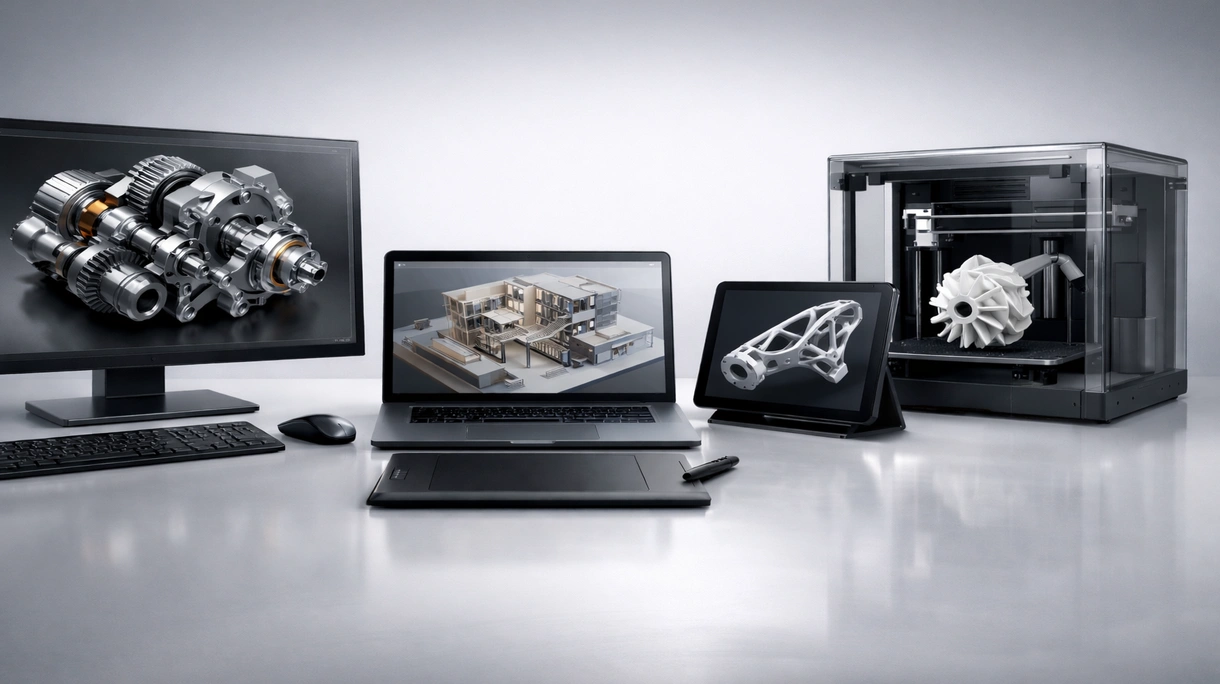
4 Criteria to choose your CAD software
Multi-platform PLM interoperability
This ensures seamless data synchronization between engineering teams and manufacturing execution systems across complex global industrial supply chains.
Parametric constraints stability
This provides the necessary mathematical integrity for complex industrial assemblies during iterative design cycles and structural performance testing.
Native CAM integration depth
This eliminates data translation errors by maintaining direct associative links between engineering models and industrial CNC machining toolpaths.
Simulation and FEA accuracy
This allows engineers to validate the structural performance of heavy machinery components under extreme operational loads before production.
Available technologies and advantages
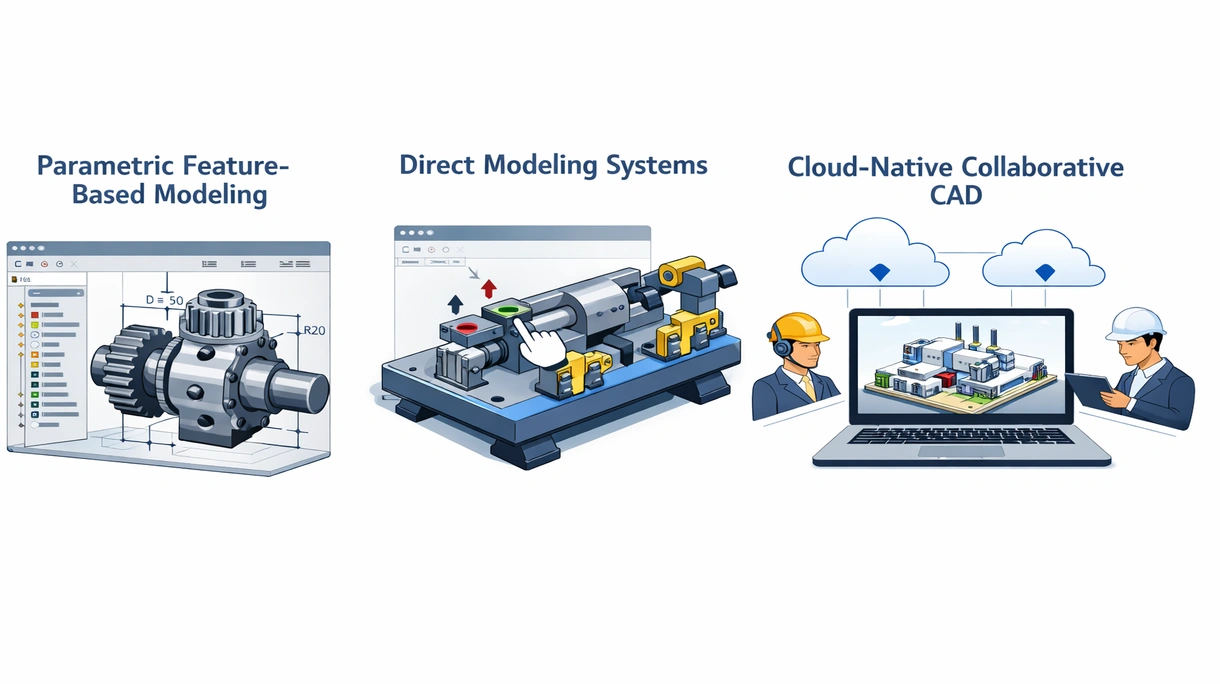
Parametric Feature-Based Modeling
This technology utilizes history-based trees to define geometry through specific constraints, offering high precision for standardized industrial mechanical components and assemblies.
Operational Profile
Advantages include robust revision control and design intent preservation. Limitations involve high computational requirements. The trade-off is extreme precision versus system agility.
Direct Modeling Systems
These systems allow for geometry manipulation without history constraints, facilitating rapid conceptual design and modifications for specialized industrial tooling and machines.
Operational Profile
Advantages include design flexibility and speed. Limitations involve lack of parametric history. The trade-off is rapid iteration versus long-term model intelligence.
Cloud-Native Collaborative CAD
This architecture utilizes centralized databases for real-time versioning across distributed engineering teams designing complex automated systems and industrial building structures.
Operational Profile
Advantages include seamless collaboration and data security. Limitations include internet dependency. The trade-off is global accessibility versus local workstation control.
6 expert tips
Audit native integration capabilities with existing ERP and PLM systems to ensure seamless and efficient industrial data flow.
Prioritize software offering robust finite element analysis tools to reduce material waste during heavy equipment manufacturing and assembly.
Select solutions featuring extensive libraries of standardized industrial components to accelerate the engineering of complex production line systems.
Evaluate vendor technical support response times to minimize downtime during the critical engineering phases of large industrial projects.
Assess the total cost of ownership including subscription fees and specialized hardware requirements for high-performance industrial rendering tasks.
Verify the technical certification to ensure compliance with local building safety standards and long-term durability.
Innovations and Trends
AI-driven optimization reduces material usage in industrial parts while maintaining structural integrity for heavy-duty manufacturing equipment applications.
Connecting real-time IoT sensor data to CAD models enables predictive maintenance and operational monitoring for complex automated facilities.
Immersive environments allow engineers to conduct detailed ergonomic reviews of industrial workstations before physical installation on production floors.
Integrated life cycle assessment tools provide measurable carbon footprint data for industrial machinery during the initial engineering phase.
*Prices are pre-tax. They exclude delivery charges and customs duties and do not include additional charges for installation or activation options. Prices are indicative only and may vary by country, with changes to the cost of raw materials and exchange rates.
About DirectIndustry
DirectIndustry is a marketplace that offers B2B players a complete experience, from product sourcing to purchase. DirectIndustry is an entity of VirtualExpo Group.
Are you a buyer?
Are you a supplier?
About Us
- VirtualExpo Group
- Our Partners
- Recruitment
- Testimonials