
- Home page
- buying guide
- CAM software
CAM software
CAM software: A technical guide
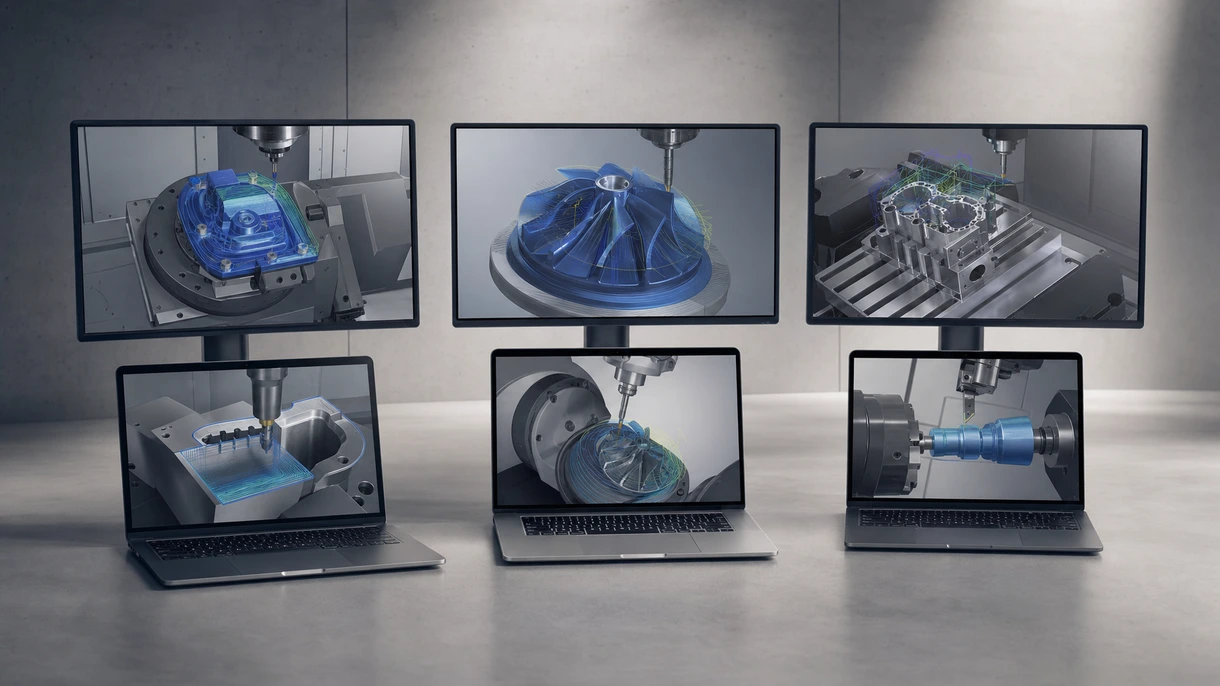
4 Criteria to choose your CAM software
Post-processor reliability
Seamless translation of G-code determines machine safety, prevents tool collisions, and ensures accurate execution on specific CNC controllers.
Multi-axis toolpath optimization
Advanced algorithms minimize air-cutting time while maintaining constant chip load to extend tool life and reduce cycle times.
Digital twin simulation accuracy
Real-time kinematic verification identifies potential interference between machine components, workholding, and tooling before any physical metal cutting begins.
CAD integration and associativity
Native synchronization ensures that any engineering design changes automatically trigger toolpath updates, eliminating manual rework and revision errors.
Available technologies and advantages
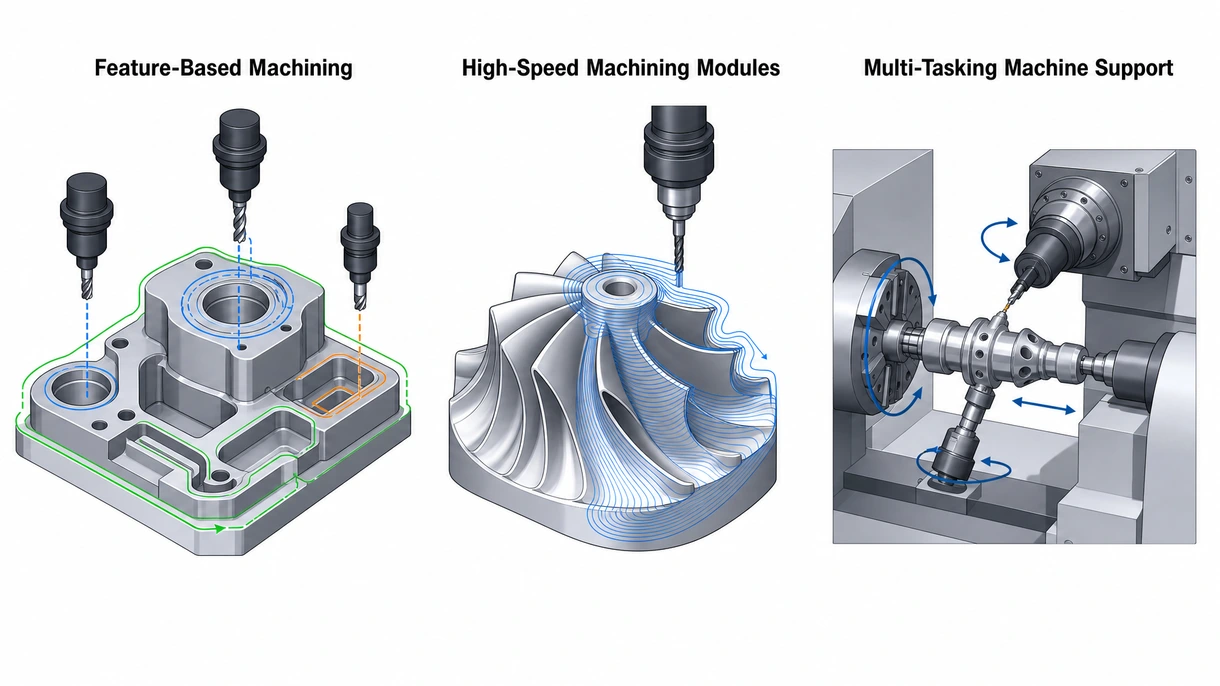
Feature-Based Machining
These systems utilize automated recognition of geometric shapes like pockets or holes to apply standardized machining strategies across parts. This improves programming speed but may struggle with highly organic surfaces.
High-Speed Machining Modules
Focused on maintaining constant engagement angles, these algorithms allow for deeper cuts at higher speeds without overheating tools. They maximize metal removal rates although they require specific machine dynamic capabilities.
Multi-Tasking Machine Support
Dedicated platforms manage complex mill-turn centers by synchronizing multiple spindles and turrets within a single integrated programming environment. Complexity increases significantly, requiring robust simulation to avoid expensive collisions.
6 expert tips
Prioritize vendors offering customized post-processors that guarantee full compatibility with your existing fleet of diverse CNC machine controllers.
Evaluate the total cost of ownership by including long-term maintenance fees and mandatory annual technical support subscription requirements.
Assess the scalability of the licensing model to ensure smooth integration as your production facility adds more workstations.
Demand comprehensive trial periods using your most complex production parts to verify actual cycle time reductions and surface finishes.
Confirm that the software environment supports open API protocols for seamless data exchange with existing enterprise resource planning systems.
Always verify the technical certification to ensure compliance with local building safety standards and long-term durability.
Innovations and Trends
Automatically optimizes feed rates and cutting paths to reduce energy consumption by fifteen percent.
Enable global engineering teams to share real-time manufacturing data, reducing version control errors by twenty percent.
Allows for seamless transition between three-dimensional printing and precision milling within a single unified programming interface.
Assists shop floor operators in tool setup and calibration, decreasing machine downtime by ten percent.
*Prices are pre-tax. They exclude delivery charges and customs duties and do not include additional charges for installation or activation options. Prices are indicative only and may vary by country, with changes to the cost of raw materials and exchange rates.
About DirectIndustry
DirectIndustry is a marketplace that offers B2B players a complete experience, from product sourcing to purchase. DirectIndustry is an entity of VirtualExpo Group.
Are you a buyer?
Are you a supplier?
About Us
- VirtualExpo Group
- Our Partners
- Recruitment
- Testimonials