
- Home page
- buying guide
- right angle gear reducer
right angle gear reducer
right angle gear reducer: A technical guide
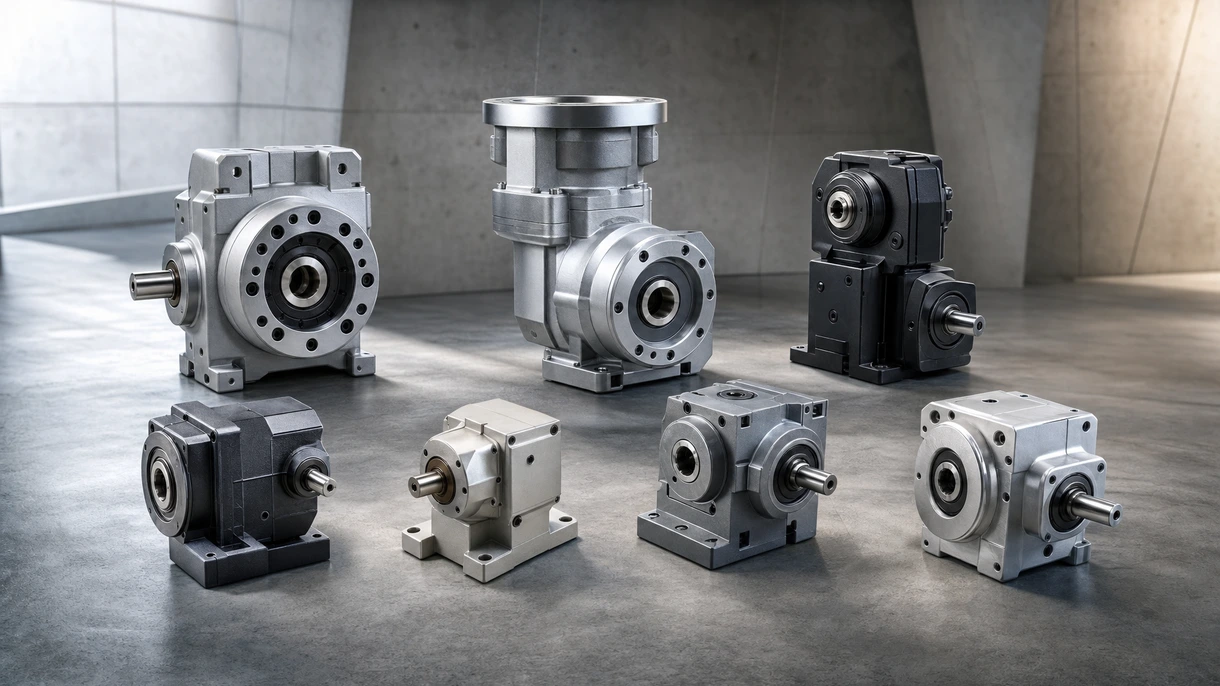
4 Criteria to choose your right angle gear reducer
Peak torque density
High torque per unit volume ensures compact footprints in space-constrained conveyor systems or heavy machinery drives without overheating risks.
Backlash precision levels
Minimal angular play is vital for automation accuracy, preventing positioning errors in robotic indexing and high-frequency motion cycles.
Mechanical efficiency ratings
Efficiency affects operational costs and heat dissipation requirements, determining continuous duty cycles without auxiliary cooling system expenditures.
Shaft configuration compatibility
Proper shaft selection dictates mechanical integration feasibility with motors and driven equipment while effectively managing overhung loads.
Available technologies and advantages
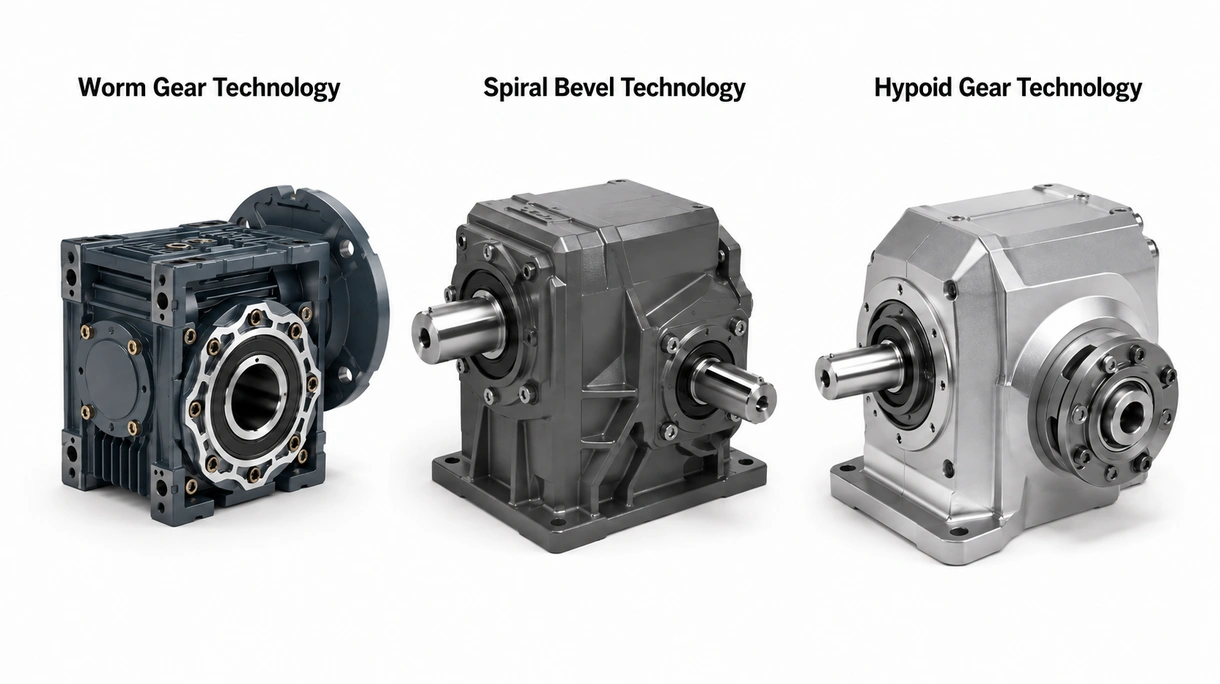
Worm Gear Technology
Worm drives offer high reduction ratios in a single stage, providing inherent self-locking properties useful for safety in vertical lifting applications within industrial plants.
Worm Operational Dynamics
Advantages include quiet operation and high shock resistance. Limitations involve low efficiency. Trade-offs involve lower costs versus higher energy consumption.
Spiral Bevel Technology
These units utilize curved teeth for smoother engagement, delivering high efficiency and high torque transmission through precise ninety-degree intersections in heavy machinery.
Bevel Operational Dynamics
Advantages include superior efficiency and long service life. Limitations involve high sensitivity to misalignment. Trade-offs involve performance against precision installation requirements.
Hypoid Gear Technology
Combining features of worm and bevel gears, hypoid units allow offset shafts and provide high torque density with superior mechanical efficiency for automation.
Hypoid Operational Dynamics
Advantages include high torque capacity and smooth operation. Limitations involve higher manufacturing costs. Trade-offs involve balancing compactness against initial capital investment.
6 expert tips
Prioritize units with high efficiency ratings to reduce long term energy consumption and operational costs.
Select synthetic lubricants to extend maintenance intervals and ensure reliable lubrication across wide operating temperature fluctuations.
Verify the service factor against peak shock loads to prevent premature internal component failure during duty cycles.
Opt for modular designs to simplify spare parts inventory and allow faster integration across various motor frame standards.
Evaluate housing materials for environmental resistance to prevent corrosion in harsh washdown or industrial chemical exposure environments.
Always verify the technical certification to ensure compliance with local building safety standards and long-term durability.
Innovations and Trends
Integration of IIoT sensors enables real-time vibration monitoring to prevent unexpected production line downtime events during operation.
Advanced surface coatings reduce friction losses by fifteen percent, significantly increasing overall system energy efficiency ratings in production.
Lightweight alloy developments reduce total machine weight while maintaining high structural rigidity for mobile industrial robotics applications.
Compliance with global eco-design regulations drives the adoption of high-efficiency gear geometries to meet mandatory carbon targets.
*Prices are pre-tax. They exclude delivery charges and customs duties and do not include additional charges for installation or activation options. Prices are indicative only and may vary by country, with changes to the cost of raw materials and exchange rates.
About DirectIndustry
DirectIndustry is a marketplace that offers B2B players a complete experience, from product sourcing to purchase. DirectIndustry is an entity of VirtualExpo Group.
Are you a buyer?
Are you a supplier?
About Us
- VirtualExpo Group
- Our Partners
- Recruitment
- Testimonials