
- Home page
- buying guide
- CNC lathe
CNC lathe
CNC lathe: A technical guide
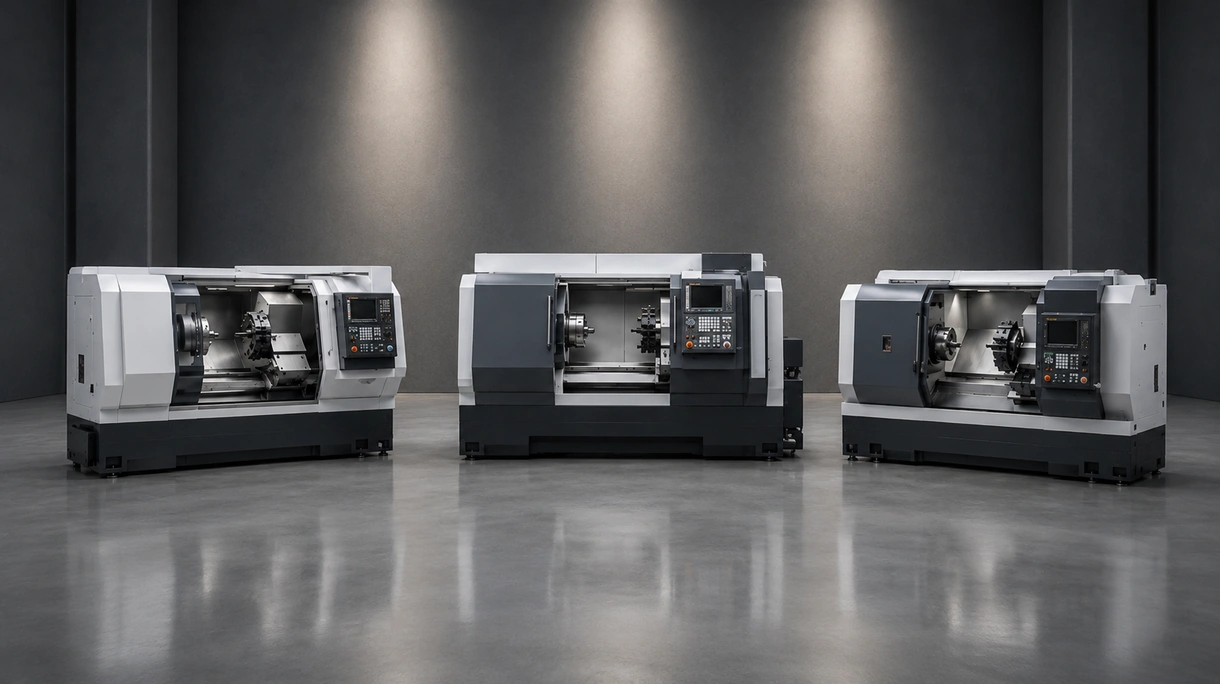
4 Criteria to choose your CNC lathe
Spindle power and torque
High torque drives heavy material removal rates while power ensures consistency during intensive machining of hardened steel alloys.
Positioning and repeatability accuracy
Precision scales and thermal compensation ensure microns-level consistency across multiple shifts, minimizing scrap rates in high-precision aerospace components.
Swing and bed length
These dimensions define the maximum workpiece envelope, directly impacting the machine capability for processing long shafts or large diameters.
Turret indexing speed
Rapid tool changes minimize non-cutting intervals during complex cycles, directly improving parts-per-hour output and maximizing shop floor productivity rates.
Available technologies and advantages
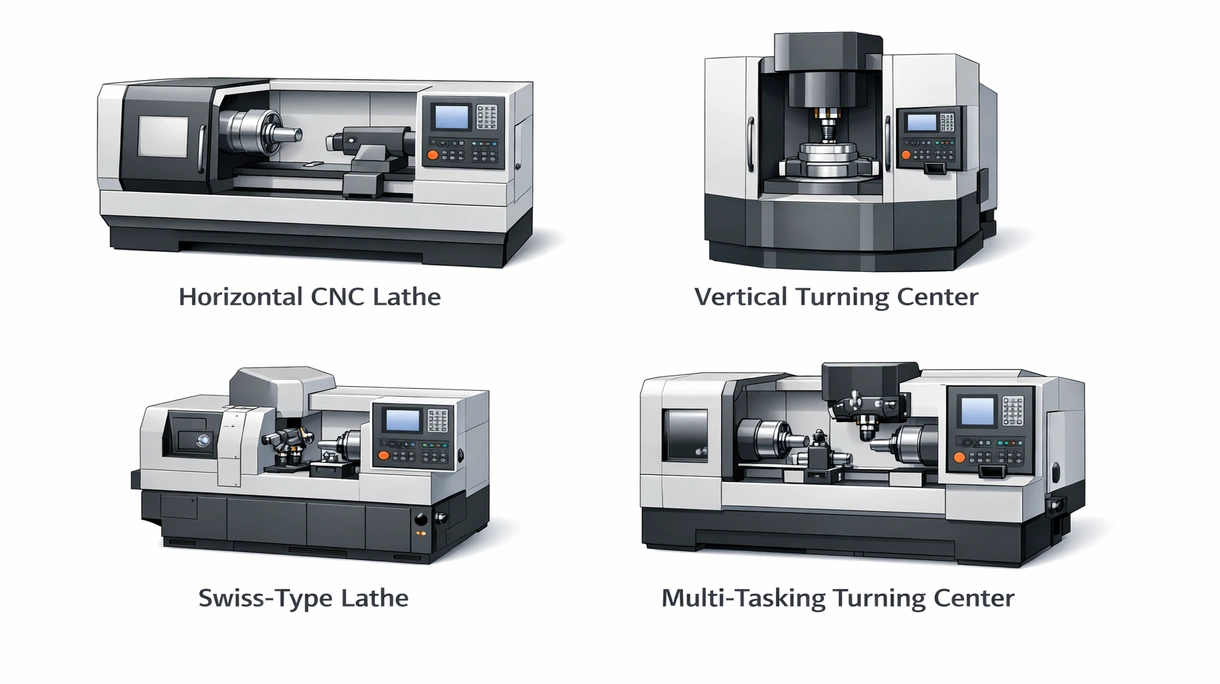
Horizontal CNC Lathes
Standard horizontal configuration facilitates heavy-duty turning and shaft work. While offering excellent accessibility, it requires more floor space and manual chip management compared to vertical orientations.
Vertical Turning Centers
Vertical orientation utilizes gravity for stable clamping and efficient chip evacuation. These are ideal for heavy, large-diameter parts but often involve higher ceiling height requirements.
Swiss-type Lathes
Sliding headstock technology provides extreme precision for small, complex parts by supporting material close to the tool. They excel in high-volume micro-machining but involve complex setups.
Multi-tasking Turning Centers
Integrating milling spindles and secondary axes allows for complete part finishing in one setup. This reduces handling errors though capital expenditure and programming complexity increase significantly.
6 expert tips
to ensure the drive system handles specific material hardness without overheating during intensive production.
like active cooling to maintain dimensional accuracy during long operational shifts in variable environments.
with existing software to minimize operator training and ensure seamless shop floor data integration.
using robust standards like BMT to provide necessary stiffness for high-feed rates and aggressive turning.
including high-pressure coolant to prevent chip nesting and protect critical machine guideway surfaces.
by factoring in service availability and energy consumption metrics beyond the initial machine purchase price.
to ensure compliance with local building safety standards and long-term durability.
Innovations and Trends
Reduces setup errors by simulating machining cycles before the first physical cut occurs on the shop floor.
Monitors vibration to predict spindle failure, reducing unplanned downtime and maintaining production schedule stability.
Systems reduce chemical waste and coolant costs while meeting stricter environmental health and safety regulations.
Enables lights-out manufacturing and higher machine utilization rates to combat skilled labor shortages in machining.
*Prices are pre-tax. They exclude delivery charges and customs duties and do not include additional charges for installation or activation options. Prices are indicative only and may vary by country, with changes to the cost of raw materials and exchange rates.
About DirectIndustry
DirectIndustry is a marketplace that offers B2B players a complete experience, from product sourcing to purchase. DirectIndustry is an entity of VirtualExpo Group.
Are you a buyer?
Are you a supplier?
About Us
- VirtualExpo Group
- Our Partners
- Recruitment
- Testimonials