
- Home page
- buying guide
- axial fan
axial fan
axial fan: A technical guide
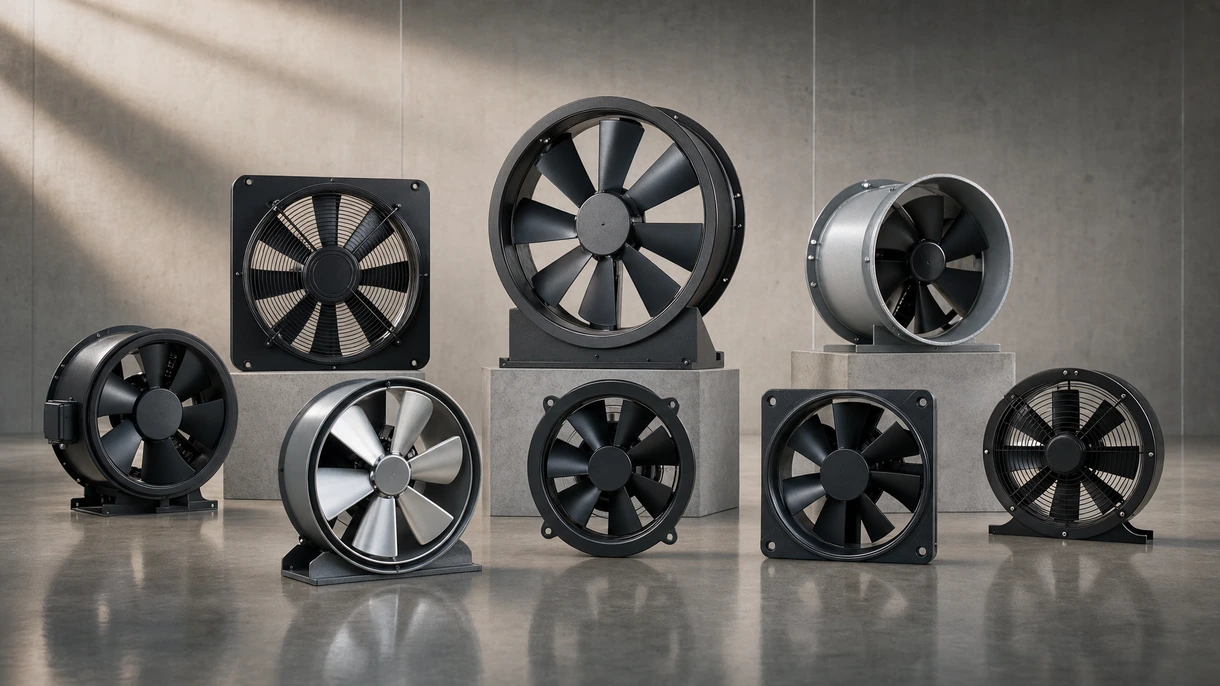
4 Criteria to choose your axial fan
Airflow volume capacity.
Calculate cubic meters per hour required to maintain temperature gradients and meet specific industrial ventilation or process cooling demands.
Static pressure capability.
Assess resistance from ductwork, filters, or heat exchangers to ensure the fan overcomes system impedance without losing efficiency.
Energy efficiency rating.
Evaluate electrical consumption and motor efficiency classes to minimize operational costs while maximizing long-term return on infrastructure investments.
Acoustic pressure levels.
Monitor decibel output during full load operations to comply with workplace safety regulations and prevent noise-induced worker fatigue.
Available technologies and advantages
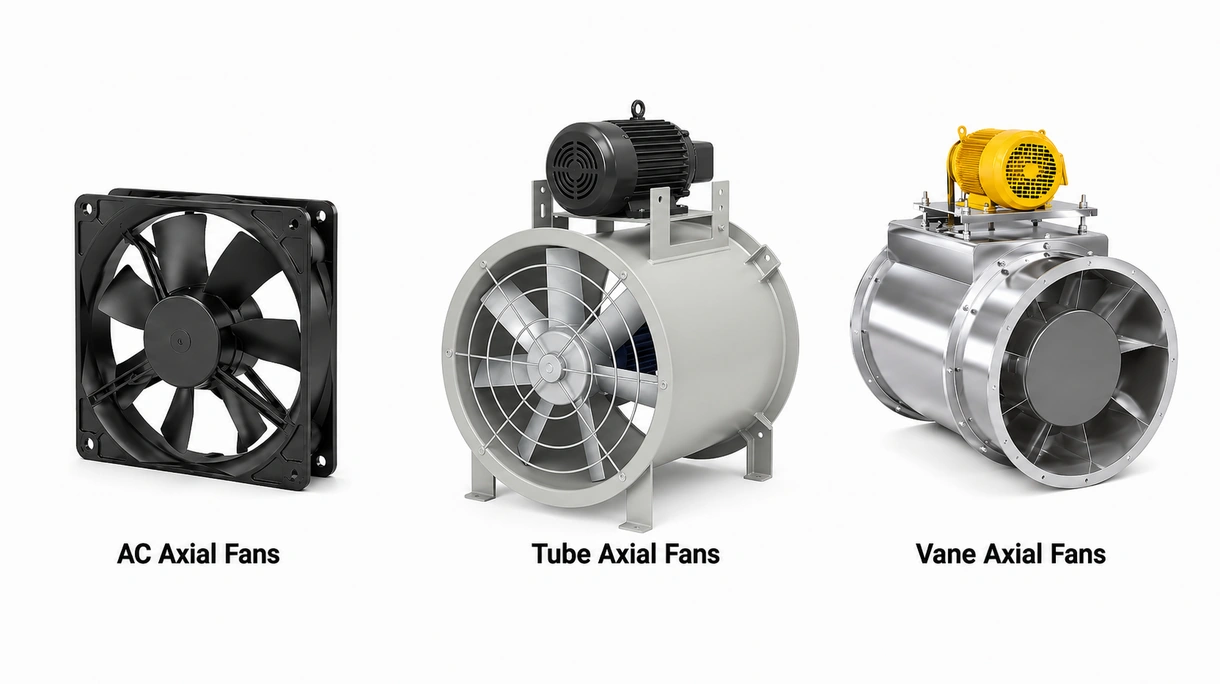
AC Axial Fans.
These motors provide robust performance for simple ventilation. They offer low initial costs but lack precise speed control and efficiency.
EC Axial Fans.
Integrated electronics allow for superior speed management and energy efficiency. These offer operational savings despite requiring higher initial capital investment.
Tube Axial Fans.
Cylindrical housings improve pressure characteristics for ducting applications. They excel in restricted spaces but generate significantly higher noise levels.
Vane Axial Fans.
Internal guide vanes straighten airflow to maximize static pressure. These units offer peak performance but demand higher mechanical maintenance costs.
6 expert tips
Prioritize high-efficiency EC motors to reduce long-term energy expenditure and total cost of ownership in continuous industrial operations.
Select corrosion-resistant materials or specialized coatings when installing equipment in harsh chemical processing or high-humidity manufacturing environments.
Verify the fan curve against system resistance to ensure the chosen unit operates within its peak efficiency zone.
Integrate smart sensors for vibration and temperature monitoring to facilitate predictive maintenance and avoid unplanned production line downtime.
Check compatibility with existing building management systems to ensure seamless remote control and real-time performance tracking across facilities.
Always verify the technical certification to ensure compliance with local building safety standards and long-term durability.
Innovations and Trends
Aerodynamic profiles inspired by nature reduce turbulence and noise while increasing airflow efficiency by nearly fifteen percent.
Embedded sensors provide real-time data on bearing wear and motor heat, enabling proactive maintenance and reducing failures.
Use of recycled or carbon-neutral thermoplastic resins for blades reduces environmental impact while maintaining mechanical structural integrity.
Enhanced motor insulation allows for seamless integration with external drives, optimizing power usage based on demand.
*Prices are pre-tax. They exclude delivery charges and customs duties and do not include additional charges for installation or activation options. Prices are indicative only and may vary by country, with changes to the cost of raw materials and exchange rates.
About DirectIndustry
DirectIndustry is a marketplace that offers B2B players a complete experience, from product sourcing to purchase. DirectIndustry is an entity of VirtualExpo Group.
Are you a buyer?
Are you a supplier?
About Us
- VirtualExpo Group
- Our Partners
- Recruitment
- Testimonials