
- Home page
- buying guide
- ATEX fan
ATEX fan
ATEX fan: A technical guide
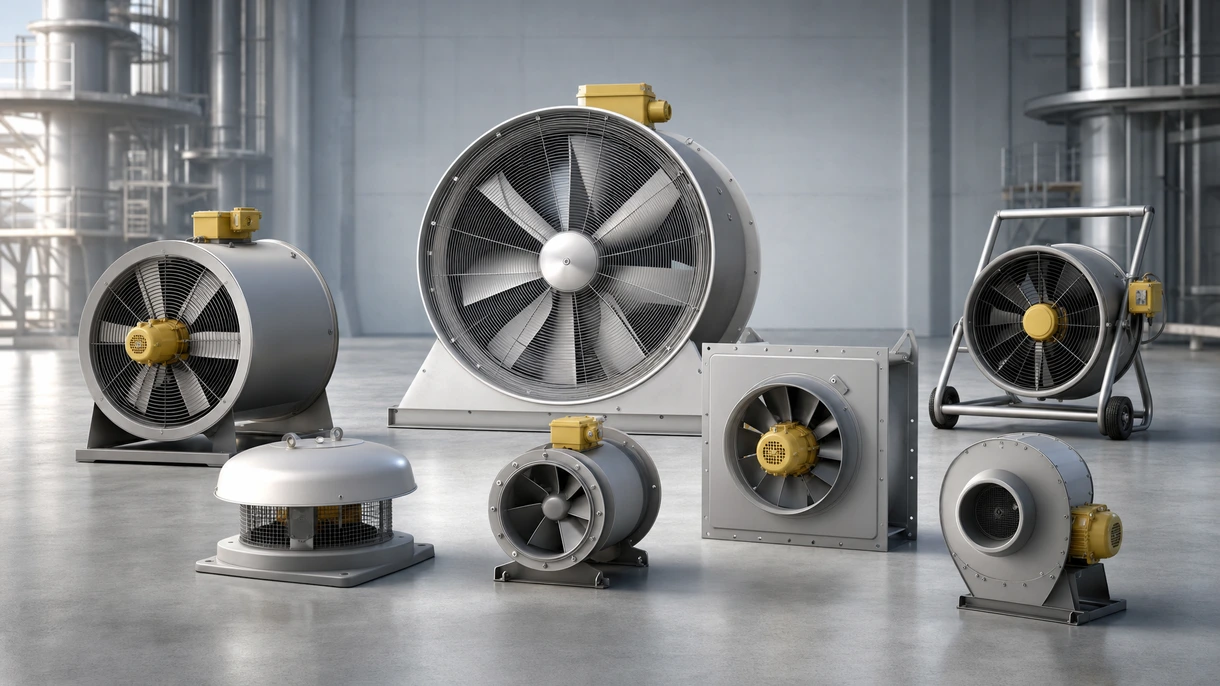
4 Criteria to choose your ATEX fan
Hazardous Zone Classification Match
Matching equipment category to gas presence prevents ignition in explosive atmospheres according to international regulatory safety standards.
Required Volumetric Airflow Capacity
Delivering specified cubic meters per hour ensures adequate hazardous vapor dilution and thermal management within high risk industrial processes.
Non Sparking Material Quality
Using non ferrous metals like aluminum prevents mechanical friction sparks during fan operation in volatile or hazardous industrial environments.
Electrical Ingress Protection Rating
High ingress protection ensures dust and moisture cannot penetrate electrical enclosures, maintaining integrity in harsh industrial processing settings.
Available technologies and advantages
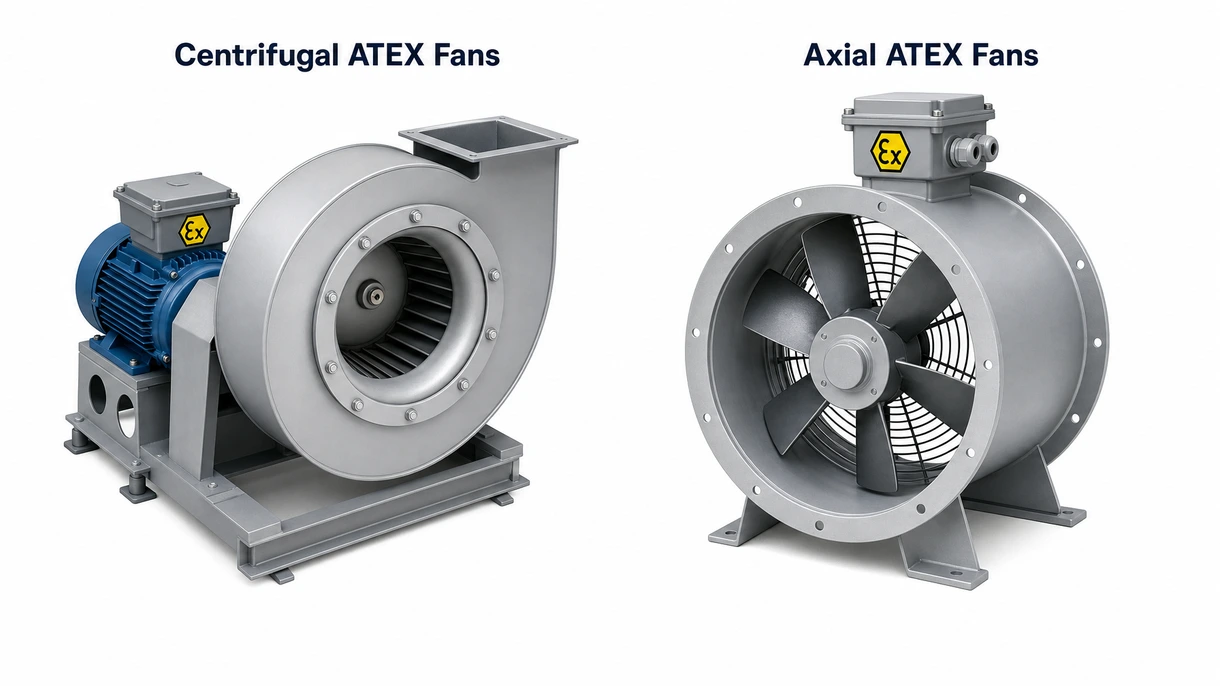
Centrifugal ATEX Fans
These systems utilize high pressure impellers to move air through complex industrial ducting. They offer superior pressure development but require significant space compared to axial alternatives for heavy duty extraction.
Axial ATEX Fans
Designed for high volume airflow at lower pressures, these units are ideal for general ventilation. They provide compact footprints and high efficiency although they struggle with significant ducting resistance in complex layouts.
6 expert tips
Validate safety certificates against specific gas groups and temperature classes to ensure full regulatory compliance and operational safety.
Select corrosion resistant materials for fans installed in chemical processing environments to prevent structural failure and maintain system integrity.
Calculate static pressure requirements accurately to ensure the fan maintains required airflow through all industrial ducting and filters.
Prioritize direct drive motor configurations to minimize friction points and reduce the maintenance overhead associated with belt driven industrial systems.
Integrate vibration monitoring sensors to detect early signs of mechanical imbalance and prevent catastrophic failures in explosive atmosphere zones.
Always verify the technical certification to ensure compliance with local building safety standards and long term durability.
Innovations and Trends
Enable real time detection of mechanical imbalances, reducing unplanned downtime by twenty percent in hazardous production environments.
Reduce rotational inertia and energy consumption while maintaining the anti static properties required for explosive gas zones.
Provide precise speed control and reduce heat generation, improving overall energy efficiency by fifteen percent.
Allow for faster onsite repairs and reduced lead times for critical industrial air handling replacements.
*Prices are pre-tax. They exclude delivery charges and customs duties and do not include additional charges for installation or activation options. Prices are indicative only and may vary by country, with changes to the cost of raw materials and exchange rates.
About DirectIndustry
DirectIndustry is a marketplace that offers B2B players a complete experience, from product sourcing to purchase. DirectIndustry is an entity of VirtualExpo Group.
Are you a buyer?
Are you a supplier?
About Us
- VirtualExpo Group
- Our Partners
- Recruitment
- Testimonials