
- Home page
- buying guide
- industrial fan
industrial fan
industrial fan: A technical guide
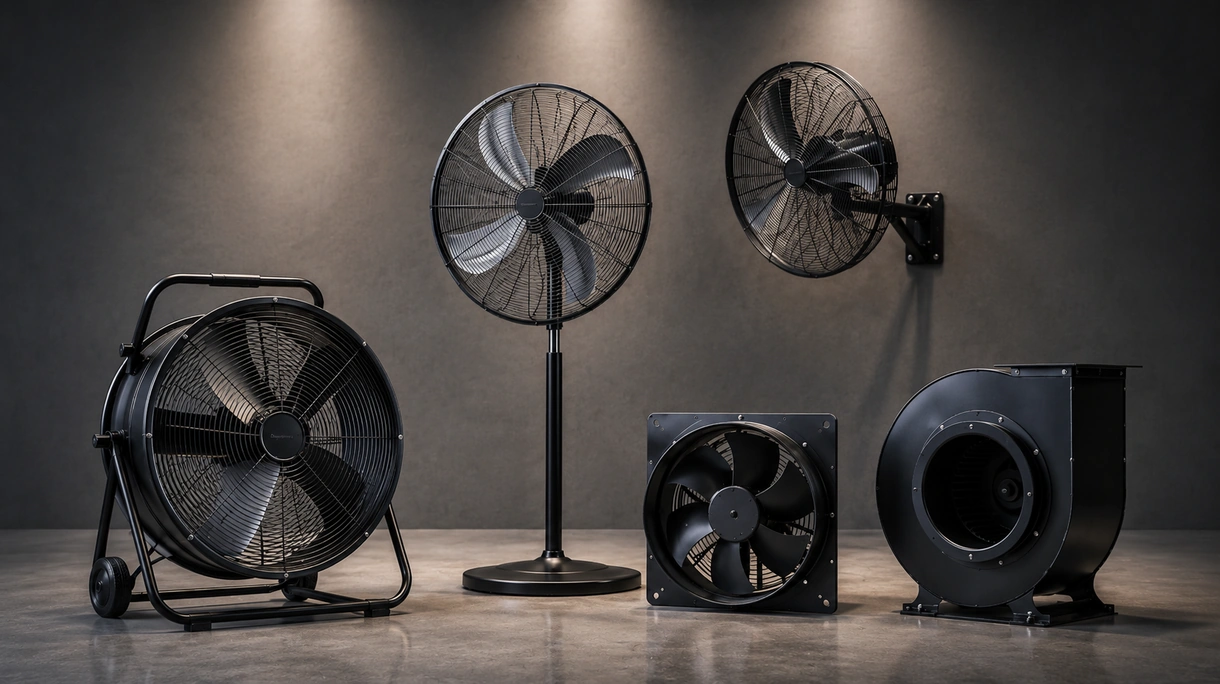
4 Criteria to choose your industrial fan
Airflow volume and pressure
Air delivery capacity at specific static pressure to overcome duct resistance and maintain required process air exchange rates.
Energy efficiency ratio
Ratio of air movement to power consumption determines long-term operational costs and compliance with environmental energy efficiency standards.
Material chemical resistance
Selection of alloys or coatings determines survival in corrosive, humid, or high-temperature environments typical of heavy industrial processing.
Motor protection ratings
Infrastructural safety requires specific IP or ATEX ratings to prevent ignition or failure in hazardous dust-filled manufacturing zones.
Available technologies and advantages
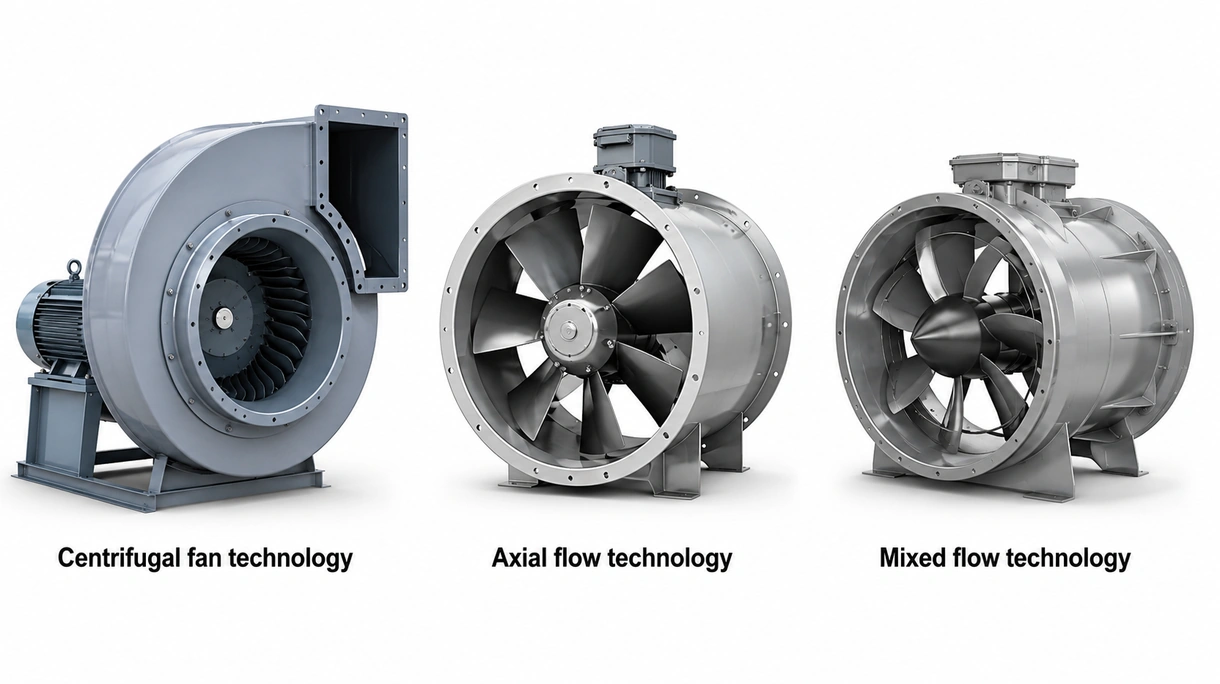
Centrifugal fan technology
These industrial units redirect intake air at right angles using impellers to generate the high static pressure required for complex ducting systems. They offer superior pressure handling but require more floor space and precise balancing to prevent mechanical vibration and premature bearing wear.
Axial flow technology
These fans move air parallel to the shaft through propeller blades designed specifically for high volume delivery at relatively low static pressures. This design provides excellent efficiency for general ventilation but struggles with significant resistance and often generates higher noise levels than centrifugal alternatives.
Mixed flow technology
Combining axial and centrifugal features, these hybrid units provide moderate pressure and air volume in a compact housing for restricted spaces. These offer a balanced solution for mid-range requirements while potentially sacrificing the peak efficiency found in highly specialized single-technology industrial designs.
6 expert tips
Prioritize high efficiency motors with variable frequency drives to minimize electricity consumption and reduce total lifecycle costs for production.
Verify specific explosive atmosphere certifications to ensure safe operation within potentially hazardous dust or gas processing environments during operation.
Assess the specific static pressure requirements of the ductwork to avoid underperformance and premature motor failure during standard operation.
Select corrosion resistant materials or specialized coatings for equipment intended for use in chemically aggressive or high humidity settings.
Evaluate the acoustic output ratings to maintain workplace safety standards and protect employees from excessive noise during long shifts.
Always verify the technical certification to ensure compliance with local building safety standards and long-term durability.
Innovations and Trends
Integrated IoT sensors enable real-time vibration monitoring to predict mechanical failure and optimize maintenance schedules in automated factories.
Advanced aerodynamic blade designs utilize biomimicry to increase airflow efficiency while significantly reducing operational noise in confined spaces.
High efficiency electronically commutated motors provide precise speed control and lower power draw compared to traditional induction motor systems.
Additive manufacturing of impellers allows for customized geometry to match unique pressure requirements and improve overall system performance.
*Prices are pre-tax. They exclude delivery charges and customs duties and do not include additional charges for installation or activation options. Prices are indicative only and may vary by country, with changes to the cost of raw materials and exchange rates.
About DirectIndustry
DirectIndustry is a marketplace that offers B2B players a complete experience, from product sourcing to purchase. DirectIndustry is an entity of VirtualExpo Group.
Are you a buyer?
Are you a supplier?
About Us
- VirtualExpo Group
- Our Partners
- Recruitment
- Testimonials