
- Home page
- buying guide
- solid milling cutter
solid milling cutter
solid milling cutter: A technical guide
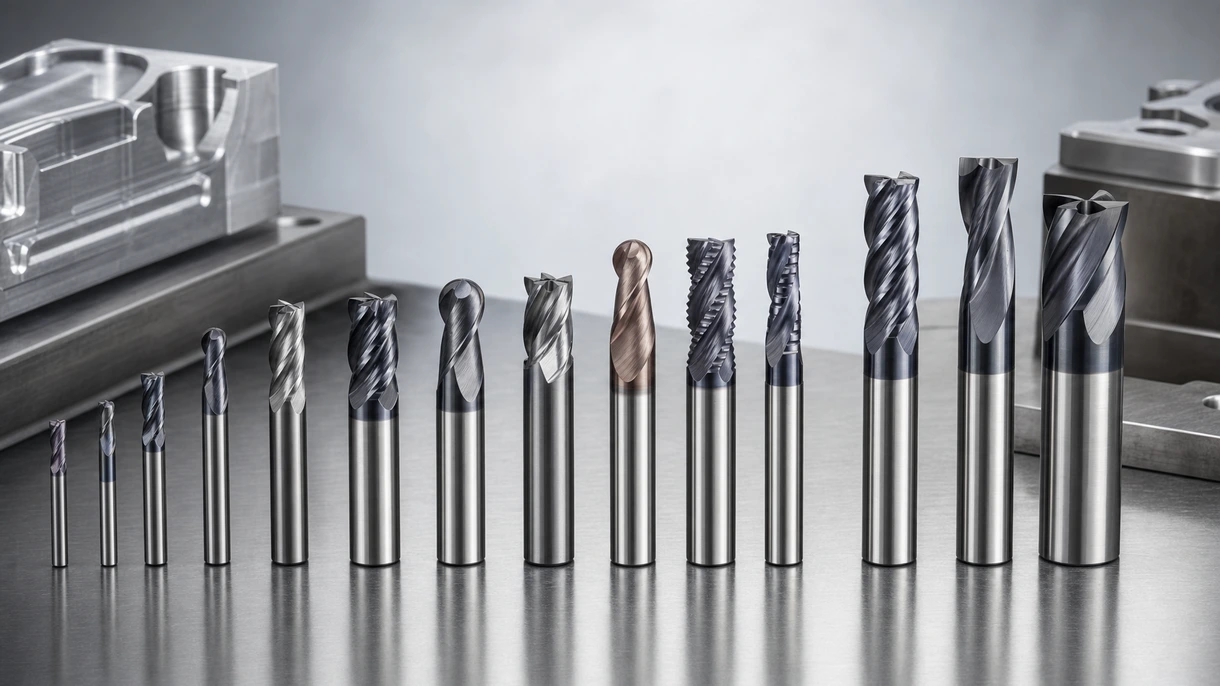
4 Criteria to choose your solid milling cutter
Substrate material composition
The balance of tungsten carbide and cobalt determines toughness and hardness necessary to prevent edge chipping during high speed operations.
Geometry and helix angle
Specific flute angles optimize chip evacuation and reduce heat buildup, ensuring surface finish quality and extending tool service life.
Specialized coating technology
Advanced aluminum titanium nitride layers provide thermal protection and lubricity, allowing for higher cutting speeds in hardened steel applications.
Radial and axial runout
Precise concentricity minimizes vibration and uneven wear, which is vital for maintaining tight tolerances and protecting machine spindle health.
Available technologies and advantages
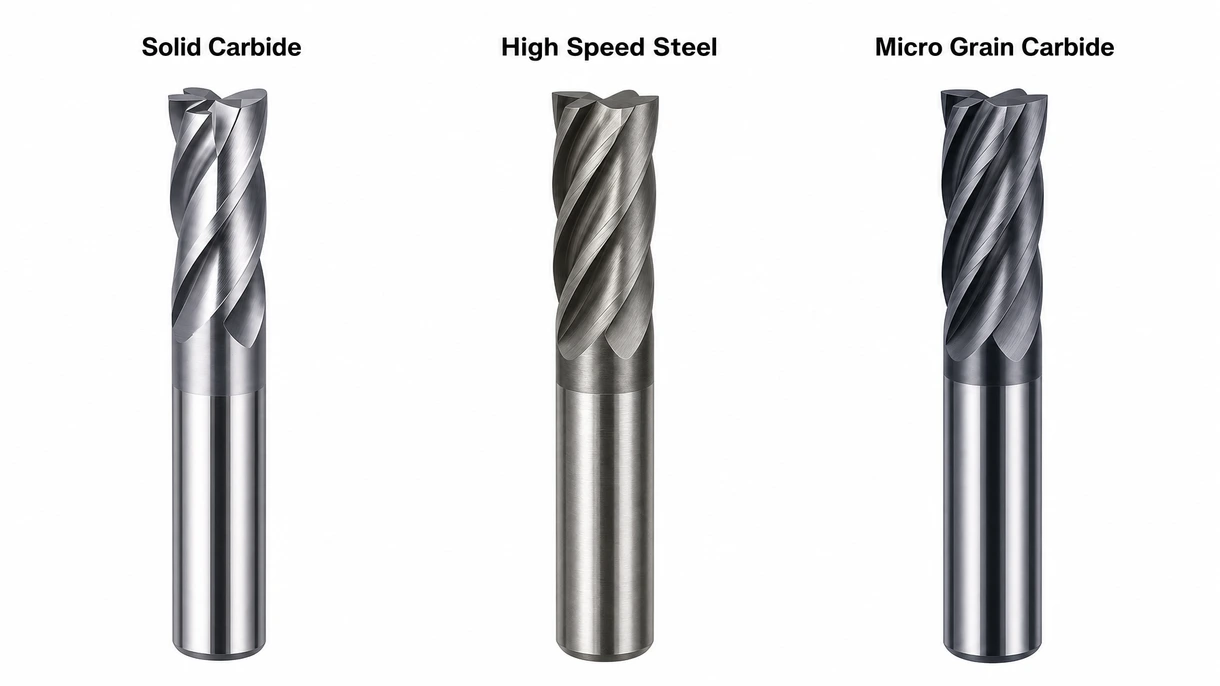
Solid Carbide Comparison
These tools offer superior rigidity and heat resistance compared to high speed steel, enabling high performance machining in tough alloys. They provide exceptional precision.
Solid Carbide Trade-offs
High feed rates and durability are primary advantages, whereas brittleness is a limitation. Users must balance throughput against the risk of breakage.
High Speed Steel Comparison
These tools provide high toughness and impact resistance for manual machining operations where spindle stability is less than optimal. They are less expensive than carbide.
High Speed Steel Trade-offs
The primary advantage is resistance to vibration and edge chipping. However, limitations include lower heat resistance and slower cutting speeds compared to carbide tools.
Micro Grain Carbide Comparison
These specialized tools feature extremely fine grain structures that maximize edge sharpness and structural integrity for micro machining. They excel in high precision manufacturing applications.
Micro Grain Carbide Trade-offs
Exceptional sharpness allows for intricate detailing and superior surface finishes. The trade-off is a significantly higher acquisition cost and sensitivity to improper machine handling.
6 expert tips
Analyze the comprehensive cost per part to justify the higher initial investment of premium coated solid carbide tools.
Match the tool geometry specifically to the workpiece material hardness to prevent premature edge wear and ensure dimensional accuracy.
Implement standardized tool holders with high clamping force to minimize runout and extend the lifecycle of expensive solid cutters.
Evaluate the effectiveness of internal coolant delivery systems to improve chip evacuation and maintain stable temperatures during deep pocketing.
Prioritize suppliers offering regrinding services to recover tool performance and reduce the total environmental and financial waste in production.
Always verify the technical certification to ensure compliance with local building safety standards and long-term durability.
Innovations and Trends
Differing flute angles suppress harmonic vibrations, allowing for significantly higher material removal rates and improved surface finish quality.
Deep freezing substrates enhances wear resistance by transforming retained austenite into martensite, increasing tool life by substantial percentages.
Virtual tool modeling enables precise simulation of cutting forces, reducing physical testing cycles and preventing costly machine crashes.
New physical vapor deposition coatings offer extreme hardness and thermal stability, facilitating dry machining of heat resistant superalloys.
*Prices are pre-tax. They exclude delivery charges and customs duties and do not include additional charges for installation or activation options. Prices are indicative only and may vary by country, with changes to the cost of raw materials and exchange rates.
About DirectIndustry
DirectIndustry is a marketplace that offers B2B players a complete experience, from product sourcing to purchase. DirectIndustry is an entity of VirtualExpo Group.
Are you a buyer?
Are you a supplier?
About Us
- VirtualExpo Group
- Our Partners
- Recruitment
- Testimonials