



- Company
- Products
- Catalogs
- News & Trends
- Exhibitions
Induction motor TEFCthree-phasepermanent magnetcast iron

Add to favorites
Compare this product
Characteristics
- Type
- induction, three-phase
- Configuration
- permanent magnet, cast iron
- Protection class
- IP55, IP66
- Cooling mechanism
- IC411, air-cooled, forced air-cooled, water-cooled
- Applications
- industrial, for boat, for pump, for medical equipment, for conveyors, for collaborative robots
- Other characteristics
- high-efficiency, high-power, high-voltage
- Power
Max.: 20,000 kW
(27,192.42 hp)Min.: 180 kW
(244.73 hp)
Description
• IEC 60034, IEC 60072, EN60034-1, NEMA MG1, ISO 9001
• Seismic design, ETGI-1.020, IEEE Std 693, NCh2369
• Structural design, ASTM A325, ANSI/AISC 360, AWS D1.1
• High altitude correction per IEC & IEEE & NEMA, ~ 5000m
• Typical application for Oil & Gas, Petrochemical, Mining, Metallurgy, Nuclear power
• Optional: Stator Winding/Bearing RTD, Vibration probe, Transmitter, Neutral terminal box, EXPO purging unit
Medium Voltage Motor (MV Motor)
A Medium Voltage Motor (MV Motor) is an electric motor designed to operate at medium voltage levels, typically from 1 kV to 35 kV (and in some applications up to 69 kV). MV motors are used for driving large industrial loads where high power output, efficiency, and reliability are required.
Common applications include:
·Pumps
·Fans
·Compressors
·Conveyors
·Crushers
·Mills
·Large process equipment
1. Working Principle
MV motors convert electrical energy into mechanical energy through electromagnetic interaction between the stator and rotor.
When AC voltage is applied:
·The stator winding produces a rotating magnetic field.
·The rotor follows this rotating field.
·Mechanical torque is generated.
·The shaft drives the connected load.
2. Main Components
A.) Stator
The stationary part of the motor.
Includes:
·Laminated steel core
·Three-phase MV winding
·Insulation system
Functions:
·Creates rotating magnetic field
·Handles high voltage stress
B.) Rotor
The rotating part.
Types:
·Squirrel Cage Rotor
·Robust construction
·Low maintenance
·Common for pumps and fans
·Wound Rotor
·External resistance control possible
·High starting torque
·Used for heavy starting loads
C.) Bearings
Support the rotating shaft.
Types:
·Sleeve bearings
·Rolling element bearings
·Large MV motors often use sleeve bearings for high reliability.
D.) Cooling System
Cooling methods:
·Totally Enclosed Fan Cooled (TEFC)
·Air-to-air cooling (TEAAC)
·Air-to-water cooling (TEWAC)
·Open ventilated cooling
E.) Terminal Box
Provides connection between:
·MV supply cable
·Motor winding
Designed for:
·High voltage insulation
·Cable termination stress control
3. Types of MV Motors
A.) MV Induction Motor
The most common type.
Features:
·Simple construction
·High reliability
·Low maintenance
Applications:
·Pumps
·Fans
·Compressors
B.) MV Synchronous Motor
Features:
·Runs at constant speed
·High efficiency
·Can provide power factor correction
Applications:
·Large compressors
·Ball mills
·Cement plants
C.) MV Wound Rotor Motor
Features:
·High starting torque
·Speed control capability
Applications:
·Crushers
·Hoists
·Conveyors
4. Typical MV Motor Specifications
·Voltage: 1 kV – 35 kV
·Power rating : 200 kW – 50+ MW
·Frequency: 50/60 Hz
·Speed: 300–3600 rpm
·Efficiency: 90–97%
·Protection: IP23–IP56
·Insulation class: F or H
·Cooling: Air/water cooled
5. Motor Starting Methods
A.) Direct Online Starting (DOL)
Advantages:
·Simple
·Low cost
Disadvantages:
·High starting current
B.) Reduced Voltage Starter
Examples:
·Auto-transformer starter
·Reactor starter
·Soft starter
Benefits:
·Lower starting current
·Reduced mechanical stress
C.) Variable Frequency Drive (VFD)
Provides:
·Variable speed control
·Energy savings
·Smooth starting
Applications:
·Pumps
·Fans
·Process control systems
6. MV Motor Protection
Typical protection includes:
·Electrical Protection
·Overcurrent protection
·Short-circuit protection
·Earth fault protection
·Phase loss protection
·Negative sequence protection
·Locked rotor protection
Thermal Protection
·RTD temperature sensors
·Bearing temperature monitoring
·Winding temperature monitoring
Mechanical Protection
·Vibration monitoring
·Bearing condition monitoring
7. Applications
·Oil & Gas
·Pumps
·Compressors
·Fans
·Power Plants
·Boiler feed pumps
·Cooling water pumps
·Fans
·Mining
·Crushers
·Conveyors
·Grinding mills
·Cement Industry
·Kiln drives
·Raw mills
·Fans
·Water Treatment
·Large pumping stations
·Renewable Energy
·Auxiliary systems
·Large pumps and compressors
MV Motor summary:
A Medium Voltage Motor is a high-power electric motor operating typically between 1 kV and 35 kV, designed for continuous operation of large industrial equipment. The most common types are MV induction motors and synchronous motors, offering high efficiency, reduced current, and reliable operation for power plants, mining, oil & gas, water, and heavy industrial applications.
• Seismic design, ETGI-1.020, IEEE Std 693, NCh2369
• Structural design, ASTM A325, ANSI/AISC 360, AWS D1.1
• High altitude correction per IEC & IEEE & NEMA, ~ 5000m
• Typical application for Oil & Gas, Petrochemical, Mining, Metallurgy, Nuclear power
• Optional: Stator Winding/Bearing RTD, Vibration probe, Transmitter, Neutral terminal box, EXPO purging unit
Medium Voltage Motor (MV Motor)
A Medium Voltage Motor (MV Motor) is an electric motor designed to operate at medium voltage levels, typically from 1 kV to 35 kV (and in some applications up to 69 kV). MV motors are used for driving large industrial loads where high power output, efficiency, and reliability are required.
Common applications include:
·Pumps
·Fans
·Compressors
·Conveyors
·Crushers
·Mills
·Large process equipment
1. Working Principle
MV motors convert electrical energy into mechanical energy through electromagnetic interaction between the stator and rotor.
When AC voltage is applied:
·The stator winding produces a rotating magnetic field.
·The rotor follows this rotating field.
·Mechanical torque is generated.
·The shaft drives the connected load.
2. Main Components
A.) Stator
The stationary part of the motor.
Includes:
·Laminated steel core
·Three-phase MV winding
·Insulation system
Functions:
·Creates rotating magnetic field
·Handles high voltage stress
B.) Rotor
The rotating part.
Types:
·Squirrel Cage Rotor
·Robust construction
·Low maintenance
·Common for pumps and fans
·Wound Rotor
·External resistance control possible
·High starting torque
·Used for heavy starting loads
C.) Bearings
Support the rotating shaft.
Types:
·Sleeve bearings
·Rolling element bearings
·Large MV motors often use sleeve bearings for high reliability.
D.) Cooling System
Cooling methods:
·Totally Enclosed Fan Cooled (TEFC)
·Air-to-air cooling (TEAAC)
·Air-to-water cooling (TEWAC)
·Open ventilated cooling
E.) Terminal Box
Provides connection between:
·MV supply cable
·Motor winding
Designed for:
·High voltage insulation
·Cable termination stress control
3. Types of MV Motors
A.) MV Induction Motor
The most common type.
Features:
·Simple construction
·High reliability
·Low maintenance
Applications:
·Pumps
·Fans
·Compressors
B.) MV Synchronous Motor
Features:
·Runs at constant speed
·High efficiency
·Can provide power factor correction
Applications:
·Large compressors
·Ball mills
·Cement plants
C.) MV Wound Rotor Motor
Features:
·High starting torque
·Speed control capability
Applications:
·Crushers
·Hoists
·Conveyors
4. Typical MV Motor Specifications
·Voltage: 1 kV – 35 kV
·Power rating : 200 kW – 50+ MW
·Frequency: 50/60 Hz
·Speed: 300–3600 rpm
·Efficiency: 90–97%
·Protection: IP23–IP56
·Insulation class: F or H
·Cooling: Air/water cooled
5. Motor Starting Methods
A.) Direct Online Starting (DOL)
Advantages:
·Simple
·Low cost
Disadvantages:
·High starting current
B.) Reduced Voltage Starter
Examples:
·Auto-transformer starter
·Reactor starter
·Soft starter
Benefits:
·Lower starting current
·Reduced mechanical stress
C.) Variable Frequency Drive (VFD)
Provides:
·Variable speed control
·Energy savings
·Smooth starting
Applications:
·Pumps
·Fans
·Process control systems
6. MV Motor Protection
Typical protection includes:
·Electrical Protection
·Overcurrent protection
·Short-circuit protection
·Earth fault protection
·Phase loss protection
·Negative sequence protection
·Locked rotor protection
Thermal Protection
·RTD temperature sensors
·Bearing temperature monitoring
·Winding temperature monitoring
Mechanical Protection
·Vibration monitoring
·Bearing condition monitoring
7. Applications
·Oil & Gas
·Pumps
·Compressors
·Fans
·Power Plants
·Boiler feed pumps
·Cooling water pumps
·Fans
·Mining
·Crushers
·Conveyors
·Grinding mills
·Cement Industry
·Kiln drives
·Raw mills
·Fans
·Water Treatment
·Large pumping stations
·Renewable Energy
·Auxiliary systems
·Large pumps and compressors
MV Motor summary:
A Medium Voltage Motor is a high-power electric motor operating typically between 1 kV and 35 kV, designed for continuous operation of large industrial equipment. The most common types are MV induction motors and synchronous motors, offering high efficiency, reduced current, and reliable operation for power plants, mining, oil & gas, water, and heavy industrial applications.
Catalogs
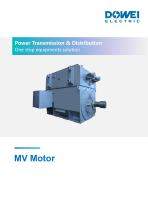
Dowei Electric MV Motor TEFC
3 Pages
Related Searches
- Electromotor
- AC electromotor
- Induction motor
- Motor for industrial applications
- 3-phase motor
- IP55 motor
- Ultra high-efficiency motor
- Pump motor
- Induction motor
- Permanent magnet motor
- Medical equipment motor
- Robotic motor
- Variable frequency drive
- IC411 motor
- High-power motor
- Conveyor motor
- Air-cooled motor
- Cast iron motor
- High-voltage motor
- IP66 motor
*Prices are pre-tax. They exclude delivery charges and customs duties and do not include additional charges for installation or activation options. Prices are indicative only and may vary by country, with changes to the cost of raw materials and exchange rates.
About DirectIndustry
DirectIndustry is a marketplace that offers B2B players a complete experience, from product sourcing to purchase. DirectIndustry is an entity of VirtualExpo Group.
Are you a buyer?
Are you a supplier?