


- Machine-tools
- Machine Tool Accessory
- Tool turret
- Fette Compacting GmbH
Tool turret Pmax®

Add to favorites
Compare this product
Description
At its British site in Macclesfield, AstraZeneca produces three variants of one of it‘s leading breast cancer tablets. The company has increased its production volume on account of the increased demand worldwide. But the existing machine setup made it impossible to achieve the optimal output volume. Fette Compacting provided support in finding a solution and even succeeded in exceeding the set goals.
The production facility in Macclesfield near Manchester has already been using tablet presses from Fette Compacting for more than 20 years. Due to the complex interactions of the processes, new production conditions pose a challenge even for experienced operators. The aim was to increase the production quantities. The granulation and tableting cycle times were not coordinated anymore, as there was a bottleneck in tableting. In the case of breast cancer tablets, there was always a jam in the granulation process and the IBC granulation containers were not emptied quickly enough.
the ideal combination
“A particularly efficient and elegant solution for increasing output entails the use of a Pmax® turret in combination with FS12® punches and segment technology from Fette Compacting,” adds Global Account Manager Martin Davies, who was responsible for on-site consulting by Fette Compacting. Segments replace traditional dies and feature tablet profiles which are integrated directly in the segments. This enables the integration of significantly more tableting stations even if the tablet size remains unchanged. In combination with an FS12® punch, this was 66 instead of 36 stations at AstraZeneca.
Catalogs
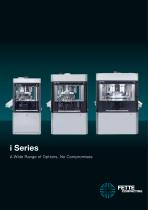
i Series
15 Pages


Related Searches
*Prices are pre-tax. They exclude delivery charges and customs duties and do not include additional charges for installation or activation options. Prices are indicative only and may vary by country, with changes to the cost of raw materials and exchange rates.
About DirectIndustry
DirectIndustry is a marketplace that offers B2B players a complete experience, from product sourcing to purchase. DirectIndustry is an entity of VirtualExpo Group.
Are you a buyer?
Are you a supplier?