


- Machine-tools
- Machine Tool Accessory
- Electric rotary indexing table
- Hansheng Automation (Dongguan) Co., Ltd.
Electric rotary indexing table HRTK-200 Serieshorizontalworm gearCNC


Add to favorites
Compare this product
Characteristics
- Operation
- electric
- Configuration
- horizontal
- Other characteristics
- worm gear, CNC, servo-driven, drive
- Weight
14.6 kg
(32.19 lb)
Description
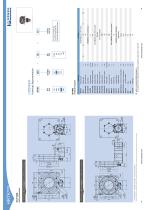
Bearing structure: Cross roller bearing
Reduction ratio: 30/40/50/70/100
Positioning accuracy: ≤ 3 arc min
application
180 degree rotating welding platform
Rotating welding platform
Mobile rotary welding platform soft platform
Welding assisted rotating platform
What is the working principle of rotary table?
Usually a rotary table uses a control knob to turn a worm gear. Underneath the table's surface, the worm gear is clearly visible interacting with the threads of a mating spur gear. The worm gear causes the table to rotate just very slightly.
A rotary table operates under rather simple working principles. A rotary table is a mechanical tool allowing exact rotation of a workpiece around a fixed axis. Machining operations include milling, drilling, or engraving routinely call for it. Here's how it operates:
1. Mechanism of Driving:
Usually running an electric motor, a hand crank, or a stepper motor (in CNC systems), a rotary table turns the table.
CNC (Computer Numerical Control) machines drive their motor under computer control, enabling quite accurate rotations for milling processes.
2. Rotation of tables:
Usually level and circular, the workpiece is laid on the table.
Through the table revolving around a central axis, the workpiece can be positioned at numerous angles relative to the machine tool.
The rotation is normally done either continuously (for CNC-controlled rotary tables) or in increments (for hand rotary tables) depending on the machining needs.
3. Indexing and Aligning Positioning:
Many rotary tables have an indexing mechanism allowing the table to spin in exact increments-that is, 90°, 15°, etc.?
VIDEO
Catalogs
Exhibitions
Meet this supplier at the following exhibition(s):

Other Hansheng Automation (Dongguan) Co., Ltd. products
Steel Housing Type HRTK Series


Related Searches
- Turntable
- Electric turntable
- Horizontal turntable
- Motor-driven turntable
- Vertical turntable
- Machine tool turntable
- Intermittent index unit
- Compact turntable
- Electric rotary indexing table
- CNC rotary table
- High-precision turntable
- Machining rotary table
- Direct-drive rotary table
- Horizontal rotary indexing table
- Motor-driven intermittent index unit
- Machine tool rotary indexing table
- Tilting turntable
- Vertical rotary indexing table
- Automatic turntable
- Servo-driven rotary table
*Prices are pre-tax. They exclude delivery charges and customs duties and do not include additional charges for installation or activation options. Prices are indicative only and may vary by country, with changes to the cost of raw materials and exchange rates.