|
|
|
|
|
|
3-dimensional fibreglass reinforcements, Nida-Fusion STO complexes are composed of a sheet of closed-cells foam covered with a reinforcing fibre layer on each side. These three elements are linked together by fiberglass bridging strands, which go through them obliquely, forming triangulations Truss Network.
For a very competitive price, Nida-Fusion STO complexes allow you to build sandwich constructions offering :
Very good flexural strength,
Excellent fatigue and delaminating resistance,
Good high temperature and fire resistance,
Shaped structures with thickness variations,
Excellent thermal insulation
Nida-Fusion STO is patented and is offered in 2 variations :
Nida-Fusion STO complexes made of rigid foam and used for the production of planar structures without thickness variation,
Nida-Fusion STF complexes made of flexible foam and used for shaped structures with thickness variation..
Nida-Fusion STO complexes can be tailored exactly to your needs (Foam, choice and weight of reinforcements, orientation and spacing of the triangulations), and are made to order.
|
|
PAMG-XR1 5052 aerospace grade aluminum honeycomb is a lightweight core material which offers superior strength and corrosion resistance over commercial grade aluminum honeycomb. PAMG-XR1 5052 honeycomb is made from 5052 aluminum alloy foil and meets all the requirements of MIL-C-7438.
Features:
- Elevated use temperatures
- High thermal conductivity
- Flame resistant
- Excellent moisture and corrosion resistance
- Fungi resistant
- Low weight/High Strength
|
|
PCGA-XR1 3003 commercial grade aluminum honeycomb is a lightweight core material offering excellent strength and corrosion resistance for industrial applications at low cost. PCGA-XR1 3003 honeycomb is made from 3003 aluminum alloy foil.
Features:
- Use temperatures up to 350°F
- High thermal conductivity
- Flame resistant
- Excellent moisture and corrosion resistance
- Fungi resistant
- Low weight/High Strength
|
|
|
ACG - Aluminum Commercial Grade,Flex-Core Formable Aluminum,CR III Microcell Corrosion Resistant Aluminum,CR III 5052 & 5056 Corrosion Resistant Specification Grade Aluminum
|
|
|
L-701 is a 250°F (121°C) curing, high peel strength, flame retardant, epoxy prepreg available on aramid fabrics such as 285 style or other styles as requested. L-701 is intended to be used as a single ply or multiple ply skin for aramid/phenolic honeycomb, aluminum honeycomb or PVC foam core sandwich panels.
|
|
PK2 Kevlar® N636 para-aramid fiber honeycomb is an extremely lightweight, high strength, non-metallic honeycomb manufactured with para-aramid fiber paper (DuPont Kevlar® N636 or equivalent) impregnated with a heat resistant phenolic resin. This core material exhibits improved performance characteristics over Nomex® and Korex® in the areas of weight, strength, stiffness and fatigue.
Features:
- Up to 40% higher properties than comparable density Nomex® honeycomb
- Extremely high strength to weight ratio
- Excellent thermal and moisture stability
- Improved shear strength and modulus
- Conforms to stringent smoke, toxicity and flammability standards
- High toughness
|
|
A core material produced from certified kiln-dried balsa wood in the 'end-grain' configuration. The properties of balsa make it ideal as a core for sandwich construction. It has extremely high strength and stiffness to weight ratios, and achieves an excellent bond with all types of resins and adhesives. It is compatible with a variety of manufacturing processes and is resistant to temperature changes, or exposure to fire, or chemicals such as styrene. It is an ideal core material for an extensive range of applications. All while being a renewable resource.
- extremely high strength and stiffness to weight ratios
- excellent fire performance
- ecological product
- wide operating temperature range (-212°C to +163°C, -414°F to +325°F)
- excellent fatigue resistance
- good sound and thermal insulation
- high impact strength
- good moisture resistance
|
|
|
|
|
|
WT93 SPRINT®
- Award winning SPRINT® matrix
- Long outlife at room temperature
- Zero volatile/solvent content
- Improved health and safety: Diuron-Free
- Available with a range of reinforcements
- Suitable for a range of pressures
- Controllable in thick sections
- Low exothermic properties
- Recommended cure between 85ºC and 120ºC
- Excellent laminate quality, low bleed
WT93 is part of the WE and WT range of prepreg, SPRINT®, and AIRSTREAM™ products. This unique product range provides technically and commercially competitive engineering materials, ideal for use either solely, or in conjunction with other products from within the product range along with other Gurit products.
WT93 is a hot melt, Diuron free epoxy SPRINT® ideally suited to the manufacture of thick sections. It can be cured at temperatures as low as 85°C, but can also be used for the rapid manufacture of components through its 45-minute cure at 120°C. All of this can be achieved together with an out-life of 75 days at 21°C.
WT93 is designed for vacuum bag processing and offers excellent mechanical performance on glass fibre reinforcements. Currently WT93 is manufactured into a SPRINT® structure with E-glass fibres, which are manufactured into biax or triax materials, these are produced in large volumes in order to make it a cost-effective composite building block for a range of applications.
|
|
|
L-901 is a 250°F (121°C) curing, high peel strength, flame retardant, epoxy prepreg available on a broad range of graphite fabrics or hybrid fabrics. L-901 is intended to be used as a single ply or multiple ply skin for aramid/phenolic honeycomb, fiberglass honeycomb or PVC foam core sandwich panels.
|
|
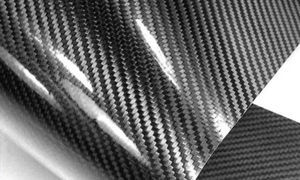
SGL Group operates the most up-to-date facilities for the production of pre-impregnated materials. Our unidirectional SIGRAFIL® prepregs are based on carbon fibers, and our SIGRATEX® fabric prepregs are made from carbon fiber fabrics.
By acquiring epo gmbh and the prepregs brand PREDO®, we have expanded our product portfolio as well as our core competency in the field of pre-impregnated materials.
* SIGRATEX® fabric prepregs
* SIGRAFIL® unidirectional prepregs
* PREDO® prepregs (For further information on the product, please refer to related subjects)
The fiber type is the main factor determining the strength, Young's modulus and other important properties of fiber composite products. The reinforcement fibers are precisely aligned and economically combined with the resin matrix.
|
|
Nelcote Advanced Composite Prepregs
> Global manufacturing and supply chain management experience - Park's 50+ years in Advanced Materials
> Structural design databases, including FAA accepted AGATE design allowables for key composite materials
> Nelcote composite materials are available in a variety of reinforcements and product forms including broadgoods, unidirectional tapes, biased tapes and molding compounds
> A broad range of resin chemistries are available including epoxy, polyester and phenolic resins
> Customer focused company with a history of proven successes with large and small customers
> Quality Management System Based on ISO 9002 and AS 9000 standards and procedures
> Extensive technical, research and development resources
|
|
|
|
|
|
PHG840(M850-37) - Prepreg materials for railway parts
Components for rail interiors include items like ceilings, floorings, bulkheads, vestibules, fire barriers, interior wall panels, window surrounds, doors, staircases, and luggage bins or racks.
Phenolics are progressively finding their way into railway interior applications to meet increasing and ever more stringent fire, smoke, and toxic fume requirements that most nations apply to passenger railway vehicles operating within their borders.
For further weight reduction, traditional monolithic laminates are replaced more and more with lightweight sandwich constructions with prepreg and honeycomb or foam core.
-Gurit PHG840 rail interior prepregs are a perfect choice to meet today’s railway cost and performance targets:
- Fulfilment of Italian, Spanish, British, French and German rail fire regulation.
- Flexible, autoclave-free processing.
- Fast curing-cycle.
- Very good surface finish.
- White colour after cure for superior cosmetics.
|
|
|
L-925 is a 275°F (135°C) curing phenolic prepreg with excellent fire smoke and toxicity properties. L-925 is available on 3K70P style graphite fabric or other styles of fabric as requested. L-925 is intended to be used as a single ply or multiple ply skin for aramid/phenolic honeycomb or aluminum honeycomb sandwich panels.
|
|
Phenolic / Carbon Ablative Prepreg
Carbon-loaded resin system. Combines high-strength and ablative properties
for demanding applications. Low thermal expansion. Also available in a low
density version
Applications: Ablative rocket nozzles, Combustion chambers, Heat shields, Rocket
motor throat sections
|
|
A core material produced from certified kiln-dried balsa wood in the 'end-grain' configuration. The properties of balsa make it ideal as a core for sandwich construction. It has extremely high strength and stiffness to weight ratios, and achieves an excellent bond with all types of resins and adhesives. It is compatible with a variety of manufacturing processes and is resistant to temperature changes, or exposure to fire, or chemicals such as styrene. It is an ideal core material for an extensive range of applications. All while being a renewable resource.
- extremely high strength and stiffness to weight ratios
- excellent fire performance
- ecological product
- wide operating temperature range (-212°C to +163°C, -414°F to +325°F)
- excellent fatigue resistance
- good sound and thermal insulation
- high impact strength
- good moisture resistance
|
|
|
|
|
|
End Grain Balsa, a highly processed ultra light wood product, imparts impressive strength and stiffness to the sandwich panel. The end grain configuration of balsa provides high resistance to crushing, and is very difficult to tear apart. End grain balsa cored panels also have the ability to handle excessive dynamic loads with high resistance to fatigue. Until recently, end grain balsa was excluded from some weight sensitive applications, as there were lower density foam cores available. Now, through controlled growing and careful selection, BalsaLite balsa wood is competitive in weight, as well as offering superior performance in stiffness and strength, particularly where local crushing or bruising is a concern.
Nida-Core is a proud BalsaLite balsa wood supplier. BalsaLite is select quality, kiln-dried, end-grain balsa wood suitable as a structural core material in composite sandwich construction. BalsaLite balsa wood is a naturally renewable resource. The balsa plant (Ochroma lagopus) grows from seedling to mature balsa tree in 4-6 years and reaches heights up to 25 m (90 ft) before dying in 8-10 years.
|
|
|
|
|
|
SparPreg
- UD prepreg ideal for use in thick sections
- Very low void content laminate achievable without debulking/dry fabric
- Increased productivity, reduced weight & cost for manufacturers
- Excellent processing properties during lamination
- Fully compatible with current SPRINT®/prepreg products
- Excellent mechanical properties
- Recommended cure between 85ºC and 120ºC
- Out-of-autoclave curing
SparPreg® is an innovative new UD prepreg to compliment the current WE and WT range of prepreg, SPRINT®, and AIRSTREAM™ products. This unique product range provides technically and commercially competitive engineering materials, ideal for use either solely, or in conjunction with other Gurit products from within the range.
SparPreg® is ideal for use in thick UD sections, such as wind turbine blade spars and roots. The material can produce laminates of exceptional quality with low void content, without the need for debulking or additional dry fabric reinforcement to aid air removal. This allows the blade manufacturer to increase productivity, and reduce blade weight and cost.
SparPreg® is a high flow, Diuron-free epoxy prepreg. It can be cured at temperatures as low as 85°C, but can also be used for the rapid manufacture of components through its 45-minute cure at 120°C.
SparPreg® has been specially formulated to achieve the outstanding in-cure and mechanical performance of the WE91 prepreg systems. It is designed for vacuum bag processing and can be used with glass and carbon fibre unidirectional reinforcements. The material can be manufactured in large volumes in order to make it a cost-effective composite building block for a range of applications.
|
|
|
|
|
|
SE 70 - Low Temperature Cure High Toughness Epoxy Prepreg System
- Low temperature 70°C curing
- Faster cycle times at elevated temperature
- Excellent balance of mechanical properties and toughness
- Long outlife - up to 4 weeks @ 18-22°C
- Range of compatible adhesive films and ancillary products
- Excellent surface finish
- Good Tg
- Suitable for vacuum bag, press or autoclave consolidation
SP’s SE 70 is a hot melt, low temperature cure, epoxy prepreg system. It has been developed for use in the construction of large components using low energy cure cycles. Excellent properties can be achieved with a processing temperature of just 70°C. At this cure temperature the system exhibits very good mechanical properties and excellent toughness.
Cure temperature for a 16 hours cure cycle is 70°C - this temperature allows less expensive tooling and ovens to be used, with lower thermal movement and distortion. Faster cures are available from higher cure temperatures. However, thicker sections (>10mm) will require the insertion of a suitable dwell into the cure cycle. Up to 20mm thick laminates may be moulded at 70°C with a peak exotherm only slightly above the cure temperature.
|
|
Isovolta AG provides different Epoxy Prepreg systems for special purposes:
Some examples for our Epoxy Prepreg Systems are:
Isopreg KB
Isopreg HT
|
|
|
|
|
|
Prepregs – "PRE-imPREGnated sheet materials" are fibrous materials impregnated with reactive resin materials. Prepregs are the ideal starting material for lightweight yet high-strength constructional parts thanks to the diverse ways of processing these further.
Characteristically, the prepreg resins are in the still very reactive B stage, are of medium to high viscosity and can thus be processed without any problems by supplying energy and moulding to shape at the same time. The low-molecular and still fusible resins are transformed here to a high-molecular non-fusible C state. The KREMPEL prepreg systems are based on multifunctional, specially modified epoxy resins and a curing which although latent at room temperature, is a highly reactive system at higher temperatures. Structural components having very good mechanical properties can be fabricated with glass, carbon and aramide fibres.
This is a controlled process and we can adjust the resin system exactly to the conditions required for further processing.
|
|
|
|
|
|
PB1000 - Modified Benzoxazine Resin
-Next Generation Prepreg for Aircraft Interiors
- Fibre reinforced thermosetting preimpregnated material for aircraft interior parts
- No free phenol and formaldehyde, fulfils AP2091
- Non-volatile curing, 140°C / 45min, 160°C / 15min
- Outstanding surface quality
- Excellent FST and Heat Release behaviour, fulfils ABD0031
- Improved mechanical properties
- Long shelf and shop life
Gurit is proud to present its next generation of aircraft interior prepregs based on PB1000. PB1000 is a modified benzoxazine resin that is without free formaldehyde and phenol and satisfies the most recent environmental standards like AIRBUS AP2091. It features a non-volatile, rapid cure, generating a perfect void and porous free surface, through which time and cost consuming rework, is eliminated.
Gurit’s novel PB1000 fully complies with demanding international JAR/FAR fire protection regulations regarding flammability, smoke, toxicity (FST) and heat release. Due to its excellent mechanical performance, PB1000 is perfectly suited to fulfil present and forthcoming stress criteria for interior design.
Meeting increasing demands on cost efficiency in aircraft interior manufacturing, PB1000 is also designed for commonly used fast hot-in / hot-out curing processes. This unique material performance combined with a competitive cost price level makes PB1000 an advantageous choice for aircraft interior applications and is clearly capable to replace phenolic systems.
|
|
|
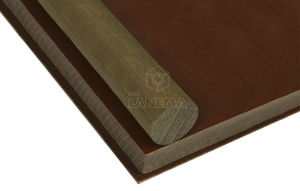
ISOCARBON is a rigid carbon reinforced epoxy laminate which covers a broad spectrum of applications with the resin systems developed by ISOVOLTA AG. ISOCARBON with the high temperature resisting epoxy resin EPOLACK 1069 allows long term applications up to 200°C.
|
|
Texipreg® includes prepregs from fabrics, multiaxial and unidirectional tapes by using resin systems in-house designed and manufactured, based on epoxy, phenolic and thermoplastic matrix.
Texindustria® and Saatilar® products can be impregnated.
|
|
Nelcote Advanced Composite Prepregs
> Global manufacturing and supply chain management experience - Park's 50 years in Advanced Materials
> Structural design databases, including FAA accepted AGATE design allowables for key composite materials
> Nelcote composite materials are available in a variety of reinforcements and product forms including broadgoods, unidirectional tapes, biased tapes and molding compounds
> A broad range of resin chemistries are available including epoxy, polyester and phenolic resins
> Customer focused company with a history of proven successes with large and small customers
> Quality Management System Based on ISO 9002 and AS 9000 standards and procedures
> Extensive technical, research and development resources
|
|
A thermoplastic foam that combines outstanding fire resistance with low smoke and toxicity, along with excellent dielectric properties. It has a high strength to weight ratio, low moisture absorption, is thermoformable, and ductile. It is an exceptional core material for use in applications that demand structural fire resistance, are required to be transparent to radar, or operate in extreme hot or cold environments.
- fulfils most stringent fire requirements
- operating temperature from -194°C to +160°C (-317°F to 320 °F)
- remains ductile at cryogenic temperatures
- excellent dielectric properties (radar transparent)
- very low moisture absorption
- good fatigue resistance
- high impact resistance (non-brittle failure mode)
- thermoformable
- good sound and thermal insulation
|
|
|
|
|
|
ST 70FR - Fire Retardant Glass Structural SPRINT®
- Award winning SPRINT® matrix
- BS476 parts 6 & 7 - best possible “Class 0” Rating
- BS6853 Annex B2 - R = 0.90 - 1.20
- Low smoke toxicity
- Suitable for rail, marine and civil engineering structures
- Self extinguishing
- Halogen-free
- 70C Curable
- Suitable for Lloyds and MCA Compliant Structures
- Suitable for monolithic and sandwich structures
- Long outlife at room temperature
- Excellent laminate quality, from vacuum-only processing
- Fire retardant : meets FAR25.853 12 second & 60 second vertical burn
: meets MVSS 302
ST70FR is part of the range of SPRINT® products. This unique product range provides technically and commercially competitive engineering materials, ideal for use either solely, or in conjunction with other products from within the product range along with other SP products from Gurit.
ST70FR is a fire retardant hot melt, Diuron free epoxy SPRINT®. This is ideally suited to the manufacture of thick sections requiring fire protection. It can be cured at temperatures as low as 70°C, but can also be used for the rapid manufacture of components through its 25-minute cure at 120°C. All of this can be achieved together with an outlife of 28 days at 21°C.
ST70FR is designed for vacuum bag processing and offers excellent mechanical performance on glass fibre reinforcements. Currently ST70FR is manufactured into a Single Sided SPRINT® structure primarily with fibreglass reinforcements such as woven WRE581T, WRE850T fabrics and multiaxial XE905 and QE1174 stitched fabrics. Other styles will be available to order.
|
|
|
|
|
|
EP137
- Fiber reinforced thermosetting preimpregnated materials for aircraft parts(e.g.passenger floor).
- Woven fabric of E-glass filament yarn Style 0180, 48 g/m2, plain weave, preimpregnated with 40% epoxy resin EP137 (125°).
- Low-smoke, highly toughened and self-extinguishing epoxy resin system
- Very good FST behaviour
- Excellent adhesion to core materials
- Improved storage conditions at -5°C
EP137-03-40 consists of a E-glass fabric Style 0180, impregnated with the epoxy resin EP137. The highly-toughened resin matrix is a 125°C curing system with a high flameretardancy and low smoke behaviour at fire and provides excellent properties such as high interlaminar shear strength, adjustable tackiness and retarded flow during processing.
The prepreg is perfectly suitable to complement high performance light-weight composite structures meeting the highest requirements of structural interior applications as such as the passenger floor where it is used as a top layer to avoid electro-galvanic corrosion of carbon structure with aluminium and improve overall impact behaviour of the panels.
Both monolithic and sandwich structures can be easily manufactured with this prepreg. The curing can be performed by press, vacuum and autoclave moulding at a temperature range between 120°C and 155°C and a pressure of at least 0.07 MPa.
Such composite structures can be exposed easily to temperatures in the range of -55°C up to +90°C.
|
|
A unique closed cell, cross-linked polymer foam that combines high stiffness and strength to weight ratios with superior toughness. It is non-friable, contains no CFCs, has negligible water absorption, and provides an excellent resistance to chemicals. A fine cell structure offers an excellent bonding surface that is compatible with most resins and manufacturing processes. It is ideally suited as a core material for a wide variety of light-weight sandwich structures subjected to both static and dynamic loads in service.
- high strength and stiffness to weight ratios
- good impact strength (highest elongation in class)
- low resin absorption
- high fatigue resistance
- good fire performance (self-extinguishing)
- sound and thermal insulation
- non biodegradable
- good styrene resistance
|
|
|
|
|
|
Corecell™ is the leading structural foam core material, which has become widely accepted for the construction of large, high performance structures. It is the latest in foam core technology and although originally developed for the marine industry, it is now used in other applications such as wind turbines and sub sea vessels.
Corecell™ uses SAN polymer base, resulting in unique high tougness and impact resistance characteristics. The foam acts as a 'shock absorber' between the two skins - absorbing the impact without failing, distributing the stresses evenly within the core and, in the case of a boat, ensures it remains watertight even after high point impacts.
Corecell™ foams provide low weight, excellent stiffness, and structural integrity under dynamic loads. They have high shear elongation and retain their mechanical properties even in the higher ambient temperature range.
Corecell™ foams are compatible with polyester, vinylester, and epoxy resins. Corecell™ is type approved by the American Bureau of Shipping (ABS), Lloyds Register of Shipping, Det Norske Veritas (DNV) and Germanischer Lloyd (GL).
The Corecell™ product range provides increased levels of performance, strength, structural integrity and comfort, unmatched by any other core material. Suitable for a wide range of demanding structural applications and different composite manufacturing processes.
|
|
ArmaFORM is the solution capable of coping with all requirements in the composite market, the innovative foam core made of PET foam is lightweight, strong and resistant to both heat and chemicals. It can be covered with most laminates and foils.
- Low weight (Available densities: 100 kg/m3 and 150 kg/m3)
- Extreme mechanical resistance through high compression strength, high stability and high shear modulus
- High structural stability
- High temperature resistance: has an excellent processing temperature.
- Short-term maximum temperature up to 200°C.
- Thermoformable
- High resistance to chemicals
- Very good thermal insulation due to its excellent thermal conductivity properties
- Very low water absorption due to its inherant cell structure
- Good bonding behaviour with all laminates and foils
- Easy to use with all common procedures used in composite applications
- Low toxic smoke emission and no corrosive gas development in the event of a fire
- Gridscore version also possible
|
|
|
|