|
|
The new products are low-profile, RS-232C serial communication boards compliant with PCI Express. The board can expand asynchronous RS-232C serial communication ports on a PC with a PCI Express compliant slot. The board is available in three models different in the number of on-board RS-232C serial communication ports: 1-channel type "COM-1C-LPE", 2-channel type "COM-2C-LPE", and 4-channel type "COM-4C-LPE".
The three new models support high-speed communication at up to 921,600 bps. The bundled driver professional software can be used for Windows and Linux to recognize the on-board ports as OS's standard COM ports, allowing them to be set as COM1 to COM256. The board has high-capacity FIFO buffer memory: 128-byte transmit buffer and 128-byte receive buffer. The FIFO buffer memory can be adjusted in buffer size for starting data transmission/reception. You can optimize the buffer size for each application, for example by increasing the buffer size to reduce the CPU load or decreasing it to improve realtimeness.
|
|
This board is external equipment and an interface board of the PCI bus conformity which performs serial communication of RS-422A/485 conformity.
It has the serial port of RS-422A/485 conformity of two channels by one sheet.
By using atta"
Moreover, COM-2PD(PCI)H can be replaced within the system already built for the higher rank compatible product of our company COM-2PD(PCI).
|
|
This board is external equipment and an interface board of the PCI bus conformity which performs serial communication of RS-232C conformity.
It has the serial port of two channels by one sheet.
|
|
This board is external equipment and an interface board of the PCI bus conformity which performs serial communication of RS-232C conformity.
It has the serial port of four channels by one sheet.
|
|
This board is external equipment and an interface board of the PCI bus conformity which performs serial communication of RS-422A/485 conformity.
It has the serial port of RS-422A/485 conformity of four channels by one sheet.
"By using attached standard COM driver software [COM Setup Disk], it can access as a Windows or standard COM port for Linux.
"
|
|
These boards are PCI bus interface boards for performing RS-232C serial communications with external devices.
The COM-1(LPCI)H has one serial port per board.
The COM-2(LPCI)H has two serial ports per board.
The COM-4(LPCI)H has four serial ports per board.
Features
- Maximum communication speed = 921,600bps.
- The baud rate can be set independently for each channel, by professional software.
- Each channel is equipped with separate 128-byte FIFO buffers for transmit and receive.
- A maximum of 16 boards can be installed as configured in the range COM1 - COM256.
- Driver software is supplied to allow the serial ports to be used as standard Windows or Linux COM ports.
|
|
The new products are low-profile, RS-232C serial communication boards compliant with PCI Express. The board can expand asynchronous RS-232C serial communication ports on a PC with a PCI Express compliant slot. The board is available in three models different in the number of on-board RS-232C serial communication ports: 1-channel type "COM-1C-LPE", 2-channel type "COM-2C-LPE", and 4-channel type "COM-4C-LPE".
The three new models support high-speed communication at up to 921,600 bps. The bundled driver professional software can be used for Windows and Linux to recognize the on-board ports as OS's standard COM ports, allowing them to be set as COM1 to COM256. The board has high-capacity FIFO buffer memory: 128-byte transmit buffer and 128-byte receive buffer. The FIFO buffer memory can be adjusted in buffer size for starting data transmission/reception. You can optimize the buffer size for each application, for example by increasing the buffer size to reduce the CPU load or decreasing it to improve realtimeness.
|
|
Robust, reliable solutions for communicating with industrial devices
Industrial ethernet controllers for GPIB and serial instruments and distributed I/O devices
PC plug-in interfaces for Controller Area Network (CAN bus), DeviceNet, and FOUNDATION Fieldbus
For PC plug-in serial interfaces, see Instrument Control and Connectivity
Just as in lab and test environments, industrial applications require Professional pcs and reliable, robust, and easy-to-use hardware and professional software tools. These tools must communicate with devices such as process instrumentation, Suppliers of plcs, single-loop controllers, and I/O and manufacturer of data acquisition devices. National Instruments offers hardware and driver software products for communication with industrial devices using Ethernet, Controller Area Network (CAN), DeviceNet, and FOUNDATION Fieldbus.
|
|
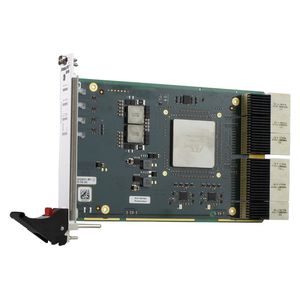
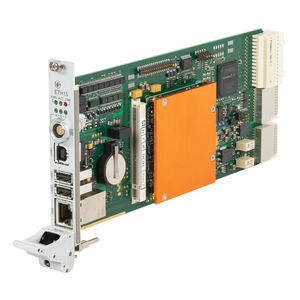
- 6U, 64-bit/66-MHz, system-slot or peripheral-slot or stand-alone
- PowerPC MPC8540 or MPC8560, 800 MHz and higher
- Cyclone FPGA for tailor-made computer I/O
- SODIMM socket up to 2 GB DDR SDRAM, optional with ECC
- Linux, VxWorks, QNX |
|
Products:
- CICP
- CSER8
- CLAN7
- Piggy-Backs
- LAN5 (service until 2014)
|
|
| Designed for requirements from 4 to 8 ports, these intelligent serial I/O adapters dramatically increase data throughput and enhance overall system response. |
|
| ... products without technical information |
| |
APPLICATION - P-C-LITEs are used as circuit board mounting sockets for status, logic and fault detection lights. Also used for back panel lighting, front panel function lights and mounting of photodetection type devices.
VERSATILITY - P-C-LITEs are relampable, no direct soldering to LED. PCH and SMD series mount horizontally, PCV series mounts vertically. The PCV can be installed on one side of the PCB while the LEDs are inserted from the reverse side of the board.
DESIGN - P-C-LITEs are manufactured from UL listed thermoplastics. Unique contact design permits automatic adjustment to the various sizes and shapes of LED leads. Also accommodate IR emitters, phototransistors and incandescent bi-pin lamps.
INSTALLATION - P-C-LITEs are wave soldered (PCH/PCV) or surface mounted (SMD) to PCB along with other components. Sockets are provided with polarity identification. Molded standoffs permit easy board cleaning. Lock-type security for component leads in high vibration and shock environments.
SPECIFICATIONS
MATERIAL: Housing - Thermoplastic, U.L. 94 V0 (black). Contacts - Phosphor bronze, 60/40 tin plated.
|
|
APPLICATION - P-C-LITEs are used as circuit board mounting sockets for status, logic and fault detection lights. Also used for back panel lighting, front panel function lights and mounting of photodetection type devices.
VERSATILITY - P-C-LITEs are relampable, no direct soldering to LED. PCH and SMD series mount horizontally, PCV series mounts vertically. The PCV can be installed on one side of the PCB while the LEDs are inserted from the reverse side of the board.
DESIGN - P-C-LITEs are manufactured from UL listed thermoplastics. Unique contact design permits automatic adjustment to the various sizes and shapes of LED leads. Also accommodate IR emitters, phototransistors and incandescent bi-pin lamps.
INSTALLATION - P-C-LITEs are wave soldered (PCH/PCV) or surface mounted (SMD) to PCB along with other components. Sockets are provided with polarity identification. Molded standoffs permit easy board cleaning. Lock-type security for component leads in high vibration and shock environments.
SPECIFICATIONS
MATERIAL: Housing - Thermoplastic, U.L. 94 V0 (black). Contacts - Phosphor bronze, 60/40 tin plated.
|
|
|
|