|
|
|
|
|
|
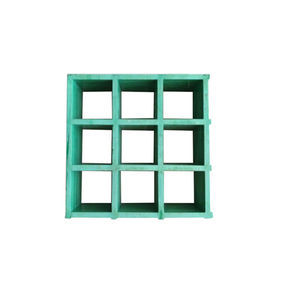
Exel Composites specializes in developing and designing customer-tailored products in close co-operation with our customers, optimizing best balance of strength, stiffness, weight and cost. Exel has also a wide range of standard profile shapes available. They are always produced against orders and typically the minimum production quantity is between 200 and 2000 meters, depending on the shape, size and the material chosen.
Exel designs and produces composites profiles from simple rods to the most challenging solutions, including custom fabrication and installation. In order to design the final product right, it is necessary to take into account the environment where the product will be used. E.g. the chemical durability of a product can be substantially improved by changing the matrix material. The choice of materials depends on factors such as loads, electrical properties or weather resistance, e.g. UV shielding. Composite profiles are electrically non-conducting and have good corrosion resistance. Also the strength-to-weight ratio is excellent compared with traditional material. The weight of a glass-fibre reinforced product is about one quarter of the weight of a comparable steel product.
The production methods used by Exel are pultrusion, pull-winding, co-winding, continous lamination and pre-preg moulding. In continuous processes impregnated reinforcement fibres are drawn through a heated nozzle serving as a mould. The product cures into its final shape and the resin hardens in the mould.
Exel quality and environment policy complies with the requirements of the standards ISO 9001:2000 and ISO 14001 (Bureau Veritas Certification).
|
|
Dynaform® Structural Shapes
General and Design Information
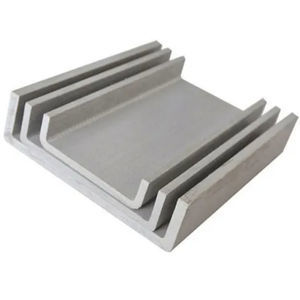
Dynaform structural shapes are used in a wide range of applications, providing a unique combination of corrosion resistance, high strength, dimensional stability and light weight, along with thermal and electric non-conductivity. Each shape is available in a number of sizes and resin systems to accomodate design and application requirements. All shapes have been tested for physical properties according to standardized ASTM procedures. For test results see the Typical Coupon Properties tables.
|
|
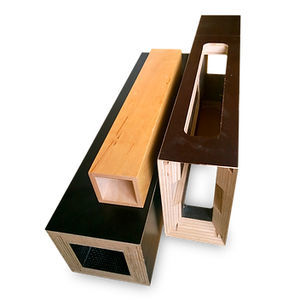
Semi-finished material (shanks, pipes, profiles, brush bodies) from own development.
Basic data for production
Are used the extruding and the injection moulding procedure. Preferential materials are classical polyolefins, PP, polystyrene derivatives, PVC and thermoplastic elastomers as well as natural fiber composite materials from the Hiendl NFC® material system.
|
|
Extruding profiles of h.hiendl GmbH & Co.KG
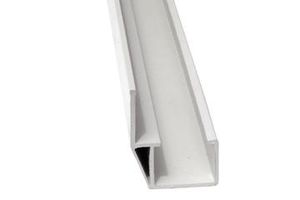
The h. hiendl GmbH & CO. Kg developed, produces and sells products of thermoplastic plastics and elastomers. These profiles as in the illustration are custom-made. Here the extruding and the injection moulding procedure are used. Preferential materials are classical polyolefins, PP, polystyrene derivatives, PVC and thermoplastic elastomers as well as natural fiber composite materials from the Hiendl NFC® material system.
|
|
|
The KROSGLASS S.A. Company manufactures polyester sections reinforced with glass roving by using continuous (pulltrusion) method. This method is usable for manufacture of sections with various shapes - round bars, flat bars, angle bars, tee bars, and wedges. Sections are manufactured by continuous impregnation of soft roving skeins with resin, then forming the shape, curing the resin and cutting the sections into lengths. The content of glass in the form of parallel roving skeins is high, typically reaching 65.5 - 75% (mass) depending upon the type of raw materials and process parameters. Therefore such sections feature with very high strength in longitudinal direction.
|
|
WACOSIT® profiles are realised by the "Pultrusion method". Reinforcing fibres are impregnated with synthetic resins and cured continuously in a heated mould.
Besides glass fibres, WACOSIT® profiles can be strengthened by carbon fibres or by aramide fibres. Variants of these are also available to best meet the differing requirements.
Thus for example, there are also the R, S and T types of glass fibres available. These are characterised by better mechanical properties over the more commonly used E type of glass fibre. Alongside rovings, there are also other fabric structures such as tapes and warp-knit complexes which are also used in engineering WACOSIT® profiles.
Tools are available for selection from more than 5000 pultruded WACOSIT® profiles, the exact dimensions for which can be taken from the applicable WACOSIT® profile list. We will of course customise a profile to your specifications.
|
|
Profiles
GEHR extrudes thermoplastic materials profiles according to your individual needs. Due to our in house toll shop we can offer short deliveries at reasonable prices.
Materials
# PVC - U
# PVC - C
# PE - HD
# PP
# PS / SB
# ABS
|
|
| ... products without technical information |
| |
Extrusion and knitting speed up to 20 m/min
Inside diameter of the radiator hose up to 120 mm
Every type of knitting LOCK STITCH, PLAIN STITCH
Automation: computer control for statistics and production records
|
|
PVC, PE, PP and wood panel extrusion line
PE, PP and wood panel plate extrusion line has compact structure, good plastification, high output, long life and other advantages. This line uses SJZ92 conical twin-screw extruder with DC motor, imported electronic components and PT100 platinum resistance, which provide wide adjusting range and precise temperature control.
The down stream equipment includesvacuum calibration and cooling unit,hauloff unit, cutting machine and stacker.The calibration unit is equipped with large forced cooling system so that it can provide perfect calibration effect.
The haul-off unit uses two lines of caterpillar.The lower one is fixed and the upper one can be adjusted according to the plate size.
The cutting machine is equipped with PLC control system which helps to set length and provide accurate automatic cutting. The stacker is covered with rubber grip blocks to prevent products from damage
|
|
|
|
|
|
Coating lines - LAMICOR, the extrusion coating process by Reifenhäuser
Extrusion coating by means of Reifenhäuser's LAMICOR process means:
Material webs such as paper, aluminium foil, plastic film, textiles, and nonwovens are coated with thermoplastic raw material and permanently bonded into a composite.
- The manufacturing of the plastic film (substrate) and the subsequent processing takes place in one work cycle.
- This process does not use any pollutant solvents and adhesives.
Areas of application
By combining different materials, product-specific properties that open up additional areas of application are achieved.
Drink cartons and packaging paper for food are classic examples for products manufactured by means of extrusion coating. Depending on the combination of source materials, a wide range of other products that were previously inconceivable have become commonplace: Lorry canvas covers, sails, or party tents made of material composites are good examples for the success of extrusion coating.
|
|
Compounding / Extrusion system to obtain in one step the extruded profile.
The main advantages are:
1) Energy savings
2) Less space needed
3) Simple logistic management
4) Substantial cost savings (investment, management …)
5) Formulations adjustable in-line
6) Maintain a proprietary in-house manufacturing process
7) Only one heat/shear history
ICMA is a specialist in offering turn – key solution for the entire process plant.
|
|
| ... products without technical information |
| |
... see all the products in the category
Extruders
|
|
|