|
|
|
|
|
|
Oxygen Sensors for liquid and gas phase measurements- series 611
Fast and precise oxygen measurements
The MecSens series 61 oxygen sensors are versatile and suitable for the most demanding of oxygen measurements under the harshest conditions. Sensors measure trace to saturation levels either in-line, off-line or at-line and are suitable for both dissolved and gaseous applications.
Beverage, power, water, pharmaceutical, semiconductor, biotechnology, and chemical customers will find the answer to their needs.
A breakthrough in oxygen measurements
From production to quality assurance, laboratory and maintenance, users will find appropriate applications for this unique hygienic sensor which provides fast precise and accurate measurements. Integrated in portable or in-line instrument, it has the additional benefit of very low maintenance and ownership costs. The customer can measure either dissolved or gaseous oxygen concentrations and the medium temperature. This smart sensor memories the calibration parameters simplifying the calibration procedure on-site.
|
|
|
The TS420 Oxygen Deficiency Detector continuously monitors for oxygen deficiency and provides an analog output. The TS420's design is based on electrochemical cell technology.
|
|
gas sensor
- Aperometric 3 electrode sensor element
- No carbon dioxide cross reference
- High reliability
description
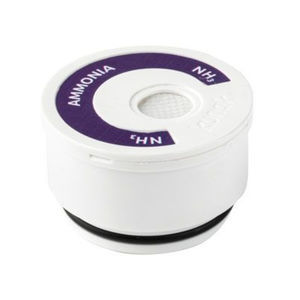
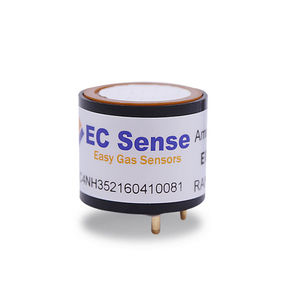
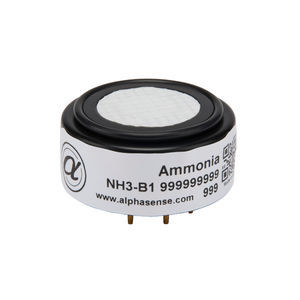
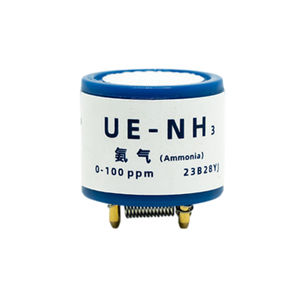
Sensor for measuring ammonia gas
|
|
|
|
|
|
Figaro Pre-calibrated CO2 sensor modules combine Figaro's CO2 sensor TGS4160/ 4161 with a microcomputer and Figaro's proprietary signal processing technique.
With simple user-defined settings, this module generates a control signal for ventilation and/or air conditioning systems. The result is economic, long-lived, and maintenance free air quality control. When compared with traditional CO2 sensor modules using infrared sensors, Figaro's CO2 module is much more cost effective.
CDM4160 - Pre-calibrated CO2 modules
Suitable for indoor ventilation control and CO2 monitoring in factories, agriculture, and automobiles where conditions are more severe than in residential applications. Based on the specific needs of each user, models are available in three sensitivity ranges: 400-4000ppm, 400-8000ppm, and 400-40000ppm.
CDM4161 - Pre-calibrated CO2 module
Suitable for indoor ventilation control in residences and high occupancy buildings. Models with detection ranges of 400-4000ppm or 400-8000ppm are available to meet the specific requirements of your application.
* pre-calibrated
* maintenance-free
* linear voltage output corresponding to CO2 concentration
* control signal
* malfunction signal
|
|
Alphasense Carbon Monoxide sensors operate using well-known fuel cell technology. The CO-BF contains a chemical filter to remove cross-interferants such as SOx, NOx and H2S. The Alphasense CO-B series offers our leak-free guarantee and good, reliable detection performance. The leakproof housing is moulded in colour coded plastic for ease of identification.
Our unique ATAV test and validation system enables us to perform customised testing to customer requirements, eg we can test 100% of all our CO-BF sensors for hydrogen response. A record of each sensor's performance is stored in our database, accessible via the sensor barcode. This can provide hard copy evidence if required and serve as a powerful diagnostic tool.
|
|
|
|
|
|
Figaro's carbon monoxide sensor TGS5042 is a battery operable electrochemical sensor which offers several advantages over traditional electrochemical sensors: its electrolyte is environmentally friendly, it poses no risk of electrolyte leakage, it does not consume active materials or its electrodes during operation, and it has lower sensitivity to interference gases. With long life, good long term stability, and high accuracy, this sensor is an ideal choice for CO detectors with digital display. OEM customers will find individual sensor data printed in bar code form on each sensor, allowing individual sensor tracking and enabling users to skip costly gas calibration. Utilizes a standard AA battery-sized package.
Features:
* Battery operable
* High repeatability/ selectivity to carbon monoxide
* Reduced influence by various interference gases
* Long life
* UL recognized component
* simple calibration
* no sensor aging necessary
* meets UL2034 and EN50291
* meets RoHS requirements
Applications:
* Residential and commercial CO detectors
* CO monitors for industrial applications
* Ventilation control for indoor parking garages and attic
* Recreational vehicle CO detectors
* Marine boat CO detectors
* Fire detection
|
|
Cross sensitivity to H2, > 4%
Sensitivity nA/ppm in 400ppm CO 55 to 85
Response time t90 (s) from zero to 800ppm CO < 45
Zero current ppm equivalent in zero air < ± 2
Resolution RMS noise (ppm equivalent) < 1
Range ppm CO limit of performance warranty 2,000
Linearity ppm error at full scale, linear at zero and 800ppm CO < ± 40
Overgas range maximum ppm for stable response to gas pulse 4,000
|
|
|
|
|
|
The Alphasense Chlorine Electrochemical range of sensors, are available in both the company's 'A' ,'B' and D series sizes, and are clearly yellow colour code. The CL2 sensors supplement the already established Toxic Gas Sensor ranges, which include Carbon Monoxide, Hydrogen Sulfide, Sulfur Dioxide, Nitric Oxide and Nitrogen Dioxode. The 'A' series is also available as an oxygen sensor.
The Alphasense CL2-A/B/D Sensors provide OEM's with an alternative for use in high volume applications. Strong signal levels combined with low zero current allows resolution to 50ppb and an operating range of 20ppm. The sensors are suitable for inclusion in fixed installation sensing heads and portable safety instruments.
These sensors show better transient response to humidity changes, compared to competitors’ equivalent sensors. As with all other Alphasense sensors, computer controlled stabilisation racks to continuously monitor every sensor during initial conditioning ensures that only sensors operating within specification are allowed to be tested with our ATAV (Alphasense Test and Validation) system. Performance of every sensor is traceable via bar coding.
|
|
General description:
The M 2103 C series Controlmatik ABW measuring probe for chlorine gas is designed to measure and indicate chlorine concentrations in the air.
The probe is mounted in an IP 65 housing and is connected via connector to the amplifying electronics, which is also mounted in the IP 65 housing.
Sensor is, with two-wire current loop, connected to the unit according to the enclosed scheme.
|
|
gas sensor
- Aperometric 3 electrode sensor element
- Low susceptibility to abrupt changes of humidity
- High reliability
description
Sensor for measuring chlorine gas
|
|
Alphasense Hydrogen Sulfide sensors operate using well-known fuel cell technology. The H2S-A series sensors are designed for continuous use between -30C and +50C, making H2S-A1 ideal for Oil and Gas/Petrochemical applications in adverse climatic conditions.
The H2S-A offers our leak free guarantee and good, reliable detection performance. The leakproof housing is moulded in colour coded plastic for ease of identification.
Our unique ATAV test and validation system enables us to perform customised testing to customer requirements. A record of each sensor's performance is stored in our database, accessible via the sensor barcode, available as hard copy evidence and as a powerful diagnostic tool.
|
|
gas sensor
- Aperometric 3 electrode sensor element
- Fast response
- High reliability
description
Sensor for measuring hydrogen sulphide gas
|
|
|
|
|
|
The Alphasense Electrochemical range of Nitric Oxide sensors are available in both the companies 'A' and 'B' series sizes and are colour coded in light blue moulded tops. The NO sensors supplement the already established Toxic Gas Sensor ranges that include Carbon Monixide, Hydrogen Sulfide, Sulfur Dioxide and Chlorine. The 'A' series is also available as an oxygen sensor.
The alphasense NO-A/B provides OEM's with a good, reliable sensor for use in a number of high volume applications. Strong signal levels combined with low zero current allows resolution to 200ppb (parts per billion) whilst giving linear outputs to as high as 250ppm (parts per million). The sensors are suitable for inclusion in fixed installation sensing heads, portable safety instruments and stack gas analysers.
The sensors incorporate innovative catalyst technology, which reduces the effects of a number of common cross interference gases whilst ensuring batch-to-batch consistency and stable output. These sensors provide a significant improvement in stability of response with respect transient relative humidity changes. These sensors allow OEM's to design instrumnts that provide trouble free monitoring of the reduced allowable maximum exposure limit of 1.0ppm for Nitric Oxide. Physical robustness allows the sensors to be used in the most demanding environments.
|
|
Alphasense Oxygen Sensors operate using well-known fuel cell technology. The O2-A3 (3-year warranty), O2-A2 (2-year warranty), O2-A1 (1-year warranty), O2-G2 (2-year warranty)and O2-G1 (1-year warranty),sensors are designed for the latest generation of portable gas detectors where high detection performance, total reliability, small size and long lifetime are the key criteria.
All Alphasense sensors pass through our unique ATAV system (Automatic Test and Validation), which provides 100% traceability for you and your customers. Our sensors can also be supplied with a customised test report to individual requirements. A record of each sensor's performance is stored in the Alphasense database, accessible via the sensor barcode. This can be made available as hard copy evidence and also provides a powerful diagnostic tool.
|
|
The remarkable features of this oxygen sensor are its extremely long service life and the low maintenance costs due to its long-term adjustment and cleaning intervals.
The adjustment can be done in air or in saturated water without any calibration tables. The replacement of the galvanic cell is simplified by the design of the sensor. The membrane is very durable and is almost unbreak-able (100 µm membrane thickness).
Newly developed sensor electronics enable the oxygen sensor to work without an additional storage battery. The sensor can be modified to customer's needs regarding measuring range and accuracy.
The response time is less than 2 minutes.
The sensor can be immersed directly in water courses or tanks and does not need regular maintenance. The sensor is also available in combination with a temperature sensor.
|
|
|
The GS-Yuasa Oxygen Sensor SK-25 is a unique galvanic cell type oxygen sensor. Its most notable features are long life expectency, excellent chemical durability, no position dependency, and it is not influenced by CO2. The SK-25 oxygen sensor is ideal to meet the ever-increasing demand for oxygen monitoring in various fields such as food, bio-technology, security system.
|
|
|
|
|
|
Japan Storage Battery has developed the galvanic cell type oxygen sensor based on its technologies in fuel cells and lead-acid batteries. While the conventional galvanic cell type oxygen sensor was affected by CO2 and its life was short, because an aqueous solution of KOH was used as the electrolyte, our oxygen sensor using a weak acid electrolyte is not affected by any acidic gas and its life is 10 to 20 times as that of the conventional sensor.
Therefore, our oxygen sensor will find new and wide range of applications.
Applications
Medical Use / Anesthesia, Respirator, Oxygen concentrator
Bio-Technology / Oxygen Incubator, Anaerobic Cultivator
Food / Refrigerator, Vegetable Factory
Home Security System / Air-Conditioning & Oxygen deficiency Alarm System, Fire Alarm System
Measuring on industry / Exhaust gas, Combusion devices
Features
Extremely long life (5 to 10 years)
No affection by carbon dioxide
High stable output voltage
No outside electric source for driving sensor
Operative in the normal temperature
No warming time
Economical
|
|
|
|
|
|
Alphasense Sulfur Dioxide SO2 B series sensors are supplied in leakproof housing with clearly colour coded red mouldings. They have an operating range suitable for personal safety monitoring applications. Additional sensors with significantly higher operating and overload ranges are available to satisfy the needs of the Stack Gas Analyser market. These provide linear outputs to 5000ppm (parts per million) with overgas capacity to 10,000ppm.
The Sulfur Dioxide sensors provide OEM's with a good, reliable sensor for use in a number of high volume applications. The sensors are designed for use in both fixed head and portable instrumentation.
As with all Alphasense sensors, the use of stabilisation racks to continuously monitor every sensor during initial conditioning ensures that only sensors operating within specification are passed to the Company's unique ATAV (Alphasense Test and Validation) system. The key operating characteristics for every sensor are recorded against the sensor serial number, which is bar coded onto the sensor. This data can be released at the time of despatch so that full traceability is maintained.
|
|
Electrochemical Sensors
Design does matter: a bigger sensor means bigger electrodes and more electrolyte, hence
faster response
higher accuracy
more stability
longer life
The smart DraegerSensor with embedded micro-chip and temperature element supports sensor recognition, numerous selftest functions, remote calibration and signal compensation over the entire temperature range of typically -40 to +65 ºC.
|
|
|
The GS Oxygen Sensor KE series (KE-25 and KE-50) is a unique galvanic cell type oxygen sensor which was developed in Japan in 1985. Its most notable features are long life expectency, excellent chemical durability, and it is not influenced by CO2. The KE series oxygen sensor is ideal to meet the ever-increasing demand for oxygen monitoring in various fields such as combustion gas monitoring, the biochemical field, medical applications, domestic combustion appliances, etc.
|
|
Alphasense Carbon Monoxide miniature sensors operate using well-known fuel cell technology. The Alphasense CO-D series offers our unique leak-free guarantee and superior detection performance all in a diameter of 14.5mm. Only its size is reduced, not its performance or guaranteed life. The leak proof housing is colour coded for ease of identification.
Our unique ATAV test and validation system enables us to perform customised testing to customer requirements. A record of each sensor's performance is stored in our database, accessible via the sensor barcode. This can provide hard copy evidence if required and serve as a powerful diagnostic tool.
|
|
Alphasense Hydrogen Sulfide Miniature sensors operate using well known fuel-cell technology. The Alphasense H2S-D series offers our unique leak-free guarantee and superior detection performance all in a diameter of 14.5mm. Only its size is reduced, not its performance or guaranteed life. The leakproof housing is colour coded for ease of identification.
As with all other Alphasense sensors, the use of stabilisation racks to continuously monitor every sensor during initial conditioning ensures that only sensors operating within specification are passed to the companies unique ATAV (Alphasense Test and Validation) system. This also enables us to perform customised testing to customer requirements. The key operating characteristics for every sensor are recorded against the sensor serial number, which is bar coded onto the sensor. This data can be released at the time of despatch so that full traceability is maintained.
|
|
|
|
|
|
The Alphasense Nitrogen Dioxide range of sensors are available in both the Company's A and B series sizes and are clearly colour coded in blue moulded bodies. They provide OEM's with an alternative for use in a number of high volume applications. The sensors incorporate innovative catalyst technology, which reduces the effects of a number of common cross interference gases whilst ensuring batch to batch consistency and stable output. These sensors provide a significant improvement in stability of response with respect to transient relative humidity changes, compared to other available products. Physical robustness allows the sensors to be used in the most demanding environments.
As with all other Alphasense sensors, the use of stabilisation racks to continuously monitor every sensor during initial conditioning ensures that only sensors operating within specification are passed to the companies unique ATAV (Alphasense Test and Validation) system. The key operating characteristics or every sensor are recorded against the sensor serial number, which is bar coded onto the sensor. This data can be released at the time of despatch so that full traceability is maintained.
|
|
|
|
|
|
Alphasense Sulfur Dioxide SO2 A series sensors are supplied in leakproof housing with clearly colour coded red mouldings. They have an operating range suitable for personal safety monitoring applications. Additional sensors with significantly higher operating and overload ranges are available to satisfy the needs of the Stack Gas Analyser market. These provide linear outputs to 5000ppm (parts per million) with overgas capacity to 10,000ppm.
The Sulfur Dioxide sensors provide OEM's with a good, reliable sensor for use in a number of high volume applications. The sensors are designed for use in both fixed head and portable instrumentation.
As with all Alphasense sensors, the use of stabilisation racks to continuously monitor every sensor during initial conditioning ensures that only sensors operating within specification are passed to the Company's unique ATAV (Alphasense Test and Validation) system. The key operating characteristics for every sensor are recorded against the sensor serial number, which is bar coded onto the sensor. This data can be released at the time of despatch so that full traceability is maintained.
|
|
Electrochemical Sensors
Design does matter: a bigger sensor means bigger electrodes and more electrolyte, hence
faster response
higher accuracy
more stability
longer life
The smart DraegerSensor with embedded micro-chip and temperature element supports sensor recognition, numerous selftest functions, remote calibration and signal compensation over the entire temperature range of typically -40 to +65 ºC.
|
|
| ... products without technical information |
| |
|
|