


{{product.productLabel}} {{product.model}}
{{#if product.featureValues}}{{product.productPrice.formattedPrice}} {{#if product.productPrice.priceType === "PRICE_RANGE" }} - {{product.productPrice.formattedPriceMax}} {{/if}}
{{#each product.specData:i}}
{{name}}: {{value}}
{{#i!=(product.specData.length-1)}}
{{/end}}
{{/each}}
{{{product.idpText}}}
{{product.productLabel}} {{product.model}}
{{#if product.featureValues}}{{product.productPrice.formattedPrice}} {{#if product.productPrice.priceType === "PRICE_RANGE" }} - {{product.productPrice.formattedPriceMax}} {{/if}}
{{#each product.specData:i}}
{{name}}: {{value}}
{{#i!=(product.specData.length-1)}}
{{/end}}
{{/each}}
{{{product.idpText}}}


... Permanent magnets with and without enclosure encapsulation Extensive range of magnet materials Different shapes for optimum use Axial and radial magnetisation characteristics High chemical resistance ...


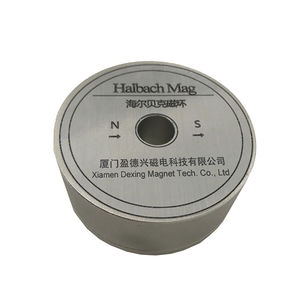

... combines the radial and parallel arrangement of the magnet. Suppose the end effect is neglected and the permeability of the surrounding magnetized material is considered infinite. In that case, the permanent magnet structure ...
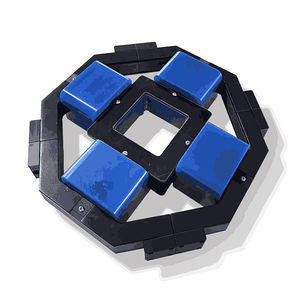
... br>
Product Structure
The core and yoke are typically made of silicon steel laminations, manganese-zinc
ferrite, or other soft magnetic alloys. Designed to generate AC magnetic fields with frequencies up to the kHz ...
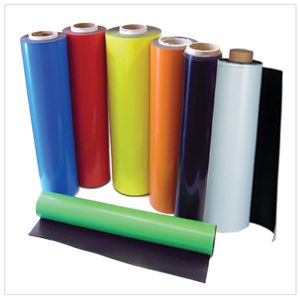
... Flexible Rubber Magnet is a type of ferrite magnet material series. They are composed of bonded ferrite magnet powder and synthetic rubber, and are made through extrusion ...


... Our permanent magnetic holding strips can be ordered in lengths from 200 - 3,000 mm. Our standard width is 82 mm and the height is 41 mm. You need other dimensions? Please contact us, we will be happy to send you an individual offer. ...
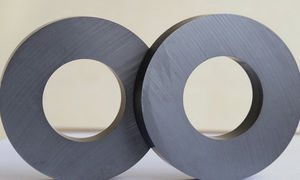

... A Ferrite magnet is a sintered permanent magnet material, which is composed of barium and strontium ferrite. This magnetic material not only has strong anti-demagnetization performance ...
Chunan Qiandaohu Pengsheng Technology Development Co.,Ltd


... Ceramic magnets, also known as ferrite magnets, are ideal for a wide variety of applications ranging from industrial and manufacturing to craft and hobby uses. They’re ideal for heavy-weight applications ...


... All purpose ceramic based magnets – Popular material for composite magnetic systems, edges can splinter – Low weight, easy in handling, ceramic – Insensitive on environmental impact – Observe Temperaturee coefficient, lose holding ...
Maurer Magnetic
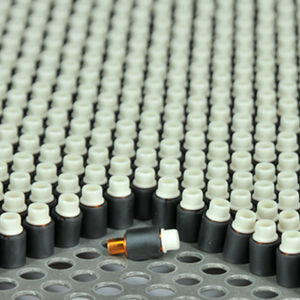

... Injection molded magnets are essentially fully dense magnetic powders blended with a variety of polymer base materials. Depending on the combination of magnetic material and polymer selected, a wide range of final material properties ...
Arnold Magnetic Technologies
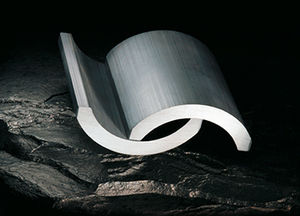

... anisotropic hard ferrite magnets are higher than that of the isotropic hard ferrite magents by up to 300%. Depending on the base materials, there are Barium Ferrite and Strontium Ferrite ...
United magnetics co., ltd


... . In addition to the proven materials ferrite and AlNiCo, modern magnets are also made from rare earth materials such as neodymium-iron-boron and samarium-cobalt. Even small magnets made from these materials ...
ThyssenKrupp Magnettechnik


... If you want to buy ferrite discs with very competitive prices, feel free to call IMA. Learn about our prices and delivery times! Disc-shaped ferrite magnets are made of an alloy of strontium oxide ...
IMA


... Magengine Anisotropic sintered ferrite with arc shape Specifications: 1. Material: Ferrite, HF26/16 Br: 380-385mT, Hcb: 191-210KA/m, iHC: 199-220KA/m, (BH) Max: 27-29 Kj/m3 2. Size: R47.5xr38.5x85x72mm 3. Coating: ...
Magengine GmbH
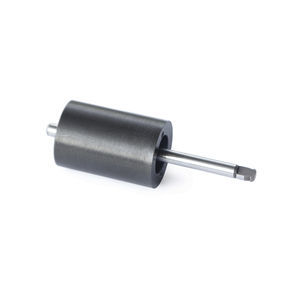

... or polymer bonded magnets covering a range of materials such as Ferrite, Nd-Fe-B, Sm-Co or Sm-Fe-N. Depending on requirements, a variety of magnetisation patterns covering bi- or multipolar topologies is feasible. Sensor ...
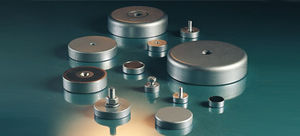

... Made with Ferrite Magnets or Neodymium inserted in appropriately sized ferromagnetic plates, so as to optimize magnetic circuitry. The magnets are embedded in epoxy resin. Any design can be created in ...
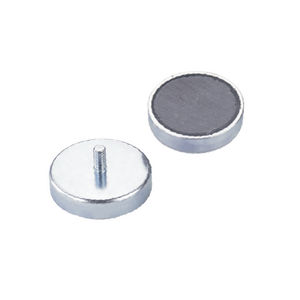

... with maximized magnetic force. 2. Magnets can be NdFeB, SmCo, ALNICO, Ferrite, etc. 3. Coating option:Zn, Ni, Cr, Painting, Rubber cover, etc. 4. Custom made is available for other special requests. Application: Pot Magnet ...
NINGBO SOUWEST MAGNETECH DEVELOPMENT CO.,LTD
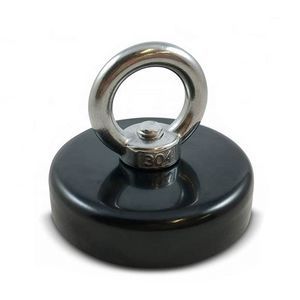

... features of our neodymium pot magnets. They are suitable as cup magnets, magnet base, outdoor attachments and for many other applications. We offer different types – from countersunk pot magnet ...
U-Polemag Industry Ltd
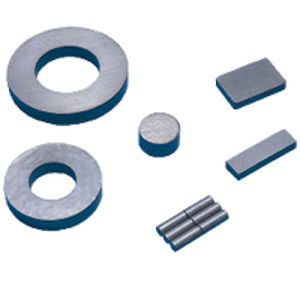

... Isotropic: Standard type for general applications. Anisotropic: Ferrite magnets having significantly higher magnetic property than isotropic magnets. In addition to dry types, a wet anisotropic magnet ...
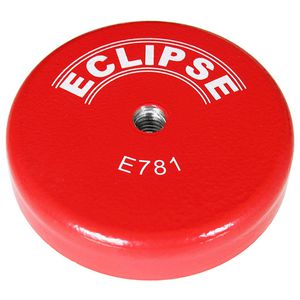

... stud pot magnet is also known as a female threaded stud pot magnet. They consist of a ferromagnetic mild steel cup containing a magnet (usually a disc magnet) with a ferromagnetic mild ...
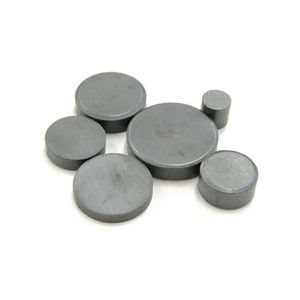

... Ferrite magnets, also called ceramic, are made through a sintering process. They are composed of a mixture based on iron oxide plus strontium or barium and a ceramic binder, crushed and pressed, with a very fine granulometry. If ...
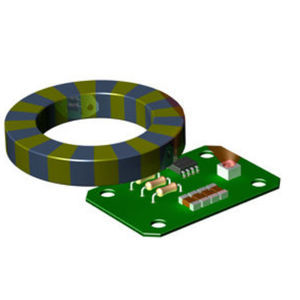

... Our multipole ring magnet products are custom designed for your application requirements. Our teams of sales and engineering professionals are able to custom create a specific multipole ring magnet to meet your most ...
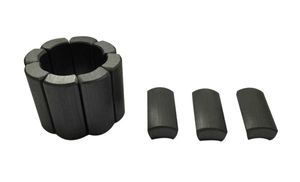

... Characteristics: Advantages of Ferrite magnet for Starter Motor ...
Anhui Tianyuan Technology Co.,Ltd
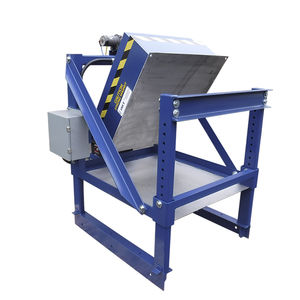

... need to install a suspended magnet, IMT’s patented Actuated Maintenance System is the perfect solution. The AMS installs over the conveyor belt and allows operators to effortlessly remove captured tramp metal from the magnet’s ...
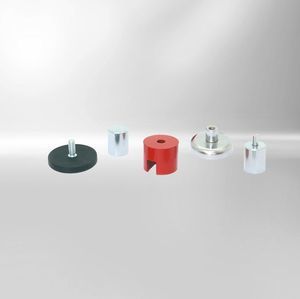

... Overview
Kendrion
Permanent Magnets are designed for reliable holding, gripping, and positioning applications. They are available in a wide range of sizes, materials, and custom configurations to meet specific application ...


... retaining magnets are shielded magnetic systems with high performances and moderate overall dimensions. RMD-HF: zinc-plated steel housing, ferrite retaining magnet, for temperatures up to 200°C. RMD-HF-SST: ...
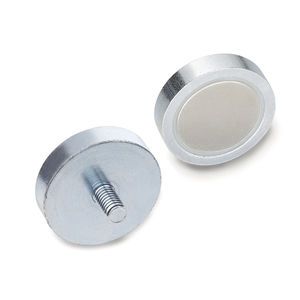
... Flat retaining magnets with threaded pin. RMB flat retaining magnets are shielded magnetic systems with high performances and moderate overall dimensions. Zinc-plated steel housing with threaded pin. RMB-HF: hard ...
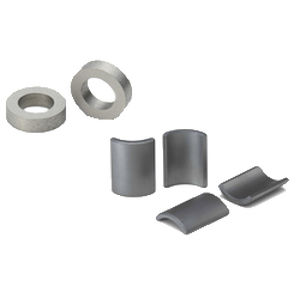

... development of ferrite magnet FB1A material in 1959 to the development of cutting-edge Neodymium magnets and the world's first La-Co high-performance ferrite magnet, ...
the best suppliers