|
|
Fast and easy sample locating:
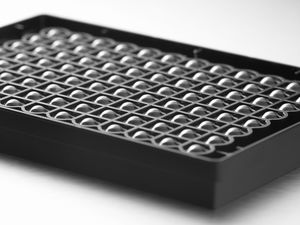
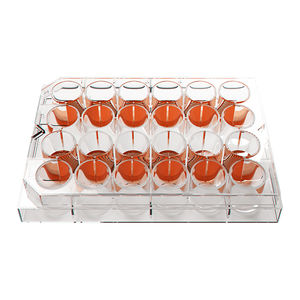
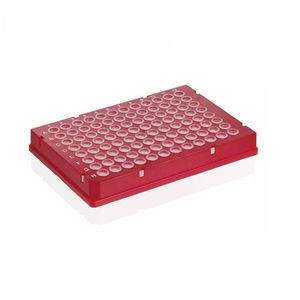
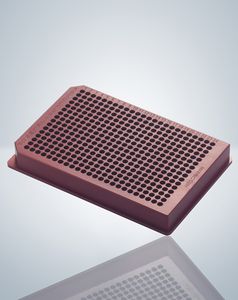
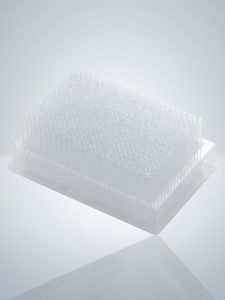
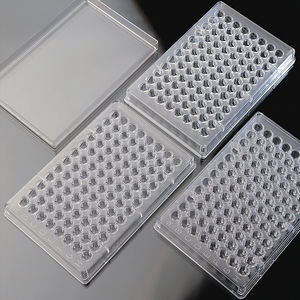
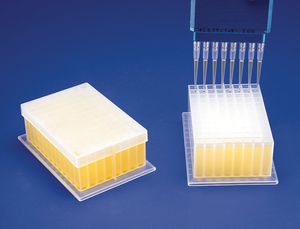
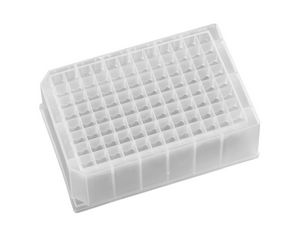
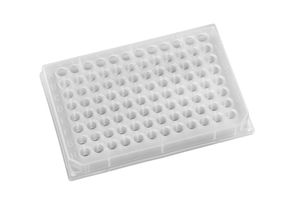
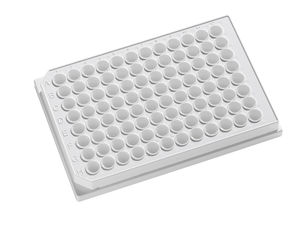
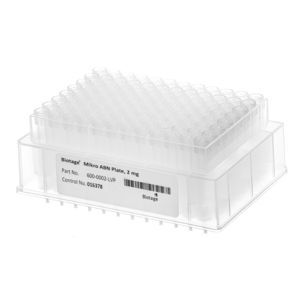
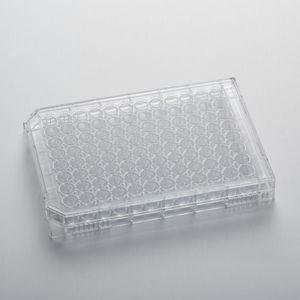
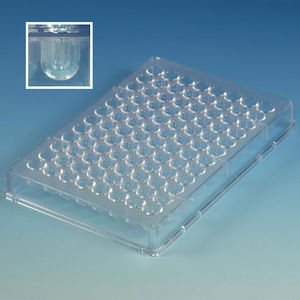
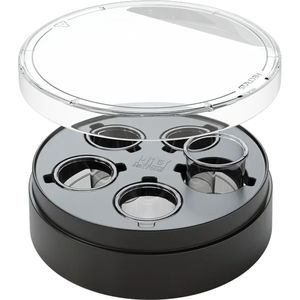
Eppendorf Polypropylene Microplates
The new Eppendorf Polypropylene microplates set new standards in terms of transparency, purity and stability!
With the easy to read OptiTrack® matrix and a clarity, unique and unbeaten for polypropylene microplates, the identification of the correct plate or an individual well is easier, less error-prone and up to 30 % faster.
Features:
- Highest transparency for better sample visibility
- OptiTrack® matrix for easy and fast well identification
- g-safe® for time saving centrifugation up to 6000 × g
- RecoverMax® well design for maximum sample recovery
- Black and white microplates for improved sensitivity in fluorescence and luminescence assays
- High chemical resistance
- Batch certified in PCR clean and Sterile quality
|
|
| ... products without technical information |
| |
... see all the products in the category
Labware
|
|
|
|
|
The Anthos Instant Microplate Solution (AIMS) from Biochrom contains ALL the microplate instrumentation you need to run ELISA and other microplate based applications, in a single package, at a great price. It is ideal for laboratories that handle a large number of absorbance based assays that also need flexibility for future techniques. AIMS includes:
The Anthos Zenyth 200st Microplate Reader with cuvette UV/Vis spectrophotometer. A versatile monochromator based instrument that reads 6-384 well plates at any wavelength between 190-1000nm, with temperature control. The built-in spectrophotometer saves bench space, and there are pre-programmed cuvette methods for nucleic acid and protein measurements.
The Anthos Fluido 2 four channel microplate washer handles up to four different wash buffers, up to 50 different programs and 20 different plate types-including strip plates and round bottom wells.
In addition, the AIMS package contains ADAP Prisma PC analysis software and a laser printer free of charge.
AIMS includes the “top of the range” Anthos microplate instrumentation and software. All Anthos instruments are designed to give reliable results in busy multi-user laboratories for many years.They are CE marked and manufactured under a rigorous quality system.
Building on Anthos’ 25 years experience in microplate instrumentation, AIMS represents new thinking for the next generation providing total flexibility for microplate absorbance applications.
|
|
|
|
|
|
Artemis – High Performance HTRF® Microplate Reader
The Artemis K-101 has been designed for optimum performance with CISbio´s HTRF® reagents. The HTRF® approved instrument is extremely easy to use and guarantees superior performance even with demanding applications.
Dedicated Optics
The internal reflection epi-fluorescence optics paired with selected excitation and emission filters and a sensitive detector operated in single photon counting mode ensures best performance with low background and high sensitivity comparable to laser-based systems.
HTRF® compatible
The instrument has been validated for all of CISbio´s HTRF® reagents. Any HTRF® assay based on either the Europium or the new Terbium cryptates can be measured with superior performance. The HTRF® assay platform from CISbio offers the researchers a highly sensitive, robust technology for the detection of biological interactions such as G-Protein Coupled Receptor (GPCR), kinase and imflammation biomarkers among others.
Easy-to-use software
The Artemis is completely controlled by the MicroPlateReader software package. The HTRF® ratio calculation derived from the donor and acceptor signals, a patented method to correct for quenching and sample interferences, is automatically performed.
Specifications:
Measurement technology: HTRF®
Light source: High energy Xenon flash lamp
Detection System: Single photon counting PMT, 620 and 665 nm filters, sequential measurement
Plate formats: 96 and 384 well
Dynamic range: > 2000 % dF high std
Sensitivity: < 10 pg/mL TNFα
Reading time: 150 s (96 well, 20 flashes)
Software incl. HTRF® ratio calculation
Certifications: CE; HTRF® compatible
|
|
Biochrom Asys Expert 96 Microplate reader
A fast multi-channel filter based instrument controlled via a PC. Equally suitable for research and routine applications.
Features
- Fast - Just 9 seconds for a 96 well plate.
- Covers visible range 400-800nm or UV/Visible 340-800nm
- Very compact footprint.
- Common filters supplied as standard.
- Automatic self check and calibration routines.
- Front-loading allowing easy integration into robotic system.
- choice of software for data capture and analysis.
|
|
|
|
|
|
Biochrom Anthos Zenyth 340 Microplate Reader
A fast, flexible, single-channel, filter based absorbance reader-equally suitable for research and routine applications. Available as a stand alone with built in software and a large graphical display, or PC controlled version.
- Fast, just 9 seconds for a 96 well plate
- Wide wavelength range 340 - 750nm for applications into the UV region.
- Commonly used filters supplied as standard.
- Excellent optical specifications (0.0001 Abs resolution)
- Handles multiple plate formats from 6 to 384 well plates.
- Highly flexible- single or dual wavelength for standard ELISA, kinetics linear scan and XY scanning.
- Choice of data analysis software packages
- Temperature control (option)
Additional Features for Stand Alone
-Large graphical display
-Comprehensive quantitative and qualitative data evaluation functions with curve-fits, cut-offs and transformation formulae
-Multiple kinetic data reduction modes, combined with further quantitative and qualitative evaluation
Variables, test-validation, automatic replicate elimination
-Integrated Windows CETM operating system, which offers full PC functionality and connectivity
Special Offer!
For a limited period we are offering a free laser printer to connect with the stand alone version of this microplate reader. Just add 80-5000-38 to your order, and you will receive a printer and cable to connect to your microplate reader completely FREE!
|
|
Biochrom Anthos 2010 Microplate Reader from Biochrom
The 2010 Microplate reader is a great value instrument designed for laboratories requiring a simple basic absorbance reader with PC control as a workhorse.
Key Features
-Single or dual wavelength measurements plus kinetic measurements
-4 commonly used filters supplied as standard 405nm, 450nm, 492nm and 620nm.
-8 position filter wheel -additional filters available
-Single, dual and kinetic measurements
-ADAP Basic software included
Optional
-Software upgrade to APAP Plus PC software or ADAP Expert.
-Reader check plate for QC
-Additional filters
|
|
|
|
|
|
Plate CHAMELEON represents a new concept in multilabel detection instruments. Compact design houses up to 6 integrated technologies providing a powerful and flexible platform for the broadest spectrum of applications.
The technologies, widely employed in research and diagnostic applications, include
- Liquid Scintillation Counting (LSC),
- Luminescence (Lum),
- Fluorescence Intensity (FI),
- Time Resolved Fluorescence (TRF),
- Fluorescence Polarization (FP) and
- Absorbance (Abs).
A unique feature of Plate CHAMELEON is the patented detector head allocation adjustment. This ensures optimal counting performance when combining fluorescence measurements with ultra high sensitivity photon counting in luminescence.
Operation of Plate CHAMELEON is with easy-to-use Windows-based MikroWin software.
You can choose a Plate CHAMELEON model to meet your application needs. Different application modules are available. Thus your Plate CHAMELEON can be dedicated to LSC applications, or to non-radiometric applications. As a third alternative, to provide a complete spectrum of applications, both the radiometric and non-radiometric modules may be included.
|
|
|
|
|
|
Biochrom Anthos Zenyth 200 Microplate Reader
The Zenyth 200 is a high performance microplate reader with a built in UV/Vis cuvette spectrophotometer providing an indispensable research tool for Life Science laboratories that need a fast accurate plate reader to handle a large number of microplates e.g. ELISA screening and nucleic acid characterisation and measurement. It is avalable both as PC controlled version and as a stand alone plate reader.
- Forget filters! Covers the range 190 - 1000nm for future flexibility.
- Endpoint, kinetic, multichromatic, spectral scanning and position scanning
- Temperature controlled 4°- 45°C for kinetic studies.
- Fast, just 11 seconds for a 96 well plate.
- Multiple plate formats: cell culture plates (6-48) and 96/384 well plates.
- Choice of Software
The PC controlled version uses ADAP Basic software or can be upgraded to ADAP Prizma that includes both an advanced ELISA module and stored routines for cuvette assays including protein, nucleic acid and oligo concentration.
The stand-alone version has built in stored routines for nucleic acid quantitation and characterisation and integrated Windows CE(LAN - interface) for easy data transfer.
Special Offer!
For a limited period we are offering a free laser printer to connect with the stand alone version of this microplate reader. Just add 80-5000-38 to your order, and you will receive a printer and cable to connect to your microplate reader completely FREE!
|
|
Biochrom ASYS UVM 340 Microplate Reader
The UVM 340 is monochromator based scanning microplate reader providing fast, accurate analysis results particularly for Life Science and Pharmaceutical research laboratories. A high performance "top range" instrument ideal for laboratories wishing to maximise the applications that can be handled.
- Forget Filters!-complete wavelength coverage from 340-800nm
- Plate format capability from 12-96 well plates
- Fast wavelength scanning of single well in 5 sec
- Self check and calibration for total results confidence
- Front loading for integration into automated systems
- Choice of software packages
- Optional QC plate and software
|
|
TriStar is the ideal instrument for biomedical research whenever multiple reading technologies and excellent performance are needed.
• Absorbance
• Luminescence
• Fluorescence
• BRET
• FRET
All common applications including DNA and protein quantification, Calcium monitoring, reporter gene assay, ATP determination, cell growth and viability, apoptosis, phagocytosis and enzyme kinetics will run on TriStar LB 941.
In addition, assays based on the reading technologies BRET, e.g. functional GPCR assays, and FRET for protein-protein interactions may be performed.
Up to 4 reagent injectors can be set up to dispense multiple activators or detection reagents at any time and with user-adjustable volumes during the measurement.
A temperature controlled microplate compartment (5°C above room temperature to 40°C) ensures stable conditions whenever temperature sensitive enzymes or cells are in use.
|
|
|
|
|
|
Mithras, the extremely versatile multimode microplate reader from BERTHOLD TECHNOLOGIES offers you a wide variety of technologies as there are:
Luminescence
Absorbance
Fluorescence (top and bottom)
Fluorescence Polarisation (FP)
AlphaScreen
BRET
FRET
HTRF®
Time-resolved Fluorescence
The Mithras LB 940 operates with dedicated optical paths (DOPS) to ensure the best available performance for each technology.
The unit combines fluorescence and luminescence modes with the uncompromised performance of dedicated instruments. The sensitivity of the luminescence function exceeds even that of the best dedicated plate luminometers.
BRET and FRET for receptor studies and protein/protein interactions can also be measured with exceptional sensitivity as well as homogenous fluorescence polarization assays.
Mithras can be supplemented with up to 4 reagent injectors %u2013 based on the proven and highly precise JET technology %u2013 and a temperature control unit for the microplates. That offers extensive opportunities to the users to perform a huge number of applications including enzyme activities, phagocytosis, calcium flux, cell viability, apoptosis, protein and DNA determinations or protein-protein interactions.
The software is supporting a multitude of functions including standard curves and kinetic data reduction as well as the 21 CFK part 11 requirements.
For medium level throughput environments such as ´assay development´ or ´secondary screening´ the instrument can be equipped with a stacker.
|
|
|
|
|
|
Biochrom Anthos 2020 Microplate Reader
The 2020 is a great value stand alone microplate reader with powerful customised software for routine absorbance assays in research, quality control and diagnostics. A reliable laboratory workhorse that can handle a wide range of microplate based assays eg ELISA.
- Single or dual wavelength measurements plus kinetic measurements
- 4 commonly used filters supplied as standard 405nm, 450nm, 492nm and 620nm.
8 position filter wheel -additional filters available
Language Choice English or German
Flexible plate layouts
Comprehensive analysis and curve fitting
Kinetic mode
Easy data export to a PC
ADAP Basis PC Software supplied as standard
Additional Options
-Upgrade to ADAP Expert PC software
-Reader Check plate for QC validation
-Additional filters
Special Offer!
For a limited period we are offering a free laser printer to connect with this microplate reader. Just add 80-5000-38 to your order, and you will receive a printer and cable to connect to your microplate reader completely FREE!
|
|
|
|
|
|
Biochrom Anthos Multiread 400 Microplate Reader
The MultiRead 400 is a fast, front loading, reliable multi-channel microplate reader suitable for general research, high throughput laboratories, or for integration into automated platforms. Ideal for applications such as ELISA, cell based assays (apoptosis and cytotoxicity studies), microbiology and enzyme kinetics. Use as a stand-alone or connect to a PC.
- Fast, just 10 seconds for 96 well plate
- Wavelength range 400-800nm (up to 6 filters) with shaking.
- Versatile on-board software with qualitative, quantitative and kinetic functions, plus a variety of curve-fit methods (linear regression, parabolic, Cubic, point to point, spline and 4 parameter)
- Stores both methods and results
- Connect to PC software included
Special Offer!
For a limited period we are offering a free laser printer to connect with this microplate reader. Just add 80-5000-38 to your order, and you will receive an printer and cable to connect to your microplate reader completely FREE! See website for more details.
|
|
|
|
|
|
Biochrom Asys Expert Plus Microplate Reader
The Expert Plus is a stand-alone, multi-channel, filter based absorbance reader designed for laboratories that need a fast, accurate plate reader to handle a large number of microplates e.g. ELISA screening. The compact design is particularly suitable for labs where bench space is an issue.
- Fast - Just 10 seconds for a 96 well plate including flat, round and V bottom.
- Common filters supplied as standard. A "UV" option is available.
- Powerful data processing capacity built in. Stores up to 120 different methods and 120 standard curves plus the results from up to 100 microplates.
- Automatic self test and calibration
- Optional link to a PC
- Optional QC plate/software for easy validation
Special Offer!
For a limited period we are offering a free laser printer to connect with this microplate reader. Just add 80-5000-38 to your order, and you will receive a printer and cable to connect to your microplate reader completely FREE!
See www.biochrom.co.uk for a video demonstration.
|
|
|
|
|
|
CentroPRO is the newest member of the microplate family of BERTHOLD TECHNOLOGIES. The instrument is universally applicable for research and routine. It enables the measurement of all important glow-type luminescence applications, e.g. reporter genes, ATP determination or cell viability.
Applications
Reporter genes
Dual reporter genes
ATP determination
Cell viability
Caspase
Kinases
Proteases
Monoaminoxidases
Mycoplasma contamination
Software
Easy operation via the innovative ICE software
(instrument control and evaluation)
Wizard guided definition of parameters
Various export formats (Excel®, PDF)
Intuitive menus
Single endpoint measurements
Dual label ratio calculations
Shaking
Specifications
Crosstalk: 10-6
Detection limit: 20 amol ATP
Detection limit: ~ 7.5 zmol firefly luciferase
Instrument Concept
Detector sensitivity and stability are the result of BERTHOLD TECHNOLOGIES experience with thousands of photon counters. True photon counting has the benefit that no user parameters need to be set, ensuring the same conditions are used for every measurement during the instruments life time. The fast photon counting circuitry provides a dynamic range in excess of six orders of magnitude, which complements the concentration range of the latest assays.
A patented design of the optical system achieves absolute minimization of cross-talk (down to 10-6 depending on the type of microplate).
Solid 96 well plates, as well 8 well and 12 well strip plates can be measured.
Inside the instrument precise x and y drivers ensure exact positioning of the wells with respect to the detector.
|
|
CENTRO LB 960
The Centro meets all currently known requirements for a versatile, robust and sensitive microplate luminometer. The selected detector and the proprietary design of the optical sytem guarantee lowest background and negligible crosstalk.
|
|
|
|
|
|
The Aurora Nephelometer delivers increased accuracy in studying particulates and their source of origin.
The effects of air pollution on human health and lifestyle are of a major concern today. There are many parameters contributing to air pollution, of which airborne particulates are a major contributor.
Nephelometers give indications of air quality by measuring the light scattering of particles in the air. This translates to visibility measurements and information for global warming studies.
The “new generation” of Aurora nephelometer is available in four models:
Aurora 1000 Nephelometer (single wavelength)
Aurora 2000 Nephelometer (PM2.5 correlation)
Aurora 3000 Nephelometer (3 wavelengths with backscatter)
Aurora 4000 Nephelometer (polar nephelometer)
The wavelengths are characterized as follows:
Blue : 450nm Fine & ultra fine particulates (wood fires, automobiles)
Green : 525nm Visibility (smog, fog and haze)
Red : 635nm Large particulates (pollen, sea salt etc)
Applications
- Visibility Measurements (Airports, City pollution, AAQMS)
- Dust/Sand storm monitoring and early detection networks
- Global warming studies (light scattering/radiation balance)
- Bushfire/pollution monitoring and early detection networks
- PM2.5 mass measurement correlation studies
Features
- Low power instrument (ideal for remote applications)
- Low maintenance
- Low cost of ownership
- Advanced LED light source
- Compact and portable
|
|
| ... products without technical information |
| |
|
|