


{{product.productLabel}} {{product.model}}
{{#if product.featureValues}}{{product.productPrice.formattedPrice}} {{#if product.productPrice.priceType === "PRICE_RANGE" }} - {{product.productPrice.formattedPriceMax}} {{/if}}
{{#each product.specData:i}}
{{name}}: {{value}}
{{#i!=(product.specData.length-1)}}
{{/end}}
{{/each}}
{{{product.idpText}}}
{{product.productLabel}} {{product.model}}
{{#if product.featureValues}}{{product.productPrice.formattedPrice}} {{#if product.productPrice.priceType === "PRICE_RANGE" }} - {{product.productPrice.formattedPriceMax}} {{/if}}
{{#each product.specData:i}}
{{name}}: {{value}}
{{#i!=(product.specData.length-1)}}
{{/end}}
{{/each}}
{{{product.idpText}}}


... The multi application grades CTPX710 and CTPX715 The new X7 multi-use grade can be used across ail application Windows. This is limited only by the chip breaker. Many materials, many requirements ...

CBN Inserts - Grade CTB H15 - for machining hardened steels Extrême demands are placed on tools used for hard machining. The cost and service life of tools play a significant rôle. The new CTB H15 ...


... Optimized for external turning Longitudinal turning Face turning Profiling Roughing to finishing External turning of medium to large components ...
Sandvik Coromant


Worldia - CC Type Polycrystalline Diamond (PCD) Turning Insert - 80° Model: - CC TYPE Brand: - WORLDIA Availability: - Delivery time 15days Place of origin: - Beijing,China Capacity(Monthly): ...
Beijing Worldia Diamond Tools Co., Ltd

Beijing Worldia Diamond Tools Co., Ltd
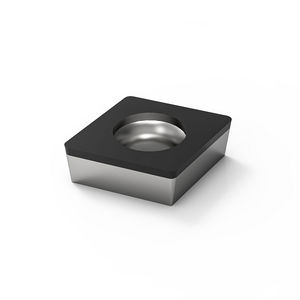
--WORLDIA full face PCD Inserts-- can be used in many fields including car industry, energy equipment, and the wood and stone industry. It can be used to cut and process different materials such as nonferrous metal, tungsten ...
Beijing Worldia Diamond Tools Co., Ltd


The preferred chip-breaker for finishing steel materials. Chip curling and chip breaking can be controlled effectively. The cutting edge is sharp and the cutting is brisk. Excellent chip breaking effect at small depth of cut ...
OKE Precision Cutting Tools Co., Ltd.
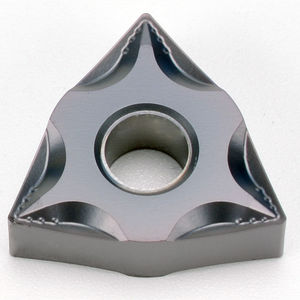
Stainless steel finishing chip-breaker: The rake angle and edge inclination angle are designed for the processing characteristics of stainless steel materials, and the blade edge is sharp. Small chip resistance, excellent chip breaking ...
OKE Precision Cutting Tools Co., Ltd.
... combine with thick TICNand AL2O3 coating, treated by special after coating treatment, which gives insert wonderful wearing resistance. \Preferred grade for semi-finishing to finishing steel machineing.
OKE Precision Cutting Tools Co., Ltd.


ISO Indexable inserts Cast iron turning processes HC = Carbide coated
Arno Werkzeuge
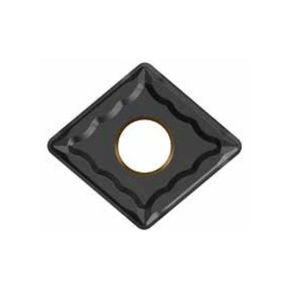
For machining cast iron materials •Suitable for smooth to slightly interrupted cuts •Enhanced coating adhesion with reduced residual stresses
Arno Werkzeuge
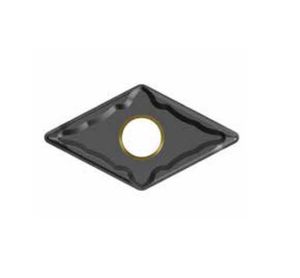
•For machining cast iron materials •Suitable for slightly interrupted cuts •High-strength coating ensures stable long tool life
Arno Werkzeuge
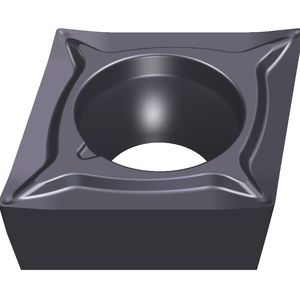


BLU - a new sub-micrograin grade with PVD triple layer coating, The BLU grade provides a combination of very high strength with high wear resistance.
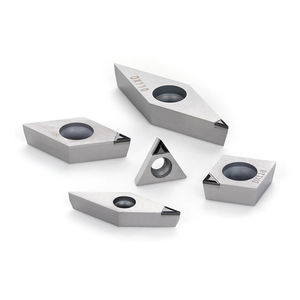

... new 0.1 and 0.2 millimeter nose radius PCD inserts have been added with NS chipbreaker. All new inserts are in Grade DX110. Extremely wear resistant, this submicron grain sized PCD grade ...
Tungaloy Germany
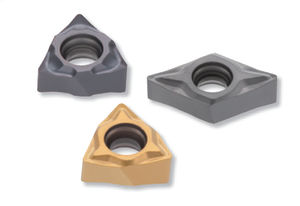
Innovative insert provides superior economic advantages! Economical double sided inserts with positive cutting edge Innovative multi-cornered insert clamped into a unique pocket ensures ...
Tungaloy Germany
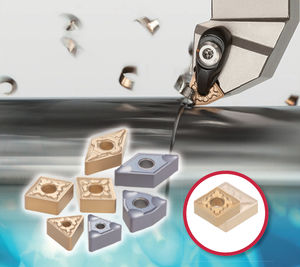
... environment Small size insert with less resource consumption provides ecological benefits. Exceptional cutting performance Chipbreaker on EcoTurn insert demonstrates same performance as regular size insert. The ...
Tungaloy Germany
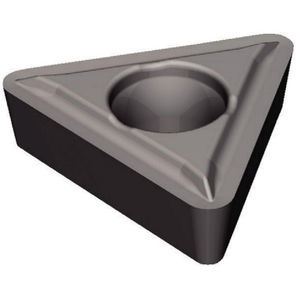

... cut applications of ductile and cast irons. TN20P Coated carbide. MTCVD-TiN-TiCN-Al2O3-TiN. Great general-purpose turning grade for steels. Ideal for semi-finishing to moderately heavy roughing. TN30M Coated ...
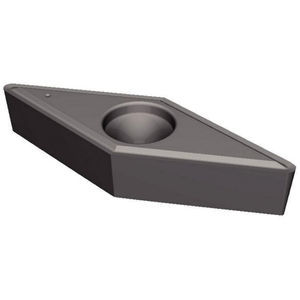
... cut applications of ductile and cast irons. TN20P Coated carbide. MTCVD-TiN-TiCN-Al2O3-TiN. Great general-purpose turning grade for steels. Ideal for semi-finishing to moderately heavy roughing. TN30M Coated ...

... cut applications of ductile and cast irons. TN20P Coated carbide. MTCVD-TiN-TiCN-Al2O3-TiN. Great general-purpose turning grade for steels. Ideal for semi-finishing to moderately heavy roughing. TN30M Coated ...


... new range of inserts with positive NF geometry is for turning of stainless steel. Marketed under the Pramet brand, the inserts feature a number of benefits including: The double-sided ...
Dormer Pramet
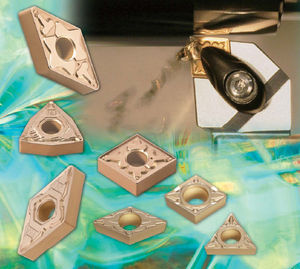

CVD coated grade for steel turning New Line of chipbreakers for Medium to Heavy cutting Extremely stable tool life due to amazing chipping resistance
TUNGALOY
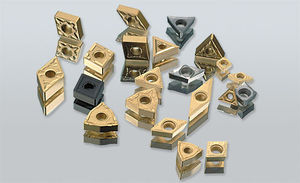

These inserts from Sau is among a wide range of products named SHG. These items are best used with their tooling products that may be indexed. Moreover, this range offers operators with products that are ideally used ...
SAU TOOL S.p.A.
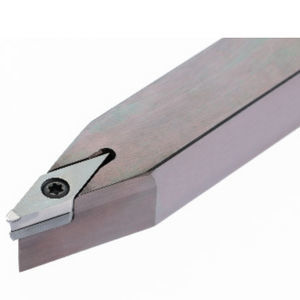

High polish turning with MCD Inserts, tipped with monocrystalline diamond (MCD) and special tool holders based on systems 117 and 105 for mirror turning. The surface roughness Rz is ...
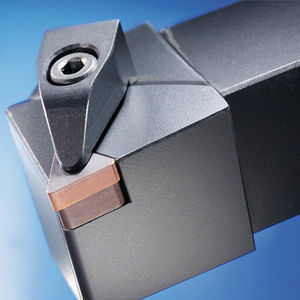

... special needs of hard turning using solid inserts with a 9.52 mm incircle. The form-fit and force-fit connection helps the insert return to the insert seating and provides ...
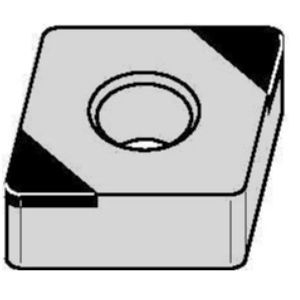

PcBN tipped insert. Designed for hard turning applications. KB5630 can also be applied for roughing to finishing in interrupted cuts on hardened steels (>45 HRC) and on gray cast iron, chilled irons, ...


... fast feed, up to 3 mm/rev and small, up to 2.8 mm D.O.C. longitudinal turning. The new tools carry WOMG 100716-T3P-IQ double-sided 10° negative flank trigon inserts, for high feed turning ...
ISCAR Tools


Duratomic® is an exclusive insert coating technology that brings an exceptional combination of wear resistance and edge toughness to a wide variety of Seco grades. Nanoscience at its best, the Duratomic CVD aluminum-oxide ...
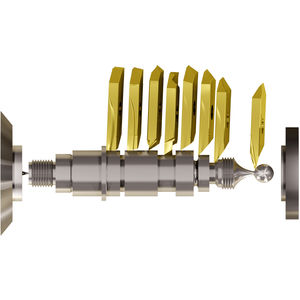

... for straight turning, copy turning, groove turninga and profile turning. The J-type inserts are available in many variations to enable the most suitable combination ...
Whizcut of Sweden AB


... general purpose steel turning grade suitable for medium to light turning applications including the removal of outer skin, plus our new chip breakers NGE and NSE for optimised chip control ...
Sumitomo Hardmetal Division


Ultimate performance CVD coated grade for high speed turning of steels Thick Al2O3 coating for improved wear resistance at high temperatures Super Nano Texture Technology with outstanding crystal orientation ...
MITSUBISHI MATERIALS
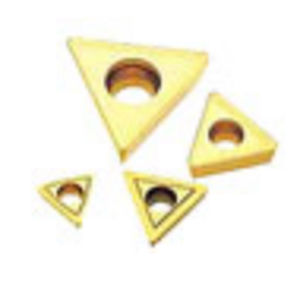

CNC Backspotfacers, Backspotchamfers and Front/Backspotchamfers with Indexable Inserts Range: See PDF file for complete information
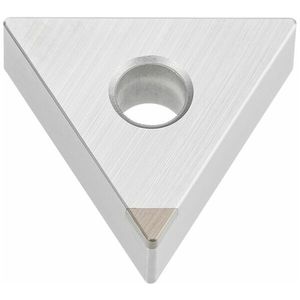

Disposable insert. Single cutting edge. Note: Further indexable insert shapes, sizes and corner radii available on request.
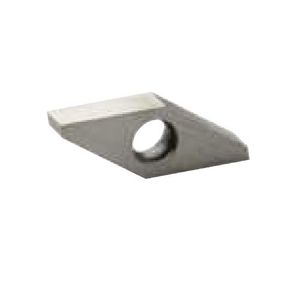

TURNING INSERT CUT 1601 1600 SIZE 16..
Utilis
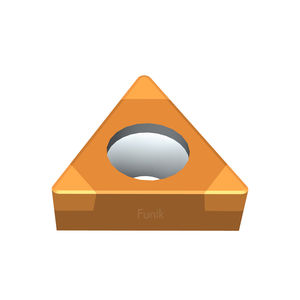

... Funik PCBN cutting tools inserts can be more than 10 times that of carbide insert and reduce the cost of comprehensive cutting tool by 30%-50%. The interval time between the replacements of Funik CBN ...
Funik Ultrahard Material Co., Ltd.


Pack of 10 pcs. Turning inserts for machining steel: N
Sharp metal srl
Please specify:
Help us improve:
remaining