


{{product.productLabel}} {{product.model}}
{{#if product.featureValues}}{{product.productPrice.formattedPrice}} {{#if product.productPrice.priceType === "PRICE_RANGE" }} - {{product.productPrice.formattedPriceMax}} {{/if}}
{{#each product.specData:i}}
{{name}}: {{value}}
{{#i!=(product.specData.length-1)}}
{{/end}}
{{/each}}
{{{product.idpText}}}
{{product.productLabel}} {{product.model}}
{{#if product.featureValues}}{{product.productPrice.formattedPrice}} {{#if product.productPrice.priceType === "PRICE_RANGE" }} - {{product.productPrice.formattedPriceMax}} {{/if}}
{{#each product.specData:i}}
{{name}}: {{value}}
{{#i!=(product.specData.length-1)}}
{{/end}}
{{/each}}
{{{product.idpText}}}

Width: 250 mm - 2,500 mm
Thickness: 30 µm - 200 µm
... Cover films Gröning cover films provide protection against moisture, UV or dust and are used for a broad range of applications. The film comes wound on reels, with tear-off perforation or as separate ...
W. Gröning GmbH & Co. KG
Width: 200 mm - 2,500 mm
Thickness: 30 mm - 200 mm
... Laminating film Gröning laminating films are available for high quality surface finishing of flexible packaging materials as well as non-wovens and paper. Laminating film enhances both the function and ...
W. Gröning GmbH & Co. KG
Width: 250 mm - 2,500 mm
Thickness: 30 µm - 200 µm
... Film for automatic packaging Gröning film for automatic packaging applications combines perfect machine runability with high packaging speeds. Excellent heat-seal and welding properties of the film ...
W. Gröning GmbH & Co. KG

Width: 250 mm - 1,200 mm
Thickness: 30 µm - 200 µm
... FFS film Gröning FFS (form-fill-seal) film excels with the following properties: good machine runability, high filling rates and perfect sealing properties. The film for automatic FFS packaging applications ...
W. Gröning GmbH & Co. KG
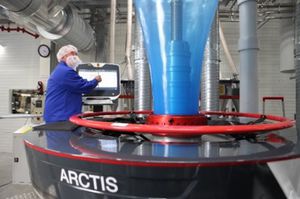
Width: 800 mm - 2,500 mm
Thickness: 15 µm - 200 µm
... Flat film Gröning flat films lend themselves to a great variety of packaging applications and uses. Perfect runability on subsequent converting machines is an obvious quality of the film. Based on our ...
W. Gröning GmbH & Co. KG
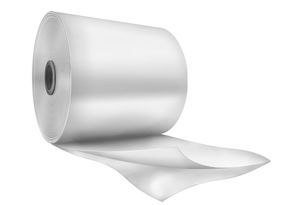
Width: 300 mm - 2,500 mm
Length: 0 µm - 0 µm
Thickness: 30 mm - 200 mm
... properties and represent the final products through their transparency. Semi-hoses offer the possibility of storing wide cover foils for various applications in a space-saving and cost-effective way. Semi-hoses can be supplemented ...
W. Gröning GmbH & Co. KG
Width: 250 mm - 2,500 mm
Thickness: 30 mm - 200 mm
... Available Dimensions Width up to max. 2,500 mm Thickness up to max. 150 µm If you are interested in other dimensions, film types and thicknesses, please feel free to contact us. ...
W. Gröning GmbH & Co. KG


... Item: Corrugated Steel Roof Material: Galvanized Steel Strip/ Painted Galvanized Steel Strip Application: Roof Thickness: 0.14-0.8mm. Width: 600-1250mm. Length: Customized Brand Name: YouYuan Zinc Coating: ...
the best suppliers