
- Home page
- buying guide
- digital camera
digital camera
digital camera: A technical guide
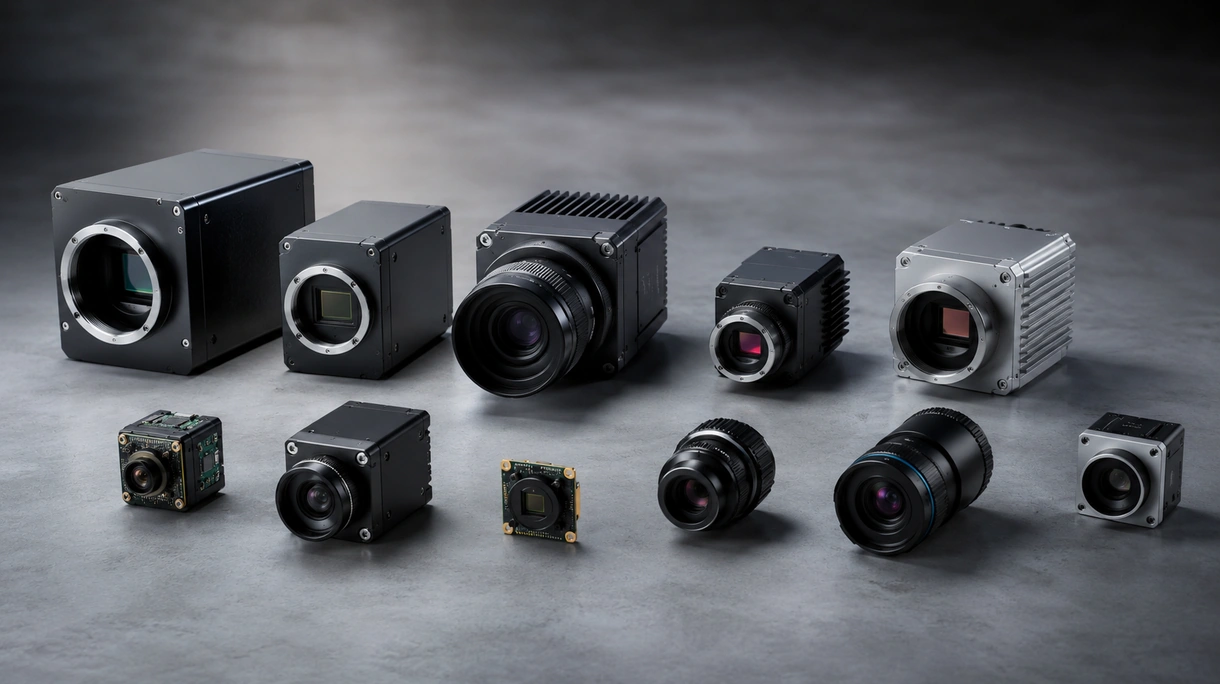
4 Criteria to choose your digital camera
Sensor Resolution and Accuracy
High pixel density ensures precise defect detection and measurement accuracy for automated quality control systems in high-speed lines.
Data Interface Compatibility
Selecting between Ethernet or high-speed serial connectivity ensures seamless integration with existing industrial networks and required data transfer speeds.
Optical Shutter Performance
Global shutter technology eliminates motion blur in high-speed imaging applications, which is essential for capturing moving industrial components.
Environmental Protection Rating
Ruggedized housings protect sensitive electronic sensors from dust, moisture, and extreme temperatures found in harsh manufacturing environments.
Available technologies and advantages
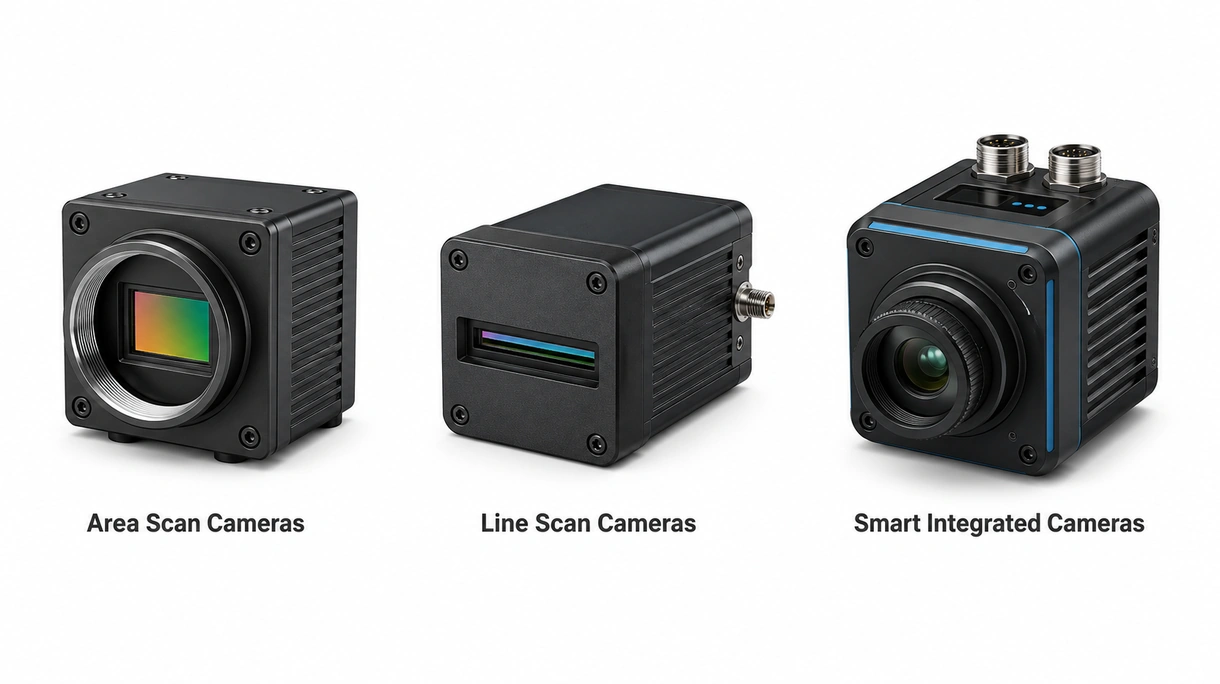
Area Scan Cameras
These capture complete frames simultaneously, ideal for static or indexed motion tasks. They are easy to integrate but limited by sensor size, forcing a trade-off between resolution and field coverage.
Line Scan Cameras
These build images row-by-row, suited for continuous web inspection or rotating objects. They offer extreme resolution but require complex synchronization and high-intensity lighting systems.
Smart Integrated Cameras
These combine sensors and processors for localized decision-making without external controllers. They reduce footprint but offer lower processing power than dedicated systems.
6 expert tips
Prioritize high-bandwidth data interfaces to eliminate bottlenecks during high-resolution automated inspection cycles on fast production lines.
Select global shutter sensors over rolling shutters to prevent image distortion when monitoring rapidly moving mechanical components.
Standardize on universal vision protocols to ensure cross-vendor software compatibility and simplify future scaling of robotic systems.
Evaluate the spectral sensitivity of sensors to ensure optimal contrast when detecting specific material defects under monochromatic lighting.
Invest in ruggedized industrial connectors and sealed housings to maintain long-term reliability in vibration-prone or wash-down zones.
Always verify the technical certification to ensure compliance with local building safety standards and long-term durability.
Innovations and Trends
These sensors enable visibility through opaque plastics, improving non-destructive testing for semiconductor and chemical manufacturing processes.
This allows real-time neural network processing for complex pattern recognition without latency from remote server data transfers.
Integrated wireless connectivity facilitates transmission of massive image data streams in large-scale smart factories and automated industrial hubs.
Time-of-flight imaging provides precise depth mapping for autonomous robots, enhancing safety and navigation in collaborative workspaces.
*Prices are pre-tax. They exclude delivery charges and customs duties and do not include additional charges for installation or activation options. Prices are indicative only and may vary by country, with changes to the cost of raw materials and exchange rates.
About DirectIndustry
DirectIndustry is a marketplace that offers B2B players a complete experience, from product sourcing to purchase. DirectIndustry is an entity of VirtualExpo Group.
Are you a buyer?
Are you a supplier?
About Us
- VirtualExpo Group
- Our Partners
- Recruitment
- Testimonials