
- Home page
- buying guide
- ultrasonic flow meter
ultrasonic flow meter
ultrasonic flow meter: A technical guide
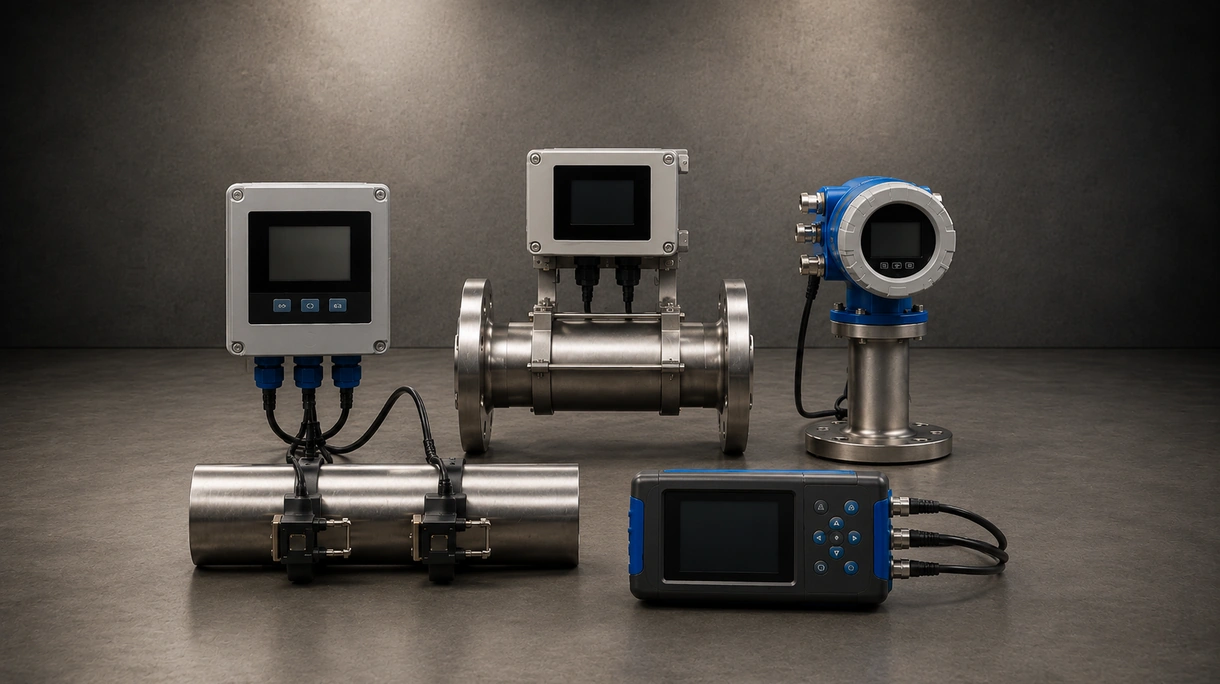
4 Criteria to choose your ultrasonic flow meter
Transducer Installation Method
External clamp-on sensors eliminate downtime and pressure drops while spool-piece designs ensure maximum accuracy for permanent industrial installations.
Fluid Acoustic Properties
High concentrations of suspended solids or entrained air require Doppler technology rather than standard transit-time measurement for stability.
Pipe Geometry Constraints
Sufficient straight-run lengths upstream and downstream are essential to eliminate turbulence and ensure a fully developed flow profile.
Communication Protocol Integration
Compatibility with Modbus, Profibus, or HART protocols ensures seamless data transmission to existing PLC and SCADA automation systems.
Available technologies and advantages
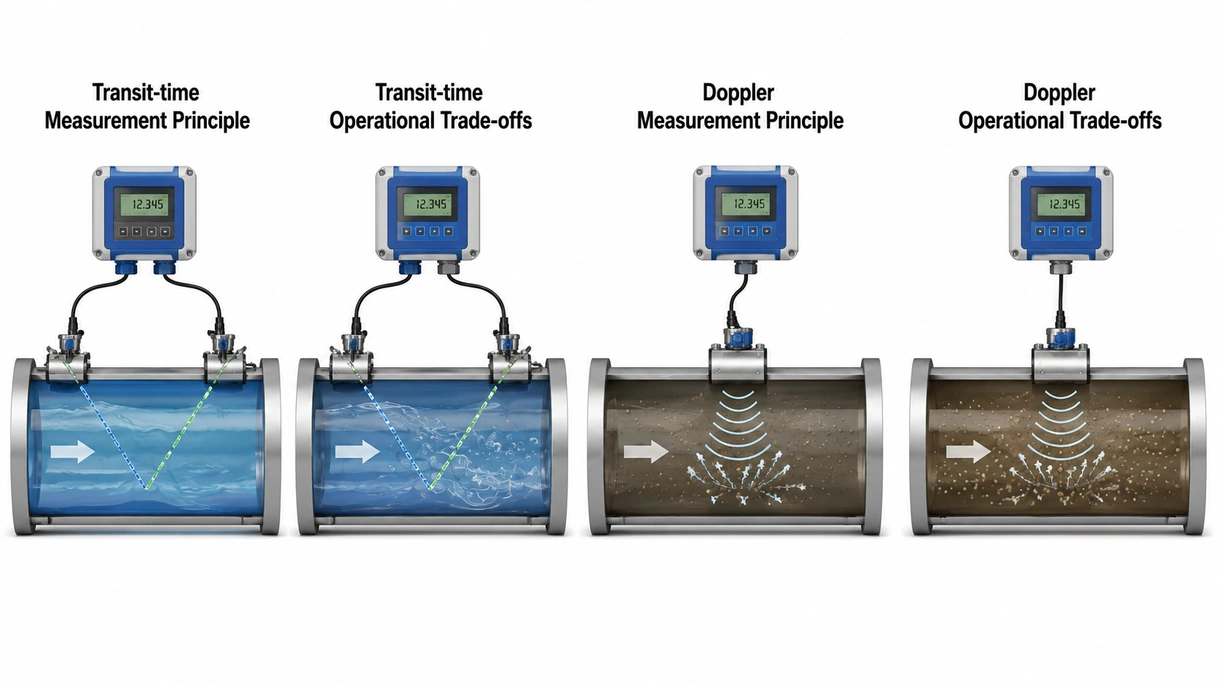
Transit-time Measurement Principle
Transit-time meters offer higher precision for clean liquids compared to Doppler systems which rely on signal reflection from suspended solids.
Transit-time Operational Trade-offs
Advantages include non-invasive setup and zero pressure drop, while limitations involve failure in aerated fluids and high sensitivity to turbulence.
Doppler Measurement Principle
Doppler systems provide reliable measurement for dirty fluids where transit-time signals would be completely blocked or scattered by high turbidity.
Doppler Operational Trade-offs
This method ensures continuity in slurry monitoring but necessitates a minimum concentration of reflectors and offers lower overall accuracy.
6 expert tips
Prioritize clamp-on designs to reduce installation costs and eliminate the risk of process contamination or system leakage risks.
Evaluate the signal-to-noise ratio in high-vibration environments to prevent measurement errors caused by mechanical interference on transducers.
Select dual-path or multi-path sensor configurations when dealing with non-ideal flow profiles to enhance overall measurement repeatability.
Ensure the chosen device carries ATEX or UL certifications for hazardous zones to maintain strict plant safety compliance.
Calculate the total cost of ownership by including periodic calibration requirements and battery life for remote monitoring applications.
Always verify the technical certification to ensure compliance with local building safety standards and long-term durability.
Innovations and Trends
Enables long-term remote monitoring in isolated industrial sites while reducing expensive cabling and infrastructure costs.
Improves measurement stability by filtering out ambient noise and correcting for real-time fluid temperature fluctuations.
Facilitates predictive maintenance by identifying sensor degradation before critical failures occur in heavy production lines.
Provide real-time verification of measurement integrity to meet strict regulatory audits and environmental reporting standards.
*Prices are pre-tax. They exclude delivery charges and customs duties and do not include additional charges for installation or activation options. Prices are indicative only and may vary by country, with changes to the cost of raw materials and exchange rates.
About DirectIndustry
DirectIndustry is a marketplace that offers B2B players a complete experience, from product sourcing to purchase. DirectIndustry is an entity of VirtualExpo Group.
Are you a buyer?
Are you a supplier?
About Us
- VirtualExpo Group
- Our Partners
- Recruitment
- Testimonials