
- Home page
- buying guide
- tunnel oven
tunnel oven
tunnel oven: A technical guide
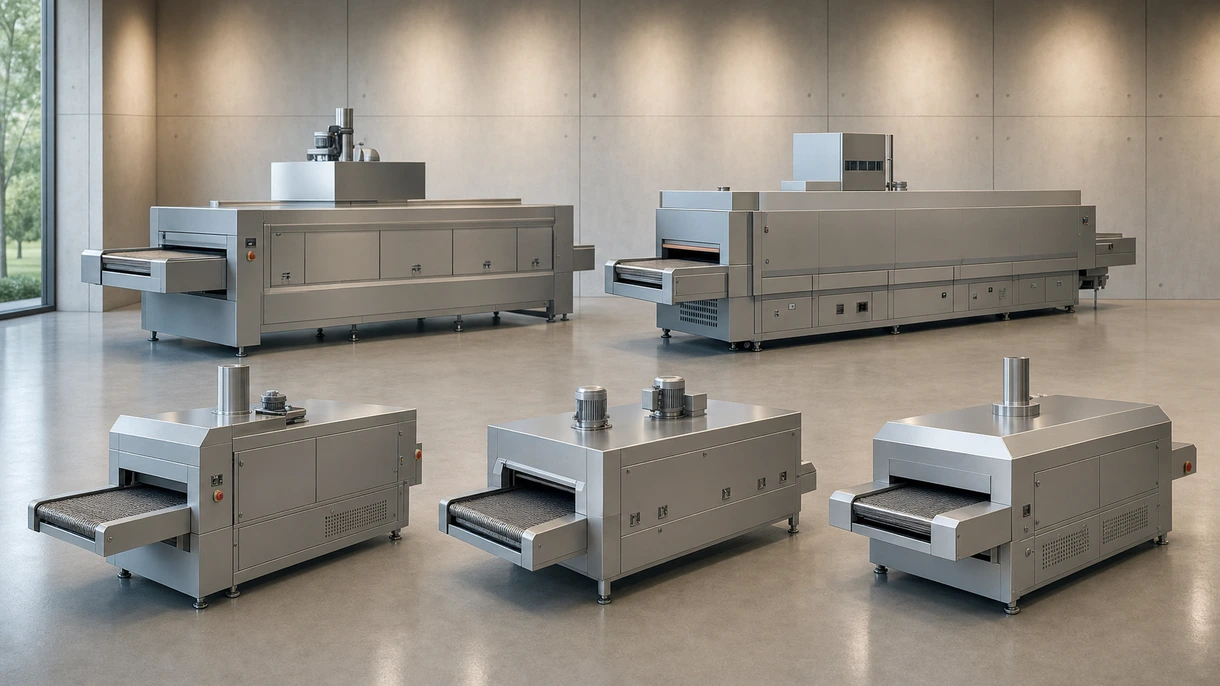
4 Criteria to choose your tunnel oven
Thermal Profile Precision
Precise temperature control across all zones ensures consistent product curing, minimizing scrap rates and maximizing throughput quality.
Energy Efficiency Rating
High thermal insulation and heat recovery systems reduce operational costs and carbon footprints, vital for meeting strict European energy standards.
Conveyor Throughput Speed
Synchronization between belt speed and thermal transfer rates determines total production capacity and integration efficiency with upstream automation.
Zonal Control Flexibility
Independent heating zones allow for complex temperature ramping, enabling the processing of diverse materials within a single continuous line.
Available technologies and advantages
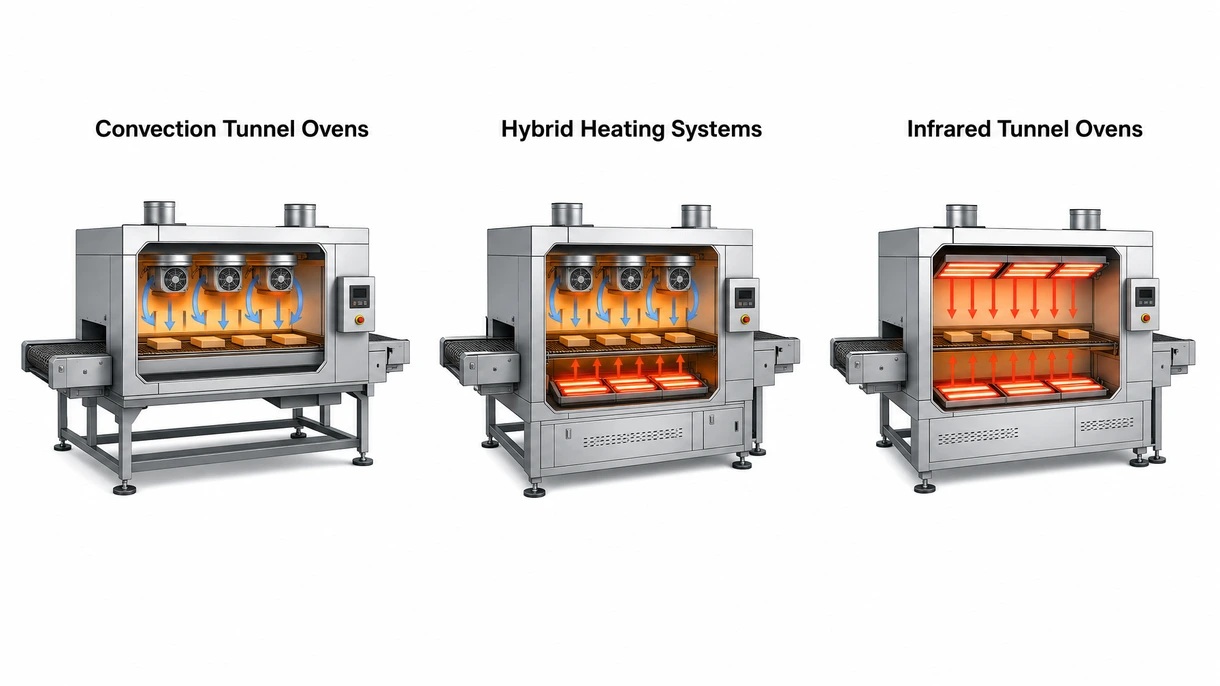
Convection Tunnel Ovens
These systems use forced air circulation to ensure uniform heat distribution, offering superior stability compared to radiant heaters for complex three-dimensional components. Advantages include excellent temperature uniformity and versatility across materials, though they require longer heat-up cycles and larger floor space.
Hybrid Heating Systems
Combining infrared and convection allows for fast initial heating followed by stable thermal soaking, surpassing single-source systems in processing complex curing profiles. Advantages center on maximum process flexibility and reduced cycle times, balanced against higher capital expenditure and more complex maintenance requirements.
Infrared Tunnel Ovens
Infrared technology utilizes electromagnetic radiation for rapid surface heating, outperforming convection systems in high-speed thin-film drying and pre-heating applications. Advantages include immediate response times and compact footprints, while limitations involve poor performance on complex geometries and high electrical power demands.
6 expert tips
designs to allow for future production line expansion and simplified maintenance access for heating elements.
density to ensure minimal heat loss and compliance with OSHA surface temperature safety standards.
integration capabilities for seamless data exchange with existing SCADA or ERP manufacturing execution systems.
internal components to prevent corrosion and ensure long-term durability in high-humidity or chemical processing environments.
variability to accommodate different product weights and prevent displacement during high-speed continuous processing cycles.
technical certification to ensure compliance with local building safety standards and long-term durability.
Innovations and Trends
Reduce unplanned downtime by monitoring heating element resistance and motor vibration patterns in real-time.
Offer zero-carbon thermal solutions for heavy industrial applications, meeting stringent new European environmental regulations.
Automatically adjust zone temperatures to compensate for ambient fluctuations, maintaining strict process tolerances.
Capture exhaust energy to pre-heat incoming air, significantly lowering total kilowatt-hour consumption per cycle.
*Prices are pre-tax. They exclude delivery charges and customs duties and do not include additional charges for installation or activation options. Prices are indicative only and may vary by country, with changes to the cost of raw materials and exchange rates.
About DirectIndustry
DirectIndustry is a marketplace that offers B2B players a complete experience, from product sourcing to purchase. DirectIndustry is an entity of VirtualExpo Group.
Are you a buyer?
Are you a supplier?
About Us
- VirtualExpo Group
- Our Partners
- Recruitment
- Testimonials