
- Home page
- buying guide
- power supply
power supply
power supply: A technical guide
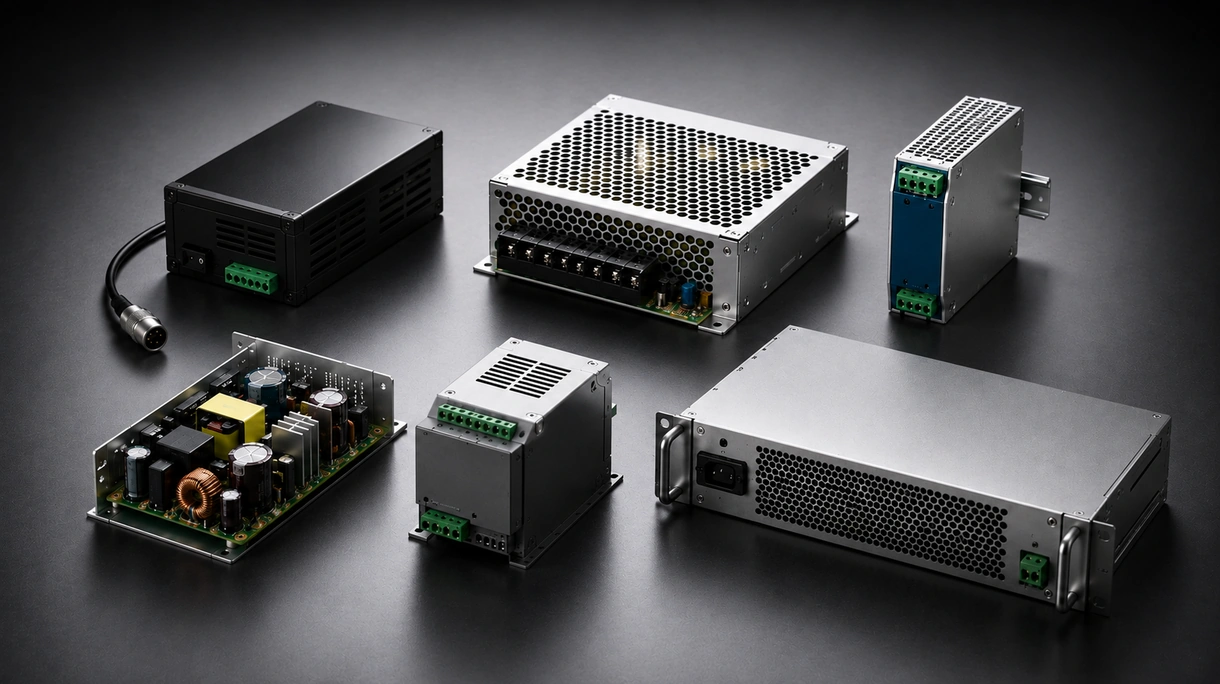
4 Criteria to choose your power supply
Load Regulation and Stability
Provides constant output voltage despite input fluctuations, protecting sensitive PLC components and preventing costly automated system downtime.
Environmental Thermal Management
High efficiency ratings minimize heat dissipation, allowing dense DIN rail mounting without active cooling or derating in hot enclosures.
Reliability and Durability
High Mean Time Between Failures reduces lifecycle costs by extending replacement intervals in continuous around the clock manufacturing environments.
Certification and Compliance
Meeting international safety and electrical standards ensures safety and legal conformity across North American and European industrial electrical markets.
Available technologies and advantages
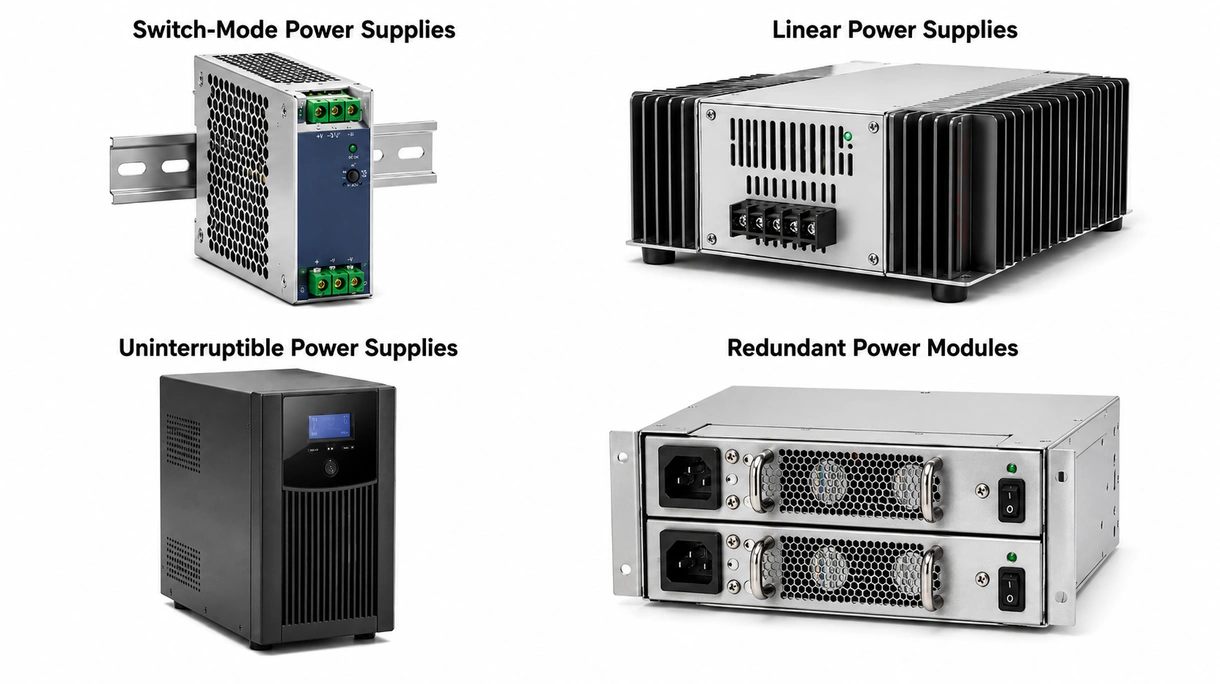
Switch-Mode Power Supplies
High efficiency and compact size make them standard for automation, though they require sophisticated filtering to mitigate electromagnetic interference in sensitive electronics. These units offer superior thermal performance but introduce ripple noise, forcing a trade-off between installation density and signal integrity in sensitive circuits.
Linear Power Supplies
These provide extremely low noise and ripple for high precision metrology applications, but their significant weight and heat limit large scale industrial scalability. Excellent regulation ensures signal purity for laboratory testing, yet low efficiency and bulky heat sinks restrict use to low power specialized instrumentation environments.
Uninterruptible Power Supplies
Essential for critical data logging and robotics control systems, offering battery backup and surge protection at the cost of regular maintenance and battery replacement. Immediate power bridge capabilities prevent data loss, but high acquisition costs and maintenance requirements present a significant financial and equipment footprint trade-off.
Redundant Power Modules
Paralleling units ensures zero downtime during component failure, providing mission-critical reliability for continuous process manufacturing at higher initial capital expense and cabinet complexity. Dual path reliability maximizes uptime for valuable production lines, though increased component count and load sharing configuration requirements complicate initial system integration steps.
6 expert tips
Always verify the technical certification to ensure compliance with local building safety standards and long-term durability.
Prioritize modular designs to allow easy field replacements and rapid scalability within evolving robotic assembly line electrical control cabinets.
Select units with peak power capabilities to handle high inrush currents from inductive loads without triggering unnecessary system shutdowns.
Implement remote monitoring interfaces to track power health and predict potential failures before they disrupt valuable production equipment operations.
Calculate the total cost of ownership by weighing initial procurement prices against energy savings from high efficiency conversion modules.
Ensure physical dimensions and mounting orientations align with existing cabinet airflow patterns to prevent localized overheating and component fatigue.
Innovations and Trends
Integrating Gallium Nitride components significantly increases power density and thermal efficiency while reducing the overall footprint of industrial converters.
Smart power supplies now feature digital communication protocols for real-time diagnostic data transmission to factory level industrial internet systems.
Built-in health monitoring tracks internal capacitor aging to alert operators before the end of the functional product lifecycle.
Emerging systems support direct high voltage DC input from onsite solar or battery storage to improve overall factory sustainability.
*Prices are pre-tax. They exclude delivery charges and customs duties and do not include additional charges for installation or activation options. Prices are indicative only and may vary by country, with changes to the cost of raw materials and exchange rates.
About DirectIndustry
DirectIndustry is a marketplace that offers B2B players a complete experience, from product sourcing to purchase. DirectIndustry is an entity of VirtualExpo Group.
Are you a buyer?
Are you a supplier?
About Us
- VirtualExpo Group
- Our Partners
- Recruitment
- Testimonials