


Acrylic adhesive A1046for metalsingle-componentindustrial

Add to favorites
Compare this product
Characteristics
- Chemical composition
- acrylic
- Type of substrate
- for metal
- Number of components
- single-component
- Applications
- industrial, sealing, retaining
- Technical characteristics
- anaerobic
- Gap fill
0.25 mm
(0.01 in)- Packaging
Max.: 200 ml
(7 US fl oz)Min.: 10 ml
(0 US fl oz)
Description
Very high strength
Bonds dissimilar metals
Allows relaxed machining tolerances
Prevents fretting corrosion
IDEAL FOR: Bearings, bushes, gears, pulleys, splines
Permabond® A1046 is a rapid curing adhesive designed to provide permanent locking and sealing of metal parts such as bearings, gears, pulleys and threaded components. It exhibits high strength and excellent durability, even under the most arduous conditions. Permabond A1046 helps joints resist vibration, fatigue and fretting corrosion, which allows machining tolerances to be relaxed and mechanical locking devices to be eliminated. Permabond A1046 will help reduce processing costs.
Bonds dissimilar metals
Allows relaxed machining tolerances
Prevents fretting corrosion
IDEAL FOR: Bearings, bushes, gears, pulleys, splines
Permabond® A1046 is a rapid curing adhesive designed to provide permanent locking and sealing of metal parts such as bearings, gears, pulleys and threaded components. It exhibits high strength and excellent durability, even under the most arduous conditions. Permabond A1046 helps joints resist vibration, fatigue and fretting corrosion, which allows machining tolerances to be relaxed and mechanical locking devices to be eliminated. Permabond A1046 will help reduce processing costs.
Catalogs
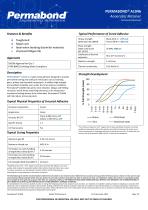
Permabond® A1046
2 Pages
Exhibitions
Meet this supplier at the following exhibition(s):


Other Permabond products
Anaerobics (AA)


Related Searches
- Permabond single-component adhesive
- Permabond metal adhesive
- Permabond industrial adhesive
- Permabond plastic adhesive
- Glass glue
- Permabond dispersion adhesive
- Epoxy adhesive
- Permabond bonding adhesive
- Two-component glue
- Electronic glue
- Permabond ceramic adhesive
- Sealing glue
- Permabond fast curing adhesive
- Permabond viscosity adhesive
- Wood glue
- Rubber adhesive
- Permabond automotive adhesive
- Permabond composite material adhesive
- High-temperature adhesive
- Transparent glue
*Prices are pre-tax. They exclude delivery charges and customs duties and do not include additional charges for installation or activation options. Prices are indicative only and may vary by country, with changes to the cost of raw materials and exchange rates.
About DirectIndustry
DirectIndustry is a marketplace that offers B2B players a complete experience, from product sourcing to purchase. DirectIndustry is an entity of VirtualExpo Group.
Are you a buyer?
Are you a supplier?