|
|
|
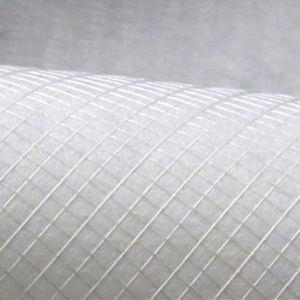
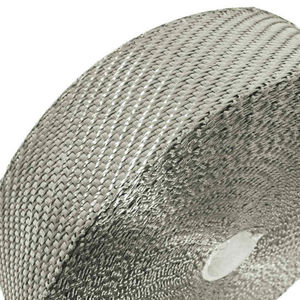
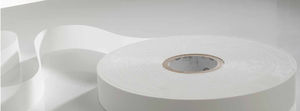
Texindustria® offers an extremely wide range of dry fabrics and tapes in carbon, aramid, HT polyethylene, E - S and R glass fibres, and unidirectional and multi-axial materials, as well as hybrid fabric such as carbon/glass, carbon/aramid, aramid/glass, polyethylene/glass.
|
|
Nextel Ceramic Fibers
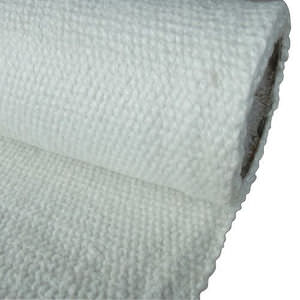
3M™ Nextel™ Continuous Ceramic Oxide Fibers 312, 440, 550, 610 and 720 represent a major advancement in refractory fiber technology. This family of metal oxide fibers can be readily converted into ceramic textile products which meet demanding performance requirements in high temperature operating environments. Nextel™ Ceramic Textiles are typically used in aerospace, outerspace and industrial applications.
Because the filaments are continuous and strong, Nextel™ Ceramic Textiles can be produced without the aid of other fibers or wire inserts. Rovings, yarns, fabrics, tapes, sleevings and sewing threads are typical products.
Features of 3M™ Nextel™ Fibers:
- Low elongation at operating temperatures
- Low shrinkage at operating temperatures
- Good chemical resistance
- Low thermal conductivity
- Thermal shock resistance
- Low porosity
- Unique electrical properties
|
|
|
Chopped fibers are used in compression and injection molding compounds to produce machine parts, gears, chemical valves and computer housings. The finished products have excellent corrosion, creep and fatigue resistance plus high strength and stiffness characteristics.
|
|
Made from 3M™ Nextel™ Fibers, these chopped fibers are used in composite applications. The fibers, commonly chopped to 1/8", 1/4" and 1/2" lengths, are widely known for their role in ceramic underbody tiles which protect NASA's Space Shuttles.
NOTE: These fibers are considered non-respirable. Fibers with diameters greater than 3 microns are considered nonrespirable in humans. 3M™ Nextel™ 312, 440, 550, 610 and 720 Ceramic fibers are 7-13 microns in diameter and therefore pose no known chronic health effects.
|
|
|
OC® Chopped Strands and Milled Fibers are reinforcements used in thermoplastic and thermoset applications for excellent dimensional stability, shrinkage control, high modulus and chemical resistance. OC® Chopped Strands are cut to a specified length and engineered to improve processing productivity, exceeding the flowability of competitive chopped strands. Unlike chopped strands, OC® Milled Fibers are hammer milled to a specific density to meet customer processing needs. Thermoplastic and thermoset applications include under-the-hood automotive components and appliance housings.
|
|
|
Chopped strands ER 2011 are made of boroaluminosilcate glass, comprising less than 1% alkalies. It is characterized by good strand integrity. Chopped strands are not stuck together, and their ends are not fuzzy. Chopped strands have the same, repeatable length of fibre sections. The size type put on the filament enables to process it with non-saturated polyester resins as well as phenolic and melamine ones. Chopped strands ER 2011 are for producing polyester moulding compounds of DMC and BMC type. Products made of these compounds can be formed by pressing or injection. Chopped strands ER-2011 can be used to produce articles from phenolic, amino resins and poly-amides as their reinforcement.
|
|
|
|
|
|
Mat EM 1002 with densities of 100, 150, 225 g/m2 is manufactured from chopped strands made of glass fibre bound together with an emulsion binder and drawn from E glass containing less than 1% of alkalies. The diameter of filament is 9 µm. The mat has a reduced strand linear density (tex) and the surface weight (density) comparing to the standard emulsion mat. It is very soft and it sets very well in a mould taking perfectly its very complicated shapes. It is characterised by a medium wet-out rate in a non-saturated polyester resin and by a good ability to remove air in the process of lamination.
Application
Emulsion bound mat EM 1002 with surface weights of 100 g/m2,150 g/m2 225 g/m2 is suitable for making laminates in a contact process. It is used with all types of non-saturated polyester resins for manufacturing products reinforced with glass fibre. It suites especially for manufacturing gel coated products as their reinforcement. It is also particularly recommended as the external layer of laminate in case of products with improved aesthetics of the surface.
|
|
|
OC® Chopped Strand Mats consist of chopped glass fibers bonded together using either an emulsion binder or a polyester powder. The mats are designed to be compatible with unsaturated polyester, vinyl ester and a variety of other resins. OC®Chopped Strand Mats are used as gel-coat backups and standard laminate reinforcements for most contact molding (hand lay-up) applications, including boats, surfboards, panels, tanks and other diverse applications. Their many excellent product characteristics have been used to provide superior performance in a broad range of end-use markets such as marine, transportation, recreation, construction, consumer and anti-corrosion
|
|
AGY's 401 S-2 Glass Chopped Strands are a unique product developed to meet the needs of the ceramic reinforcement market, as well as other high performance filler materials applications.
The 401 S-2 Glass chopped strands consist of numerous E to L filament continuous fibers cut into short pieces of consistent length. The standard length for the chopped strand product is ¼", or 6.4mm. Other lengths can be produced to order, but are considered non-standard products. The 401 size chemistry designation is applied to the chopped strand fibers. This chemistry is a multi-compatible size, suitable for use in epoxy, urethane, phenolic, and polyamide resin systems, and is also compatible with standard ceramic slurry processes. The 401 S-2 Glass Chopped Strands are designed for use in a variety of processes including compound molding, injection molding, and ceramic casting.
|
|
SIGRAFIL®T is a partially carbonized polyacrylonitrile (PAN) fiber for specific industrial applications.
Applications:
The balance of mechanical properties, chemical resistance and thermal stability of SIGRAFIL® T staple fiber renders it ideal for industrial uses, e.g. as an asbestos replacement in industrial packings and gaskets.
Specific applications:
* Partially carbonized fibers for seals
Key benefits:
Fiber
* High chemical and hydrolytic resistance
* High thermal stability in oxidizing atmosphere
* Low thermal shrinkage
* Adjustable electrical conductivity (low to none)
* Physiological harmlessness
Process
* Superior blending and handling characteristics
* Compatible with most resin/gasket formulations
* Suitable for textile processing
Forms supplied:
SIGRAFIL® T is available as continuous tow and precision cut staple fiber.
|
|
|
OC® Continuous Filament Mats are continuous glass fiber, non-woven mats containing an insoluble binder for unsaturated polyester and polyurethane resin compatibility in unfilled or filled resin systems. OC® Continuous Filament Mats are particularly suitable for compression molded electrical and non-electrical laminates, as well as for use in pultrusion processes.
|
|
|
|
|
|
CFM is made from continuous fiberglass strands randomly looped and bonded together with a minimal binder that is compatible with a variety of unfilled or filled resin systems including PE/PV, PE/PU, Phenolic, PU, PU/Epoxy.
Key Features:
* Roll Slitting - mat rolls can be easily slit into various widths.
* Wet-Through/Porosity - offers little resistance to resin flow to allow for easy and complete resin impregnation, resulting in high line speeds.
* Excellent Wet-Out - improves the ability to coat individual glass filaments and strands.
* Mat Strength - resists being pulled apart under tension during impregnation and molding.
* Manageable - can be unrolled, cut and conveyed to the mold or die without losing its integrity.
Applications:
CFM is used in many FRP applications such as pultrusion, high pressure laminating, vacuum infusion, and several fiberglass-molding processes (SRIM/RTM, etc.). It is particularly suitable for compression molded electrical and non-electrical laminates. Pultruded shapes made with AGY CFM have outstanding transverse- and random-direction strength. Typical applications include electrical flat sheet, grading and railings, window frames, boat hulls and transoms, cooling tower structural shapes and ladder rails.
|
|
|
Manufactured from E-type glass. Offered as a wound which is produced by winding parallel strips of strand. Free from looping. Features low static electrisation compliance and minor fraying. Very good chopping qualities. Designed for processing by means of open mould spraying with the use of polystyrene resins. Very good wet-out qualities and quick release of air bubbles during laminate moulding process.
|
|
|
OC® Single-End Continuous Rovings (Type 30®) consist of a combination of filaments bonded into a single, ribbon-like strand. They are produced by pulling individual fibers directly from a bushing, at the glass furnace, and winding them onto a roving package that is ready for shipment. These single-end or direct rovings deliver outstanding processing and mechanical properties, and they are compatible with most resin systems, including polyester, vinyl ester, epoxy, phenolic, polypropylene and polyamide. Typical end-use processes and applications include filament winding, pultrusion, knitting and weaving, and thermoplastic processing to manufacture products such as pipe,
|
|
|
Woven roving glass fabrics of KROSGLASS S.A. are produced on weaving looms from rovings ER 3003 and ER 3003 B. These rovings are made of glass fibers of alkali-free boron-aluminium-silica glass of type E (contents of alkali metal oxides less than 1%). The fabrics are made of direct roving having filament diameter 11 ÷ 22 µm (depending on linear mass of the roving used). Rovings with chemical active vinyl-silane or metacrylosilane coating are used in fabric production, thus enabling a direct application of fabrics in production of laminates (no additional operations of surface finishing off are required), and good polymer-to-glass adhesion is ensured.
|
|
|
OC® Woven Rovings are either single-end or multi-end rovings woven into fabrics for uses such as wall reinforcements and rib or laminate reinforcements. Compatible with most resins, woven rovings provide rapid wet-out and excellent dimensional stability during product handling. OC® Woven Rovings are made in a variety of assorted weave patterns for design flexibility and high strain values, and can be engineered for high impact-resistant applications.
|
|
For more than thirty years, Kermel® fibre has had tremendous success in providing innovative solutions for firefighter clothing.
KERMEL has always worked in close relationship with many fire brigades and fire department supply.
KERMEL has developed a very wide range of solutions made out from its Kermel® fibre, from fire resistant knitted underwear to fire suits :
Fire suits
Kermel fire reistant fibre is used in :
- the outer fabric
- the membrane support
- the thermal barrier
- the lining.
These elements are the parts of a multi-layer complex.
The multi-functional nature of this firefighter clothing hinges around four aspects :
- protection
- the integrity of the complex
- comfort
- appearance
Along with our partners, we can offer fire suits made from our fibre which meet the ever-increasing requirements of standard EN 469 in terms of protection, durability and comfort.
|
|
|
|
|
|
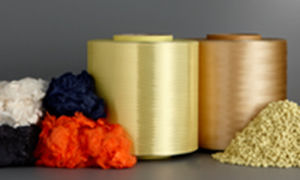
Kermel fibre is a polyamide-imide, classified as a meta-aramid.
Many assets thanks to its chemical structure:
Non-flammability
It is permanently non-flammable by nature. Industrial protective clothing made from Kermel® aramid fibre thus offers maximum protection at very high temperatures (up to 1,000°C), contrary to protective clothing only treated with a fire-retardant that deteriorates over time.
Thermal insulation
Kermel® aramid fibre is an excellent thermal insulator, providing efficient protection from heat, even in lightweight protective clothing.
Thermostability
Kermel® fabrics are flame stable and protective clothing integrity is maintained for a relatively long time, thus allowing for sufficient egress time.
Resistance to chemicals
The chemical inertness of Kermel® aramid fibres provides efficient protection against the majority of chemical agents, even at high concentrations under the effect of splashing.
Permanent colour
The main advantage of Kermel® over competing fibres is the fact that it is solution-dyed during the manufacturing process. This property allows exceptional color fastness. KERMEL offers a range of over 40 colours for your industrial protective clothing !
Extreme comfort
The fibre's low modulus results in Kermel® aramid fabric and knitwear having unequalled drape, softness and comfort.
Impressive appearance
Kermel® does not pill: industrial protective clothing stay looking perfect over time.
Good mechanical resistance
Its high resistance to abrasion allows for the creation of extremely durable industrial protective clothing, that do not deteriorate during industrial wash cycles.
|
|
KERMEL, the leading European company on the market of aramid fibres dedicated to protective clothing against heat and flames, has developed a wide range of innovative textile solutions made out of its Kermel fibres.
The main users are:
- fire-fighters
- military and police forces
- personnel working in hazardous environment
Kermel fibre offers protection against very high temperatures and provide an unequalled level of comfort to workwear.
|
|
|
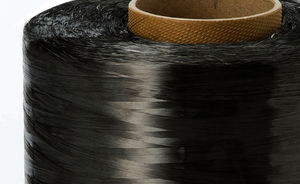
HexTow™ fibers from Hexcel are produced in a continuous operation in which the polyacrylonitrile precursor undergoes a series of precisely controlled processes. Exposure to extremely high temperatures chemically changes the precursor, yielding high strength-to-weight and high stiffness-to-weight properties through oxidation, carbonization and graphitization. The successive surface treatment and sizing stages improve bonding and handleability. The resulting carbon fiber is stronger than steel, lighter than aluminum and as stiff as titanium. It can be supplied in two basic forms: Continuous Fiber and Chopped Fiber.
|
|
|
OC® Knitted Fabrics are knitted layers of directional rovings either with or without a supporting chopped strand mat or veil. The layers are stitched together for better handling and dimensional stability during lamination. The precise alignment and positioning of the rovings give high tensile strength and a smooth surface finish in applications such as leisure boats.
|
|
|
OC� Milled Fibers are glass fibers, coated with a specific sizing to enhance resin compatibility, and then milled to a specific bulk density. OC� Milled Fibers are produced in two general product forms - powder and floccular - and are used in both thermoplastics and thermosets. In the powder form, molders obtain good flowability with a high bulk density, and benefit from increased productivity and lower manufacturing costs. Molders looking for lower bulk density use the floccular product form with longer glass filaments. Both product forms offer excellent dimensional stability, shrinkage control, high modulus and acid resistance in applications.
|
|
|
OC® Multi-End Rovings are continuous glass fibers bonded together with high-performance sizings and gathered together into strands without twist. The OC® Multi-End Roving can be used in many processes, including but not limited to sheet molding (SMC), spray-up, panel, centrifugal casting, long fiber injection (LFI), glass mat thermoplastics (GMT) and continuous molding (CMC). The roving strands are chopped and used with a wide variety of resins, including but not limited to polyester (PE), vinyl ester (VE), polyurethane (PU), styrene butadiene (SBR), chloroprene rubber (CR), polypropylene (PP) and epoxy (EP) resin systems.
|
|
|
AGY produces conventional or multi-end roving products from S-2 Glass fibers. These roving products are typically used for composite reinforcement applications where high performance fiber reinforcement is required. S-2 Glass Rovings are produced in a variety of constructions, varying by total linear density and by the type of size system applied to the fibers. The products are broken down by the size system and its resin compatibilities. There are 4 families of S-2 Glass Roving products - 365 rovings, 449 rovings, 463 rovings, and 933 rovings. These roving products are described with the size chemistry number followed by the nominal yield in yards per pound.
|
|
|
Texindustria® offers an extremely wide range of dry fabrics and tapes in carbon, aramid, HT polyethylene, E - S and R glass fibres, and unidirectional and multi-axial materials, as well as hybrid fabric such as carbon/glass, carbon/aramid, aramid/glass, polyethylene/glass.
|
|
|
Texindustria® offers an extremely wide range of dry fabrics and tapes in carbon, aramid, HT polyethylene, E - S and R glass fibres, and unidirectional and multi-axial materials, as well as hybrid fabric such as carbon/glass, carbon/aramid, aramid/glass, polyethylene/glass.
|
|
Designed for a wide range of applications, Taconic TFE-GLASS Fabric is available in several grades to match specific performance requirements. TFE-GLASS exhibits the following high-performance characteristics:
Non-stick surface
Excellent temperature resistance: from -100°F - +500°F (-73°C - +260°C)
Chemically inert
High tensile strength
|
|
|
E-Glass products: Although we offer a 'standard product list', much of our production is for bespoke products specific to a customer. Please discuss your individual requirements with our technical sales team.
|
|
ZenTron high strength roving is a single-end S-2 Glass roving product that consists of numerous L or T Filament continuous glass strands gathered without mechanical twist into a single bundle and treated with one of two epoxy-compatible size systems.
ZenTron is suitable for a number of composite and non-composite processes and applications, including weaving, filament winding, pultrusion, and texturizing. The 758 size system was developed for composite and reinforcement applications, while the 721B size system was developed for texturizing and thermal applications.
ZenTron products are described with the size chemistry designator as well as the nominal yield in yards per pound.
There are two families of ZenTron products - L Filament and T Filament.
|
|
|
|