
- Home page
- buying guide
- universal joint
universal joint
universal joint: A technical guide
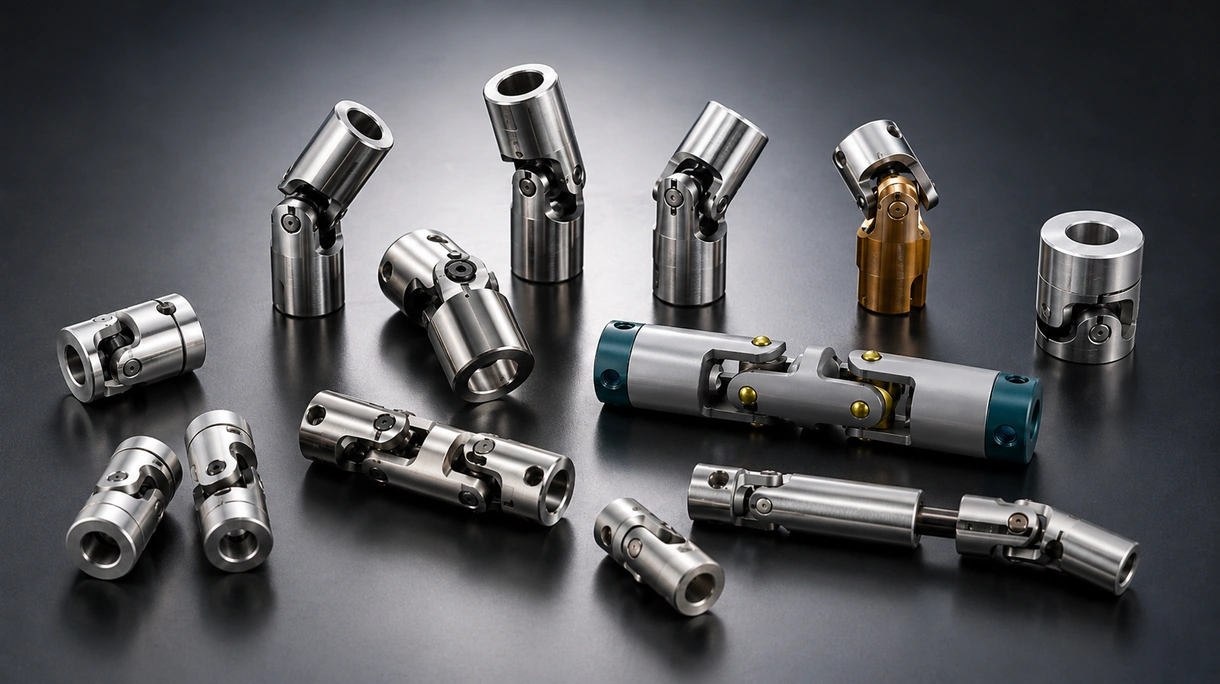
4 Criteria to choose your universal joint
Torque transmission capacity
Essential for preventing mechanical shear failure by matching peak load requirements with the material yield strength and cross-pin dimensions.
Maximum angular displacement
Defines the operational limit for power transfer efficiency while preventing excessive vibration or binding at high articulation angles during operation.
Dynamic rotational speed
High-speed applications require precision balancing to mitigate centrifugal forces and prevent premature bearing wear or catastrophic system failure through vibration.
Environmental resistance rating
Exposure to corrosive chemicals or abrasive particulates necessitates specific coatings or stainless steel grades to ensure long-term structural component integrity.
Available technologies and advantages
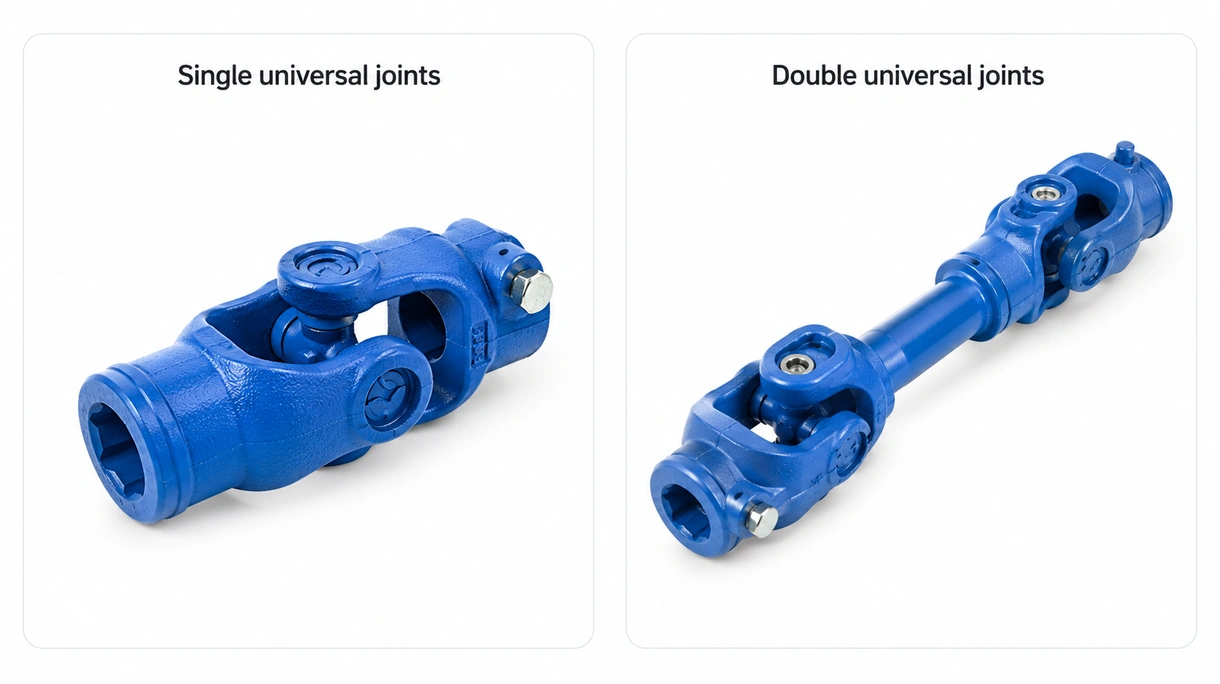
Single universal joints
This linkage transmits motion between shafts intersecting at an angle, accommodating misalignment up to forty-five degrees. It remains the most common solution for basic industrial mechanical coupling. These joints offer simplicity and cost-efficiency but create non-constant velocity, requiring specific orientation pairing to cancel out the resulting rotational speed fluctuations and vibrations.
Double universal joints
These feature two joints connected by a center yoke to compensate for parallel misalignment and ensure constant velocity through phase synchronization during power transmission. While providing smooth power transfer and higher angle capacity, they occupy a larger mechanical footprint and involve higher manufacturing costs compared to single joint configurations.
Needle bearing joints
Utilizing precision needle rollers within the cross-pin assembly, these joints support high-speed continuous operations while reducing friction and heat generation during industrial automation tasks. They offer exceptional longevity and efficiency in high-speed applications, yet they possess lower shock load resistance compared to plain bearing bushings used in heavy-duty machinery.
6 expert tips
Specify peak torque including safety factors to ensure the cross-pin assembly withstands intermittent shock loads during heavy industrial cycles.
Prioritize precision-ground needle bearings for applications exceeding one thousand rotations per minute to minimize thermal expansion and mechanical wear.
Mandate telescopic splined shafts when axial movement is required to accommodate distance variations between the driving and driven equipment components.
Select stainless steel or specialized coatings for joints operating in washdown environments to prevent surface oxidation and mechanical seizure.
Verify dynamic balance certifications for long-distance drive shafts to eliminate harmonic vibrations that compromise sensitive motor and gearbox bearings.
Always verify the technical certification to ensure compliance with local building safety standards and long-term durability.
Innovations and Trends
Real-time vibration and temperature data streams enable predictive maintenance strategies to reduce unplanned production downtime in heavy manufacturing.
Carbon fiber reinforced yokes reduce rotational inertia by thirty percent, significantly improving acceleration dynamics and energy efficiency in robotics.
Advanced solid-state lubrication eliminates periodic maintenance requirements while meeting strict FDA standards for cleanroom and food processing environments.
Generative design optimizes weight-to-strength ratios, allowing for custom geometries that manage complex stresses while reducing total material consumption.
*Prices are pre-tax. They exclude delivery charges and customs duties and do not include additional charges for installation or activation options. Prices are indicative only and may vary by country, with changes to the cost of raw materials and exchange rates.
About DirectIndustry
DirectIndustry is a marketplace that offers B2B players a complete experience, from product sourcing to purchase. DirectIndustry is an entity of VirtualExpo Group.
Are you a buyer?
Are you a supplier?
About Us
- VirtualExpo Group
- Our Partners
- Recruitment
- Testimonials