

- Materials - Tools - Components
- Lubrication
- Single-point lubricator
- GREASEMAX® Sohm Schmierstofftechnik e.K.


- Company
- Products
- Catalogs
- News & Trends
- Exhibitions
Single-point lubricator GREASEMAX®for food processing lineautomatic


Add to favorites
Compare this product
Characteristics
- Type
- single-point
- Applications
- for food processing line
- Other characteristics
- automatic
- Capacity
120 cm³
(4 US fl oz)- Pressure
Max.: 3 bar
(43.5 psi)Min.: 2 bar
(29 psi)2 bar
(29 psi)
Description
Automatic Lubrication in Food and Beverage Production
In food and beverage production, one principle applies without exception: production lines run around the clock, hygiene standards leave no room for compromise, and every unplanned interruption costs not only time but can also jeopardise compliance with quality and safety requirements under IFS, BRC or HACCP.
At the same time, machines operate under conditions that place a lasting strain on bearings and drives: moisture, aggressive cleaning chemicals, frequent temperature changes and abrasive food residues. Manual lubrication under these conditions brings typical risks: imprecise grease quantities, contamination risk through over-lubrication, hard-to-reach lubrication points and downtime that must be accepted for routine maintenance alone. Automatic lubricators solve this problem reliably, hygienically and without interrupting ongoing operations.
Why lubrication in the food industry demands special requirements
The challenges in food and beverage production are the result of an environment that, in almost no other industry, is so consistently designed for hygiene, throughput and availability at the same time.
Moisture and cleaning chemicals place a continuous strain on lubrication points. Systems are often cleaned daily with aggressive agents and high pressure. Water and chemicals wash conventional lubricants out of bearings and promote corrosion. Lubrication points that are not continuously replenished lose part of their protective film after every cleaning cycle.
Abrasive food residues and particle contamination such as flour dust, sugar particles and husks penetrate bearing gaps and act abrasively on running surfaces. Especially in processing areas with open processes, this ingress is almost impossible to avoid.
High temperature peaks and temperature fluctuations in baking and oven systems, pasteurisation lines and cold areas cause lubricating grease to age faster and lose its protective effect prematurely.
Hygiene requirements and contamination risk make over-lubrication in food production more than a technical problem: grease ejection at bearings can come into direct contact with products or packaging and jeopardise audit results. Precisely dosed, closed lubrication systems structurally eliminate this risk.
Where automatic lubrication helps along the production line
In the area of delivery and pre-processing, conveyor belts, sorters, washing and peeling machines and depalletisers are most exposed to moisture. Frequent start-stop cycles, aggressive cleaning agents and hard-to-access bearings make manual lubrication particularly error-prone here. Automatic lubricators protect bearings against wash-out and corrosion on a sustained basis, even when the system is cleaned daily. Manual interventions in slippery, wet areas are eliminated, and unplanned downtime at conveyor and drum drives is reliably reduced.
In the processing core, presses, chain conveyors, cutting machines, baking and oven systems as well as mixers operate under high temperatures, with abrasive food residues and strong vibrations. In this area, precision is decisive: too much lubricant causes grease ejection and particle adhesion, too little leads to overheating and premature wear. Automatic lubricators deliver precisely dosed grease quantities, continuously and regardless of whether the system is operating under full load or in timed operation. Chains and bearings in hot and cold zones are supplied uniformly, and process stability is maintained even with changing production parameters.
In filling, packaging and palletising, fillers, labellers, roller conveyors and palletisers operate at high cycle rates, with precise movement sequences and in hygienically particularly sensitive areas. A failure shortly before dispatch generates disproportionately high consequential costs. Automatic lubrication ensures uniform supply of all roller and guide points at high speeds. The closed grease supply structurally eliminates any risk of product contact through grease ejection and relieves maintenance in areas where maintenance windows are particularly tight.
The practical benefits for your operation
Precise grease delivery from a closed system prevents over-lubrication and grease ejection. The contamination risk is structurally eliminated, not through additional control measures, but through the nature of the lubrication supply itself. Re-lubrication during ongoing operation is possible without stopping lines or entering hygiene zones. Ongoing, precisely dosed supply prevents both insufficient lubrication and over-lubrication, two extremes that accelerate wear and provoke failures. Hard-to-access, wet or hygienically sensitive lubrication points are supplied automatically; manual interventions concentrate on changing the lubricators: plannable, safe and far less frequent than previous lubrication rounds. Automatic, documentable lubrication supply supports the requirements of IFS, BRC, HACCP and comparable standards.
GREASEMAX®: Hygienically safe lubrication solution for food production
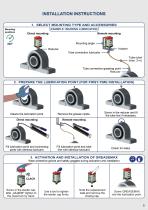
GREASEMAX® requires neither electricity nor batteries and operates purely on the basis of a chemical reaction, fully self-sufficient and without dependence on external power supply or electronic components. For use in food production, GREASEMAX® brings the decisive properties: the closed lubrication system prevents uncontrolled grease release and structurally eliminates the contamination risk through over-lubrication. NSF H1 approved lubricants are available for use in areas where occasional food contact cannot be fully excluded. Operating periods of 1, 3, 6 or 12 months with constant, uniform lubricant delivery make consumption plannable, entirely without electronics and without sensitive mechanics. The robust design resistant to moisture and cleaning chemicals is engineered for sustained use in environments with regular wet cleaning. Flexible mounting directly at the bearing point or via hose connection up to two metres in length enables reliable supply even at hard-to-access lubrication points.
Conclusion: Hygiene and availability are not a contradiction with the right lubrication
In food and beverage production, automatic lubrication is not a comfort solution. It is a technical prerequisite for the reliable, hygienically safe operation of modern production systems. Anyone still organising lubrication manually accepts contamination risks, unplanned downtime and a maintenance burden. Automatic lubricators such as GREASEMAX® can be integrated into any existing line from delivery to packaging, without complex installation, without electronics and without intervention in existing system controls.
In food and beverage production, one principle applies without exception: production lines run around the clock, hygiene standards leave no room for compromise, and every unplanned interruption costs not only time but can also jeopardise compliance with quality and safety requirements under IFS, BRC or HACCP.
At the same time, machines operate under conditions that place a lasting strain on bearings and drives: moisture, aggressive cleaning chemicals, frequent temperature changes and abrasive food residues. Manual lubrication under these conditions brings typical risks: imprecise grease quantities, contamination risk through over-lubrication, hard-to-reach lubrication points and downtime that must be accepted for routine maintenance alone. Automatic lubricators solve this problem reliably, hygienically and without interrupting ongoing operations.
Why lubrication in the food industry demands special requirements
The challenges in food and beverage production are the result of an environment that, in almost no other industry, is so consistently designed for hygiene, throughput and availability at the same time.
Moisture and cleaning chemicals place a continuous strain on lubrication points. Systems are often cleaned daily with aggressive agents and high pressure. Water and chemicals wash conventional lubricants out of bearings and promote corrosion. Lubrication points that are not continuously replenished lose part of their protective film after every cleaning cycle.
Abrasive food residues and particle contamination such as flour dust, sugar particles and husks penetrate bearing gaps and act abrasively on running surfaces. Especially in processing areas with open processes, this ingress is almost impossible to avoid.
High temperature peaks and temperature fluctuations in baking and oven systems, pasteurisation lines and cold areas cause lubricating grease to age faster and lose its protective effect prematurely.
Hygiene requirements and contamination risk make over-lubrication in food production more than a technical problem: grease ejection at bearings can come into direct contact with products or packaging and jeopardise audit results. Precisely dosed, closed lubrication systems structurally eliminate this risk.
Where automatic lubrication helps along the production line
In the area of delivery and pre-processing, conveyor belts, sorters, washing and peeling machines and depalletisers are most exposed to moisture. Frequent start-stop cycles, aggressive cleaning agents and hard-to-access bearings make manual lubrication particularly error-prone here. Automatic lubricators protect bearings against wash-out and corrosion on a sustained basis, even when the system is cleaned daily. Manual interventions in slippery, wet areas are eliminated, and unplanned downtime at conveyor and drum drives is reliably reduced.
In the processing core, presses, chain conveyors, cutting machines, baking and oven systems as well as mixers operate under high temperatures, with abrasive food residues and strong vibrations. In this area, precision is decisive: too much lubricant causes grease ejection and particle adhesion, too little leads to overheating and premature wear. Automatic lubricators deliver precisely dosed grease quantities, continuously and regardless of whether the system is operating under full load or in timed operation. Chains and bearings in hot and cold zones are supplied uniformly, and process stability is maintained even with changing production parameters.
In filling, packaging and palletising, fillers, labellers, roller conveyors and palletisers operate at high cycle rates, with precise movement sequences and in hygienically particularly sensitive areas. A failure shortly before dispatch generates disproportionately high consequential costs. Automatic lubrication ensures uniform supply of all roller and guide points at high speeds. The closed grease supply structurally eliminates any risk of product contact through grease ejection and relieves maintenance in areas where maintenance windows are particularly tight.
The practical benefits for your operation
Precise grease delivery from a closed system prevents over-lubrication and grease ejection. The contamination risk is structurally eliminated, not through additional control measures, but through the nature of the lubrication supply itself. Re-lubrication during ongoing operation is possible without stopping lines or entering hygiene zones. Ongoing, precisely dosed supply prevents both insufficient lubrication and over-lubrication, two extremes that accelerate wear and provoke failures. Hard-to-access, wet or hygienically sensitive lubrication points are supplied automatically; manual interventions concentrate on changing the lubricators: plannable, safe and far less frequent than previous lubrication rounds. Automatic, documentable lubrication supply supports the requirements of IFS, BRC, HACCP and comparable standards.
GREASEMAX®: Hygienically safe lubrication solution for food production
GREASEMAX® requires neither electricity nor batteries and operates purely on the basis of a chemical reaction, fully self-sufficient and without dependence on external power supply or electronic components. For use in food production, GREASEMAX® brings the decisive properties: the closed lubrication system prevents uncontrolled grease release and structurally eliminates the contamination risk through over-lubrication. NSF H1 approved lubricants are available for use in areas where occasional food contact cannot be fully excluded. Operating periods of 1, 3, 6 or 12 months with constant, uniform lubricant delivery make consumption plannable, entirely without electronics and without sensitive mechanics. The robust design resistant to moisture and cleaning chemicals is engineered for sustained use in environments with regular wet cleaning. Flexible mounting directly at the bearing point or via hose connection up to two metres in length enables reliable supply even at hard-to-access lubrication points.
Conclusion: Hygiene and availability are not a contradiction with the right lubrication
In food and beverage production, automatic lubrication is not a comfort solution. It is a technical prerequisite for the reliable, hygienically safe operation of modern production systems. Anyone still organising lubrication manually accepts contamination risks, unplanned downtime and a maintenance burden. Automatic lubricators such as GREASEMAX® can be integrated into any existing line from delivery to packaging, without complex installation, without electronics and without intervention in existing system controls.
VIDEO

Other GREASEMAX® Sohm Schmierstofftechnik e.K. products
---


*Prices are pre-tax. They exclude delivery charges and customs duties and do not include additional charges for installation or activation options. Prices are indicative only and may vary by country, with changes to the cost of raw materials and exchange rates.
About DirectIndustry
DirectIndustry is a marketplace that offers B2B players a complete experience, from product sourcing to purchase. DirectIndustry is an entity of VirtualExpo Group.
Are you a buyer?
Are you a supplier?
© 2026 All rights reserved - Terms - Privacy policy - General Terms - Manage cookies - 鄂ICP备2026053537号-2 -