



- Production Machines
- Cutting Machine
- Coil cut-to-length cutting line
- Guangdong MAHATMA Intelligent Co,. Ltd
Laser cut-to-length cutting line Z1sheet metalcoilroll sheet


Add to favorites
Compare this product
Characteristics
- Technology
- laser
- Product handled
- sheet metal, coil, roll sheet
- Control type
- with control software
- Associated function
- unwinding
- Applications
- for industrial applications, for the automotive industry, for shipbuilding
- Workpiece loading
- automated loading/unloading
- Other characteristics
- automatic, coil-fed, high-precision, with automatic feeder
- Maximum cutting height
25 mm
(1 in)- Minimum cutting height
0.1 mm
(0 in)- Laser power
Max.: 20,000 W
Min.: 3,000 W
- Repeatability
0.01 mm
(0.0004 in)- Maximum width
Max.: 2,500 mm
(98 in)Min.: 200 mm
(8 in)
Description
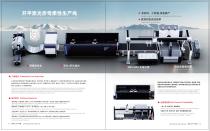
This specialized production line integrates decoiling, feeding, laser blanking (cutting), leveling and unloading to provide one-stop processing from coiled material to finished parts. It is designed for flexible, high-precision manufacturing with an Industry 4.0 collaborative control system and full-material adaptive dynamic compensation for variable material conditions.
Technical Features
Production Line Series and Application Scope
Comparison of Core Parameters Across Series
Industry Selection Guide
Applicable Materials
Technical Specifications
Technical Features
- Seamless integration of leveling and laser blanking for precise end-to-end production.
- High-precision leveling and laser cutting across a wide range of sheet thicknesses.
- Support for diverse materials enabling flexible manufacturing across industries.
- Five scalable series (UL–XL) to match different production volumes and applications.
- Zero roller imprint capability to meet high-surface-precision requirements.
Production Line Series and Application Scope
- UL Ultra-Thin Plate Series: Thickness 0.1–0.8 mm; Examples: precision electronics, photovoltaic backsheets, small appliances; Typical materials: cold-rolled steel, stainless steel, aluminum.
- TL Thin Plate Series: Thickness 0.3–3.0 mm; Examples: automotive body panels, appliance casings, kitchen & bath hardware; Typical materials: galvanized sheets, carbon steel, aluminum alloys.
- ML Medium–Heavy Plate Series: Thickness 1.0–8.0 mm; Examples: construction machinery, electrical cabinets, rail equipment; Typical materials: hot-rolled steel, stainless steel.
- HL Heavy Plate Series: Thickness 3.0–20.0 mm; Examples: structural components, heavy machinery, marine plates; Typical materials: high-manganese steel, aluminum-magnesium alloys.
- XL Extra-Heavy Plate Series: Thickness 6.0–25.0 mm; Examples: building steel structures, heavy-duty manufacturing, energy equipment; Typical materials: steel plates, titanium alloys.
Comparison of Core Parameters Across Series
- Thickness range: UL 0.1–0.8 mm; TL 0.3–3.0 mm; ML 1.0–8.0 mm; HL 3.0–20.0 mm; XL 6.0–25.0 mm.
- Width range: UL 200–1500 mm; TL/ML/HL/XL 600–2500 mm (series-dependent).
- Positioning accuracy: ±0.02 mm/m (all series).
- Laser power: Typical guidance by application — thin-sheet/new energy: 3–6 kW; automotive/multi-industry: 3–12 kW; heavy structural/shipbuilding: 12–20 kW.
- Blanking method: Integrated laser blanking standard across series.
Industry Selection Guide
- Automotive manufacturing: Recommended TL / ML / HL; common materials: high-strength steel, aluminum alloys, stainless steel; typical width ~1300–1600 mm; laser power 3–12 kW.
- Home appliance: Recommended UL / TL; common materials: cold-rolled, galvanized and coated sheets; typical width 1000–1300 mm; laser power 3–6 kW.
- Rail transit: Recommended ML / HL; materials: stainless steel, aluminum, hot-rolled steel; width 1600–2100 mm; laser power 6–12 kW.
- Building steel structures: Recommended HL / XL; materials: carbon and alloy steels, thick plates; width 1600–2100 mm; laser power 12–20 kW.
- Sheet metal processing (multi-industry): Recommended TL / ML; widths 1000–1600 mm; laser power 3–12 kW.
- New energy / Photovoltaics: Recommended UL / TL; materials: thin aluminum, galvanized sheet, silicon steel; width 1000–1300 mm; laser power 3–6 kW.
- Shipbuilding & heavy industry: Recommended XL; materials: thick steel plates and special alloys; width 1600–2100 mm; laser power 12–20 kW.
Applicable Materials
- Stainless steel
- Carbon steel
- Galvanized sheet
- High-strength steel plate
- Aluminum and aluminum alloys
- Cold-rolled coils and sheets
- Titanium and specialty alloys (series-dependent)
Technical Specifications
- Commercial name: Automatic Roll Laser Blanking Line.
- Integrated functions: decoiling, feeding, leveling, laser blanking and unloading (one-stop processing).
- Control: Industry 4.0 collaborative control system with full-material adaptive dynamic compensation algorithm.
- Leveling precision: ultra-precision leveling delivering material flatness to ~0.01 mm.
- Positioning accuracy: ±0.02 mm/m.
- Support for multi-coil switching and quick changeover for flexible production.
- Width capability (series-dependent): 200–2500 mm.
- Thickness capability (series-dependent): 0.1–25.0 mm across UL–XL series.
- Blanking method: integrated laser blanking (standard configuration).
VIDEO
Catalogs
Other Guangdong MAHATMA Intelligent Co,. Ltd products
Automated Smart Factory


Related Searches
- Cut-to-length cutting line
- Coil cut-to-length cutting line
- Sheet metal cut-to-length cutting line
- Cut-to-length cutting line for industrial applications
- Automatic cut-to-length cutting line
- Coil-fed cut-to-length cutting line
- Cut-to-length cutting line for the automotive industry
- High-precision cut-to-length cutting line
- Unwinding cut-to-length cutting line
*Prices are pre-tax. They exclude delivery charges and customs duties and do not include additional charges for installation or activation options. Prices are indicative only and may vary by country, with changes to the cost of raw materials and exchange rates.