


- Hydraulics - Pneumatics
- Filter and Separator
- Metal separator
- PRODECOLOGIA SMF
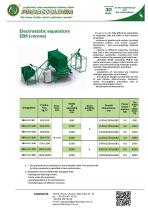
Electrostatic separator EBS seriesfor non-ferrous metalsfor the recycling industryprocess


Add to favorites
Compare this product
Characteristics
- Separated substance
- for non-ferrous metals
- Technology
- electrostatic
- Application domain
- process, for the recycling industry
- Other characteristics
- automatic, high-efficiency, dry, high-performance, aluminium
Description
Intended for dry high-efficiency separation of materials, that differ in electric properties:
mixtures of plastics and metals, including shredded cables, into metal (copper, aluminium), and non-conducting material (plastic);
mixtures of different materials upon condition that one of the components has conducting characteristics (among them extraction of textile cord from rubber crumb in the processing of used tires)
shredded WEEE (including PCB’s) into metal (aluminium, copper, nickel, bronze, precious metals and other) and non-conducting material (plastic, textolite, fiber-glass plastic and other);
and also for dry benefication:
nonmetallic raw material (feldspar, pegmatite, quartz sand);
collective concentrates of deposits, in composition of minerals of zirconium, ilmenite, rutile, leucoxene, staurolite, tourmaline, distan, quartz;
rough concentrate of ores of rare metals (tin-tungsten, monacite);
ores of precious metals (gold, silver)
diamond-bearing raw materials.
Application inndustries:
Cable recycling
Municipal engineering
Processing of plastic waste
Recycling of household appliances
Principle of operation:
Two-component mixture of polymers (pre-crushed, dried and classified) is fed into the loading hopper, then the product falls into a special tribocharging device.
In the tribocharging device particles of polymers mix, due to the numerous encounters with each other and the walls of the device, get positive and negative charges and then sorted out by electric field on the drum separator.
In accordance to the sign of the charge, particles are attracted either to the precipitating electrode or to the deflecting electrode connected to the high voltage power supply.
Our company will help you to choose the equipment and calculate the price based on your requirements.
VIDEO
Catalogs
Exhibitions
Meet this supplier at the following exhibition(s):

Other PRODECOLOGIA SMF products
Electric separators


Related Searches
- Solid classifier
- Centrifugal classifier
- Eddy current separator
- Gravity classifier
- Process classifier
- Classifier for the recycling industry
- Ferrous metal separator
- Classifier for the food industry
- Automatic separator
- Air classifier
- Classifier for the chemical industry
- High-efficiency classifier
- Self-cleaning separator
- Dry classifier
- Vertical classifier
- High-performance classifier
- Ore separator
- Magnetic drum separator
- Construction classifier
- Production line separator
*Prices are pre-tax. They exclude delivery charges and customs duties and do not include additional charges for installation or activation options. Prices are indicative only and may vary by country, with changes to the cost of raw materials and exchange rates.
About DirectIndustry
DirectIndustry is a marketplace that offers B2B players a complete experience, from product sourcing to purchase. DirectIndustry is an entity of VirtualExpo Group.
Are you a buyer?
Are you a supplier?