|
|
DiaMon analyzers are the pioneers of on-line process monitoring measuring several chemical parameters automatically in a single instrument.
- Multi-parameter on-line analyzer
- For waste water treatment plants, rivers, lakes and coastal waters
|
|
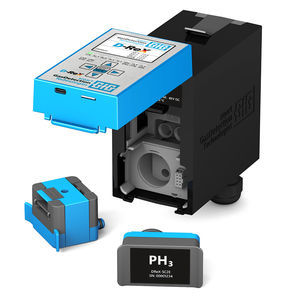
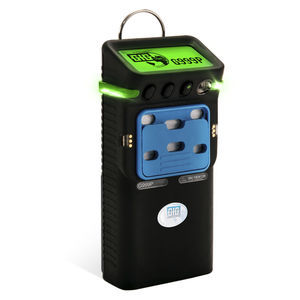
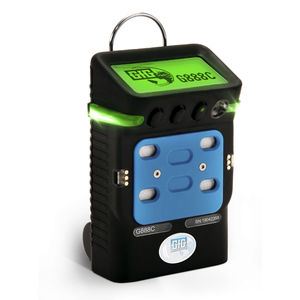
GfG is a world leader for gas detection and measurement technology. For over 40 years GfG has specialized in designing, developing and producing the safest and most reliable equipment and sensors available.
GfG offers an extensive range of portable monitors and fixed systems. The product range includes sensors, the world´s smallest gas monitors, micro-processor controlled multi-gas detectors and computer aided system solutions. GfG provides diverse solutios for Toxic, Explosive and Oxygen gas detection in air and water.
GfG equipement is used in a variety of applications and industries including automotive, chemical industries, landfills, steel industries, hospitals, mining, public utilities, food processing, research institutes, universities and wherever the protection of life and property is needed.
|
|
The DS2 Docking Station provides the ultimate flexibility for managing your gas monitors wherever you use them. The DS2 gives you all of the benefits of consistent automated calibration, record keeping, battery recharging and instrument diagnostics for your monitors to limit your liabilities and safety hazards. Two way wireless and/or ethernet connectivity enables you to link up to 100 stand-alone Instrument Docking Stations (IDSs) from remote locations anywhere in your facility and relay the data back to one central database for total instrument management. A graphical user interface tool (DSSAC) allows an administrator to view operations on each Docking Station from a network computer, making it easy to track instruments, print reports, set events and change parameters for any location.
|
|
|
Gas sensors are usually installed in hard to reach places: inside pits, over vats, high under roof and skylights. To eliminate the labor and risk to personnel perfoming routine calibration on these sensors, Rel-Tek developed its unique Magikal and Magikal-II automatic gas sensor calibration (AGSC) utilities. These powerful technologies have been proven over the years at installations from Massachusetts to California , from Michigan to Texas. Users appreciate freedom from the calibration nuisance, while saving a lot of money to boot.
|
|
|
|
|
|
What if you could maintain and manage your fixedpoint gas monitor fleet without leaving your desk?
The advantages would be significant. Manually calibrating every fixed monitor in a facility is a time consuming distraction from your core business. The units may be in hard-to-reach places creating additional safety hazards. These and other obstacles make it difficult to follow industry best practices for routine testing and calibration.
iTrans™ DS2 Docking Station™ is the first system to automate calibration, record-keeping and instrument
diagnostics for fixed-point gas monitors. Hands-off maintenance and a snapshot view of your entire gas
monitor fleet allow you to:
• Maintain your gas monitors more safely, efficiently and reliably
• Increase equipment reliability
• Eliminate safety concerns
• Save money on calibration and testing
• Focus more resources toward your core business
A graphical user interface tool allows an administrator to view operations on each Docking Station from a network computer. From here, you can initiate calibrations and instrument tests remotely, print reports, set events, and run diagnostics for any or all instruments at any location.
The DS2’s flexible architecture minimizes installation costs, whether you’re managing one instrument or an entire fleet of fixed-mounted or portable instruments.
|
|
From fermentation through to distribution, Carbon Dioxide is one of the most common hazards to health in breweries, cellars and drinks outlets.
It is also the fourth most abundant gas in atmosphere; Long term exposure to only 0.5% volume represents a toxic health hazard.
Concentration greater than 15% volume can lead to death.
CellarSafe has been specifically designed
to warn personnel of these hazards and features both long life sensors and remote warning panels (whcih can for example be installed behind a bar as well as at the entrance to the cellar).
|
|
Novel infrared measuring system for CO2
With an infrared sensor (IR sensor) specifically for carbon dioxide.
The infrared measuring system detects the carbon dioxide content of the ambient air fast and precisely. It contains a novel infrared measuring system functioning basically like a conventional two-beam photometer.
However, since material and construction of the sample cell are novel, and the measured signals are evaluated and processed according to a new digital algorithm, the infrared measuring system is light-weight, compact, in normal applications maintenance-free and long-term stable but nevertheless affordable.
The infrared measuring system detects the absolute carbon dioxide content of the ambient air (partial pressure), monitors itself constantly and signals malfunctions of its hard and software. The whole measuring range is linear.
|
|
|
|
|
|
The MYCO2 is a high performance infra-red gas sensor, designed for monitoring environmental CO2 in protected crops and demand controlled ventilation.
MYCO2 is a robust, low cost CO2 monitor, housed in an IP65 rated enclosure against the ingress of water and particulates. The monitor operates on a diffusion/convection principle and therefore no sampling pump is required.
This monitor can easily be wall-mounted.
For many years, Edinburgh Sensors has manufactured infra-red, dual wavelength sensors with a single optical path and without any moving parts. As a result, the sensor is highly gas specific, and insensitive to other gases and water vapour.
This ensures long term stability and accuracy over extended periods, removing the need for frequent re-calibration.
The MYCO2 sensor can be customised to suit specific applications, placing the design control in the hands of the system designer. The user selectable functions include linear analogue output options, alarm function software and automatic temperature correction.
The MYCO2 sensors are aspirated by a combination of diffusion and convection within the sensor head. This gas sampling method is silent, reliable and provides a fast response time. Convection is used to circulate gas between the sensor head and the diffusion cell with gas exchange occurring, by diffusion, at the surface of the diffusion membrane. Since the gas in the cell circulates within a closed system, all optics are protected from the ingress of dust. No additional pumping or filtering of the gas is necessary.
|
|
Thermo Scientific's Model FX-CO2 single gas detector/transmitter uses an NDIR (non-dispersive infrared) sensor to detect carbon dioxide (CO2) in the workplace. The sensor and electronics are mounted in a NEMA 4X fiberglass surface mounting enclosure.
Features:
- Uses an NDIR (non-dispersive infrared) technology
- Industry standard, 4 to 20 mA output
- Housed in rugged, weather proof case, suitable for indoor or outdoor installation
- Excellent long term stability
- User friendly - simple to operate
- Economical
- Splash resistant NEMA 4X
- Diffusion and flow-through version available
|
|
The GMT220 transmitter series is designed for a wide range of industrial carbon dioxide applications including greenhouses, fruit storages, safety alerts and demand-controlled ventilation in mushroom farms, livestock husbandry and parking garages.
The GMT220 transmitters measure carbon dioxide in harsh and humid environments. The housing is dust and waterproof to IP65/NEMA4. The materials have been chosen for extended corrosion resistance.
The GMT220 transmitters are easy to use and install. The transmitters have a modular structure which includes a separate mounting plate for easy installation.
Interchangeable probes facilitate field maintenance. The probes can simply be replaced with newly calibrated ones, or with separate probes that are only used as a reference for calibration checking. This minimizes downtime and eliminates the need for expensive calibration equipment.
|
|
Besides pH and dissolved oxygen measurements, reliable monitoring and control of the CO2 partial pressure is important for successful fermentation. The oxidation of carbohydrates to CO2 water results from aerobic respiration. METTLER TOLEDO's new CO2 measuring system is specially designed for in-situ measurement into a bioreactor and therefore "registrates" exactly the same partial pressure as the cell.
METTLER TOLEDO offers a wide range of different measurement systems for very specific requirements in different industries consisting of sensors, housings, transmitters, services and fulfills all high quality requirements.
|
|
CMS-2 Carbon Monoxide Monitor/Alarm
The CMS-2 is a field portable carbon monoxide monitor and alarm for respirator air supply. If CO exceeds 10 ppm, it triggers a warning light, and a high-decibel audible alarm. The rugged case with comfortable carrying handle, protects the monitor from minor impacts. Used by blasting and painting contractors for field operations.
Available Literature:
23248 - CMS 1 & 2 Carbon Monoxide Alarms
|
|
|
|
|
|
The Tocsin 103 series of gas detectors are designed for cost effective safe area gas detection solutions. They incorporate micro processor technology to give a stable 4-20mA process signal output or digital addressable output. The addressable output option allows detectors to be networked on a single cable run giving dramatic reduction in installation costs. The in built processor can be used to pre-calibrate the sensor prior to installation. Alternatively calibration can be achieved on site via the Oliver IGD control panel or locally using a handheld PC device or laptop. A range of sensing technologies can be incorporated into the housing to provide the most appropriate detection method.
ATEX VERSIONS (TOCSIN 102) AVAILABLE
Available sensor types include
IGD’s own MKIII and Type B Pellistors,
Infra Red
Electrochemical Devices
Gas Detected Include
Flammable Gases
Carbon Dioxide
Carbon Monoxide
Nitric Oxide
Nitrogen Dioxide
Hydrogen Cyanide
Chlorine
Hydrogen Sulphide
Ammonia
Oxygen
Sulphur Dioxide
Hydrogen Chloride
ATEX VERSIONS ALSO AVAILABLE
|
|
D-G 102 PM Measuring System for CO
The CO-measuring system was developed according EU regulations for controlling the concentration of the limit values of carbon monoxide (CO) and nitrogen (NO) if applicable.
The warning-system can be connected to the tunnel DCS.
|
|
|
|
|
|
The F2000IAQ-CO 60xx/80xx series monitor and controller is used to monitor and control room CO level, as well as room temperature with optional relative humidity detection and display. Other options for additional outputs can be provided with RS485 communication, up to 3 dry relay contact and analog outputs.
The F2000IAQ-CO-60xx/80xx can be used as a programmable logical controller to control CO level, temperature or humidity and also as a transmitter to other device, DDC/PLC controller or other automatic system. It provides RS485 communication interface with independent address to PC or other control system.
Features:
- Real time detecting and display CO level with range from 0 to 1,000ppm.
- LCD can display CO, temperature and optional humidity at the same time.
- Preset the 1st and 2nd alarm set points for CO level.
- Providing one 0-10V analog output or up to two dry contact relay outputs.
- Analog output with two alternatives; linearised over full range output or PID control output.
- Semiconductor sensor technology with long lifetime..
- Multiple functions and high performance with low price..
- Optional RS485-communication interface, 15 KV antistatic protection, independent address setup to connect to PC or other system.
|
|
|
|
|
|
Series 9000 cross stack infrared, in-situ carbon monoxide monitors provide high accuracy and reliability, coupled with straightforward installation and setup and is suitable for a wide range of industrial combustion efficiency monitoring applications. This carbon monoxide monitor is designed to provide the operator with a fast response measurement, essential to the efficient combustion control of any boiler system.
Product Range:
Model 9100 Carbon Monoxide Monitor
Model 9200 MkII High Performance Carbon Monoxide Monitor
Features and Benefits:
Direct continuous measurement of Carbon Monoxide
True representative measurement - reading averaged across entire duct
Improved combustion control and efficiency savings
Low running and maintenance cost
High reliability - robust design
Simple installation - advanced alignment features
Over 20 years of experience in carbon monoxide monitoring - 4th generation product
The 9200 MkII has all the facilities of the 9100 with the addition of:
Clear stack, open path gas calibration
Automatic cell leak detection
4 gas cell, TUV approved measurement technique
Automatic duct pressure correction
|
|
|
The Model S4000CH Intelligent Sensor is a microprocessor- based transmitter designed for use with General Monitors' catalytic bead sensors. The unit features one person calibration and can virtually self-calibrate by simply activating a magnetic switch and applying gas. It is designed to monitor combustible gases and vapors within the lower explosive limit (LEL) and provide status indication and alarm outputs. Complies with ANSI/ISA 12.13.01-2000 performance requirements for combustible gas detectors.
|
|
|
|
|
|
MILLENNIUM CATALYTIC BEAD COMBUSTIBLE GAS DETECTOR
The Millennium Series is an innovative line of industrial gas detectors. Its microcontroller provides fast, accurate and continuous monitoring of gases in extreme environments.
Using a modular design, Millennium products can easily develop and adapt to changing requirements, regulations and available technologies. No need to redesign an entire system - simply replace one inexpensive "personality module" with another. Not only will the new "personality module" provide additional or enhanced functionality, it will easily integrate into your existing system.
The compact and explosion-proof Millennium features a power disconnect switch to simplify maintenance, a scrolling LED display for calibration and configuration and meter jacks for easy current loop monitoring.The internal circuitry is equally well designed with performance enhancing proprietary circuits and firmware.
The best designers, technologies and components make Net Safety products responsive, precise, and reliable in the most extreme conditions.
We provide products at a competitive price, with superior functionality and demonstrated effectiveness.
A full range of gases and custom configurations are available (ppm ranges etc.). Please consult our Sales Department.
|
|
The IGD MKIII flammable gas detector has been in service for many years gaining an enviable reputation for reliability and performance.
Developed originally for the off shore oil and gas industries using IGD's patented pellistor technology the MKIII today finds applications across many industries from drilling platfoms to boiler monitoring and everything in between.
Now ATEX approved the MKIII and available with a range of EEXd controllers, rack cards and 4-20mA output interfaces.
|
|
ToxiBoss is a wall mounted gas sensor with interchangeable sensing heads to cover a wide variety of toxic gas situations. It is approved intrinsically safe for hydrogen (Group B) environments. Its Class I, Div 1 and 2, Group BCD approval means that it may be used in any hazardous gas environment, except acetylene. And, being intrinsically safe, it can be serviced in place without having to disconnect power or to undertake a costly declassification of the area. Also, the ToxiBoss can be installed in Div 2 applications without the added cost of sealed conduit.
Pick any one of the following sensing heads to suit your particular needs.
Gas Range Units Sensor model Head Designation
CO 0-500 ppm TB-CO/500 TBH-CO/500
NO2 0-10 ppm TB-NO2/500 TBH-NO2/500
H2S 0-50 ppm TB-H2S/500 TBH-H2S/500
H2 0-25 ppm TB-H2/500 TBH-H2/500
Cl2 0-10 ppm TB-CL2/500 TBH-CL2/500
SO2 0-10 ppm TB-SO2/500 TBH-SO2/500
O2 0-100 % TB-O2/100 TBH-O2/100
|
|
|
|
|
|
The FX-SMT Intelligent Single Gas Detection Transmitter is loaded with industry features. These transmitters come standard with non-intrusive calibration which eliminates the need to declassify hazardous areas, a user adjustable "calibration reminder" message. Smart sensor replacement assemblies available for plug in operation.
This single gas transmitter can be configured for the detection of combustibles, AsH3, B2H6, Cl2, Cl02, CO, F2, HCl, HCN, HF, H2S, NH3, NO, NO2, O2, O3, PH3, SiH4 or SO2.
Features:
- Non-intrusive calibration via a magnetic wand eliminates the need to declassify hazardous areas
- User adjustable "calibration reminder" message
- Pre-calibrated sensors for quick plug-in operation
- Using an optional adapter, oxygen and toxic gas detectors can be mounted up to 25 ft. away from the transmitter; 200 ft. for combustible gases (no adapter required)
- Connect to Thermo Scientifics (formerly GasTech's) controllers, PLC (Programmable Logic Controllers) or DCS (Distributive Control System)
- Industry standard, 4 to 20 mA output
- Housed in a NEMA 4X, copper-free aluminum enclosure (weather & explosion-proof)
- User friendly - simple to operate
- Economical
|
|
LAND offers a system capable of monitoring the entire coal handling process including applications such as coal storage and transportation as well as the actual grinding.
The early detection of a coal fire is vital to the safe and efficient operation of any plant. LAND has a range of coal fire detection systems based upon the best monitoring technology available.
|
|
ARELCO’s Model ANATEX gas Analyzer is a microprocessor-based instrument for measuring oxygen (ppm or % level), Hydrogen in nitrogen, air… This instrument is designed in an explosion proof enclosure (MP Technology) for ATEX area (Zone1).
Simple menu choices, externally accessible by a capacitive pod, and LCD displays make set-up operation clear and quick. ANATEX is on auto-ranging analyser, with an excellent linearity. It uses reliable sensors like electrochemical cell or paramagnetic by ARELCO fits a large range of application and it can be used even in hydrocarbons, acid gases, pure gases… or for natural gas industries.
ANATEX can be also a TCD analyzer outputs to measure a blending gas like hydrogen in nitrogen or other specific gas blending.
|
|
Gas detectors E2606 are intended for air quality monitoring - control of combustible gas and oxygen concentration and prevention of gas leaks in confined spaces.
Depending on version the gas detector E2606 uses either advanced metal-oxide semiconductor or an electrochemical gas sensor. Concentration of combustible (methane, butane,hydrogen, etc) gases can be measured.
- Temperature range -20..+50 °C, <90 %RH
- Output relay 230V, 3A
- Supply 230 VAC or 24 VDC
- Diffusion, flow-through and remote sensor versions
- Visual and audible alarms, adjustable output relay
- Linearized analog output 4-20 mA
- RS485 Modbus RTU interface option for direct Fieldbus networking
- Wall-mount
|
|
The gas measuring systems for explosive gases and vapors made by J. Dittrich Elektronic determine the concentration of explosive gases and vapors in air in an ambient temperature from -10 to +50° C.
A pellistor or semiconductor sensor detects methane (CH4), hydrogen (H2), propane (C3H8), alcohol and benzine; additional hydrocarbons on request.
The calibration is carried out with the aid of the respective test gas by means of a potentiometer; however, a certain amount of cross-sensitivity of the sensor with regard to the other substances always remains.
Low-cost infrared measuring system for methane
Since the cross-sensitivity of the sensors gives rise to problems when monitoring methane, J. Dittrich Elektronic developed a new infrared measuring system which detects specifically methane quicker, more accurately and at less cost than conventional infrared systems.
|
|
|
|
|
|
myDatasens Mobile
Independent operation even at most unfavourable conditions enables an extremely cost effective and maintenance-free measurement network without compromises. The rugged and acid- and alkali-resistant instruments allows you to collect data for your application in a cost optimised way.
Application:
Portable measurement instrument for capture and transmission of gas concentration in air, to be used in:
Sewer systems
Industries
Public water and sewage systems
Product Characteristics:
Monitoring and alerting via Internet
ATEX-certified for zone 1
Automatic reconfiguration upon exchange of instruments
Measurement sites may be managed from anywhere around the world via the internet
Data storage on the instrument of up to 440.000 measurements
Adjustable measurement and transmission intervals
Real time clock synchronised with server
Extraordinary battery lifetime of up to 5 years - MicroPower® technology
Compact dimensions
Rugged IP66, IP67 and IP68 casing with high resistance against chemicals and with a protective rubber outer sleeve
Ultra low costs for start-up and operation
Download the sensor list on the website.
|
|
|
In many industrial applications, safety is ensured around the clock by a fixed gas detection system. Hazards can have several origins: the release of toxic gases, oxygen deficiency or enrichment as well as the presence of combustible gases and vapors. When detected at an early stage, countermeasures can be initiated to protect personnel, workplaces and equipment.
|
|
|
The Model MC600 is a highly configurable multi-channel controller that provides six channels of continuous gas detection. It is compatible with our fixed hydrocarbon sensors, H2S sensors, as well as our Models S4000CH, S4100C, S4000TH, S4100T, IR400, IR5000, IR7000, TS4000H, TS400, TS420, Gassonic Observer, and Gassonic Surveyor gas detectors. Dual redundant Modbus communications provides complete status and control capability. Removable terminal blocks provide ease of installation and wiring. Six user configurable 8A relays drive a combination of horns, beacons etc. Modular, plug-in signal input cards allow for system expandability and simplified maintenance. Pre-configured from factory saves installation time with minimum setup required. User selectable zoning and voting for application flexibility.
|
|
|
|
|
|
|
GfG's fixed gas detection systems are available as easy to operate single point units or as larger systems with several hundred transmitters. These multiple point systems consist of controllers and transmitters that communicate with each other. The transmitter changes the measured gas concentration to an electrical signal which is transfered to the controller. The controller shows the gas concentration in a display and immediately activates alarming devices in case of a gas leak. Advanced features such as data logging or online data transmission allow the user to easily monitor ambient changes in the environment. The Stand Alone unit is a combination of both transmitter and controller. GfG controllers are designed to operate any transmitter offering either a 0,2-1 mA or a 4-20 mA signal. The controller processes the electrical signal received from the transmitter. It evaluates and displays the measured gas concentration. All controllers offer three on board relays that will be activated if the gas concentration exceeds the alarm level. All controllers are available as 1 or 4 channel controller. This means that either one or up to 4 transmitters detecting the same gas in the same range can be connected to one controller.
|
|
|
|