|
|
|
|
|
|
The World's Smallest Video Cameras.
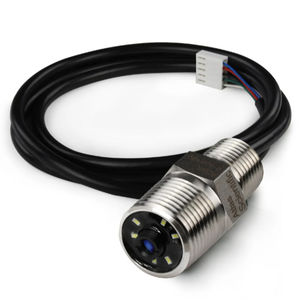
Medigus offers the world's smallest micro cameras. The current offering includes a new revolutionary disposable CMOS camera, which has an outer diameter of only 1.2mm x 5mm long and is by far the smallest camera in the world. In addition the company offers reusable CCD cameras in two sizes: 3.0mm x 3.0mm and 1.8mm x 1.8mm.
The outer diameter size of the recently announced revolutionary disposable camera is only 1.2mm x 5mm long and it by far the smallest video camera in the world. The camera, which is based on an advanced CMOS image sensor, offers high performance at a low cost and combines superb sensitivity, resolution and dynamic sensitivity. The camera is completely disposable eliminating the need for the very costly sterilization process commonly associated with endoscopic procedures. As such, the camera is designed to be incorporated into disposable endoscopes or used in various diagnostic and surgical medical procedures.
The camera is also suitable for industrial applications and can be integrated into borescope, devices for Remote Visual Inspection (RVI), Non-destructive Testing (NDT), Machine Vision systems etc.
In addition, Medigus' CCD cameras (3.0mm x 3.0mm and 1.8mm x 1.8mm) offer excellent image quanlity and are suitable for both medical and industrial applications.
|
|
|
|
|
|
The MLX90255BC linear sensor array consists of a 128 x 1 array of photodiodes, associated charge amplifier circuitry and a pixel data-hold function that provides simultaneous-integration start and stop times for all pixels. The pixels measure 200µm (H) by 66 µm (W). Operation is simplified by internal control logic that requires only a serial-input (SI) signal and a clock. The sensor consists of 128 photodiodes arranged in a linear array. Light energy falling on a photodiode generates photocurrent, which is integrated by the active integration circuitry associated with that pixel. During the integration period, a sampling capacitor connects to the output of the integrator through an analog switch. The amount of charge accumulated at each pixel is directly proportional to the light intensity and the integration time. The output and reset of the integrators is controlled by a 132-bit shift register and reset logic. An output cycle is initiated by clocking in a logic 1 on SI. This causes all 132 sampling capacitors to be disconnected from their respective integrators and starts an integrator reset period.
|
|
Standard sensors
The extensive product spectrum offered by Leuze electronic in the field of binary switching position sensor technology encompasses a highly varied range of designs and sizes, which includes cubic, round, small and more compact sensors. Due to the different functional principles used – throughbeam and retro-reflective photoelectric sensors as well as diffuse reflection light scanners with and without background suppression – these sensors can be used in widely varying applications.
|
|
Proximity switches FT 55 R
SensoPart has set a new standard in industrial sensor technology with its F 55 series. This product line combines excellent performance data with a robust housing design and numerous user-friendly details.
• Scanning range: 2,000 mm
• All-purpose
• Comfortable use via electronic teach button or cable
• Type of light: red light LED or laser
• Protection: IP 67 or IP 69 K (stainless steel version)
• Switching frequency LED/laser: 600 Hz/1,500 Hz
• Laser class 2
|
|
Avago’s Proximity Sensors are designed for use to detect the presence of object or motion detection in various industrial, mobile, electronic appliances and retail automations.
The Ambient Light Photo Sensors provides precise light detection for a wide range of ambient brightness and are commonly used in LCD Backlight Control in mobile phones, LCD TV/Panel and Notebook applications.
- Ambient Light Photo Sensors
- Proximity Sensors
|
|
RMT produces DX7100Plus Optical Sensor for non-contact measurement of plastic film thickness. It is suitable for laboratory applications as well as for industrial process automations.
The DX7100Plus sensors provide measurement of film thickness with high accuracy and high speed.
It allows thickness measurement of Polyethylene, Polypropylene and similar films and selective measurements of separate layers in multi-layer film structures, for instance barrier layers (EVOH or similar materials - O-H group containing plastic layers in multi-layer films).
The principle of operation is based on selective absorption of IR emission by molecules of tested media. The differential double frequency optical scheme provides high accuracy in wide humidity and temperature ranges due to internal thermostabilization.
|
|
|
OSRAM Opto Semiconductors' new optical Orientation Sensor SFH 7710 is absolutely unique: It's not just extremely small, it's also one of the first to feature a small SMT package and a digital output. In applications where you need to detect and define vertical or horizontal tilt angles - in everything from manufacturing systems to digital cameras, in fixed installations or in mobile devices - the new SFH 7710 is the sensor of choice.
|
|
Copal develops sensors for special applications by integrating our original lens design technology and image circuit technology and LED lighting technology to comply with diverse security requirements currently so important in different fields.
Optical sensors
Optical sensors irradiate specific wavelengths (RED/IR/UV) onto paper, etc., read reflected and transmitted components, and output information.
|
|
The Fiber Optic pH Sensor system consists of a fiber optic probe designed to hold immobilized colorimetric indicator dye materials, plus a light source, spectrometer and OOISensors Software. You can supply your own indicator material, or select from our line of transparent or reflective films. Calibration involves recording spectra in high and low pH samples, and in at least one pH standard such as a NIST-traceable buffer.
|
|
Optex FA Digital Fiber sensor D2RF series
- Digital display for easy setup and easy monitoring
- Two independent output with
- High speed 60 micro second response.
- Cross talk prevention up to 4 units
- APC Function (Auto Power Control):
The APC function ensures precise sensing even when there are changes in the temperature or environmental conditions.
|
|
· 4 models: Standard, High Speed, Mark Detection and Moisture Detection.
· Unique "Moisture Sensing Type" BIF-W series senses the presence of moisture in a product.
· High Speed type (50 micro sec) and Green
LED type for Mark Sensing.
|
|
Optex FA Fiber Sensor BRF series
· 4 models: Standard, High Speed, Mark Detection and Moisture Detection.
· Unique "Moisture Sensing Type" BIF-W series senses the presence of water and moisture in a product.
· High Speed type (50 micro sec) and Green
LED type for Mark Sensing.
- Cross talk prevention, IP66 protection
- 10 turn potentiometer for easy and fine adjustment
|
|
|
The MTI-2100 Fotonic Sensor is a high-resoulution fiber optic based vibration/displacement sensor with extremely high frequency response. The system offers a bandwidth up to 500 kHz and resolution to 0.01 microinch (2.5 Angstrom).
|
|
|
|
|
|
Light barriers for optical fiber adaption
FL 70 R-..D
Informative display
The FL 70 R-..D is the high-end sensor for fibre optics with a 4 digit display.It is characterised by simple settings and many additional functions, e.g. fine adjustment of the switch point, inversion of the switch output, adjustment of accuracy and speed, window programming, time functions and tamperproof protection. The display is always clearly visible thanks to a 180° rotatable screen.
FL 70 RA-..D
Analogue output
The FL 70 RA-..D has an analogue output, which is of particular advantage for complex applications such as the connection of a socalled cross-section transformer. This enables e.g. checks with regard to object size and automatic edge control.
FL 70 R
The FL 70 R version operates without a display and is a cheap alternative for standard applications. An easy teach-in function is common to all of the sensor versions. Teach-in is carried out at the touch of a key and external teach-in is possible via a teach cable. The keys can also be locked.
Product advantages
» High user comfort – Teach-in
» High level of accuracy
» High switching frequency
» No mutual interference thanks to automatic communication
» Mode of operation selectable (types R-..D and RA-..D)
» Assembly on DIN rails
» Robust IP 64 protection system
» Top quality price/performance ratio
|
|
|
Fiber Optic sensors, photo lens eliminated amplifier combined with fiber optic cable, are ideal where small objects detection and quick response time is required. Moreover, the high flexibility of the optic cable allows easy installation fitting almost anywhere. Autonics fiber optic sensing amplifiers and cables of real compact body offer sophisticated part detection, quick response time and generous sensing range.
|
|
Dual digital display unit and the highest powered amplifier on the market. Monitor 2 features with one unit.
Over 80 sensor heads are available for the FS-V20 with applications in a wide range of industries.
|
|
|
|
|
|
FX-100 - top price-performance ratio powered by technological innovation
New possibilities with digital fibre sensors. SUNX has developed a new top price fibre sensor. The quick set mode allows inexperienced operators to use the sensor quickly. For experienced operators, the setting and PRO mode are still available. Other features, such as the ECO mode, copy and GETA function, enhance its practicality in the workplace. A total product range of 12 types will be available for all customers’ requirements.
Characteristics:
One 4-digit green, one 4-digit red LCD display
Copy settings via wiring as with DP-100
3-step setting hierarchy, from basic to advanced
External input for external adjustment
No need to connect amplifiers in case interference prevention is requested
Direct installation possible without bracket or DIN rail
Commercially available connector simplifies procurement
Key-lock function
Teaching, light-ON / dark-ON setting
Threshold values can automatically adjust to changes in incident light
Intensity of emitted light can be reduced automatically to ensure stable sensing
Accessories:
Various cable lengths: 1, 2, 3, 5m
End plates
Protection cover
|
|
MICRONOR optical products are based 100% on fiber optics. We make use of light in an innovative and elegant way to fulfill complex sensing requirements. These new sensors show themselves to be particularly advantageous and reliable under extremely tough and difficult environmental conditions. Areas of application such as in deep-drilling sites, wind generators, railway rolling stock, nuclear plants, aircraft braking systems and steelworks are where these products come into their own.
We offer two encoder versions and the appropriate analysis appliance:
|
|
General description :
Panasonic Electric Works Corporation of America is proud to introduce the brand new FX-100 Series from SUNX. Its ultra-slim design features a 9mm width and integrated mounting holes for installation in any application. The four chemical, visible red LED used for the emitter ensures long life operation and high-powered sensing.
This sensor incorporates a dual digital display for simple setup, along with automatic push-button teaching and external input capabilities. Advanced functions including threshold tracking, timers, LED attenuation, and interference prevention allow the FX-100 to compete with fiber optic units that are twice its price.
The connection options for the FX-100 series consist of an industry standard M8 quick disconnect along with an option that utilizes the same quick connect cable found in the SUNX DP-100 and PM series.
With list pricing starting at $75, the FX-100 series is primed to become the gold standard in fiber optic sensors.
|
|
|
|
|
|
These electronic devices, photoelectric sensors or photocells, use the light emission principle combined with the electronic and are made up
of an emitter or luminous source, the light rays of which are detected by a receiver. The variation in luminous signal, obtained when interrupting this ray, is converted into an electrical signal and is measured and used by
an electrical circuit. The light used is either infrared or red. By making use of this light various type of photoelectric sensors can be made. The AECO photoelectric sensors available in the FOTOSTAR range are the FT18M - FT18 -FTQ series in direct reflection, with reflector with polarized light and emitter-receiver versions. Due to their flexibility regarding the various
standard programmable versions these products offer the possibility of stocking reduction and are easily interchangeable with most of the units available on the market. They are used in the field of automation to check for the presence, counting, position control, etc., and they
are compatible with most logic programmers.
|
|
|
Plastic fiber optic cabel with outside diameters of 1 mm and 2.2 mm can be connected to this sensor. The easy to use Teach-In function allows for fine sensor adjustment, so that even transparent objects can be reliably recognized in barrier mode operation. Scanning width is automatically adapted to each individual application via external Teach-In. The devices can be easily mounted to standard DIN rails.
|
|
Features
Analog output 4 ... 20 mA
and switching output
Detection rang 2,5 mm resp. 20 mm
Fork opening 50 mm
High operating frequency
Light / dark switching
Metal casing
M12 metal connector
Protection class IP 67
Typical fields of application
Thickness measurement of tiny objects
Height measurement
Positioning
Contour measurement
Web edge control
Application for instance in packaging machines
|
|
di-soric fork light barriers are through beam sensors. Transmitter, receiver and all the electronics are in one casing ensuring very straightforward and quick installation. Complex brackets for fastening the transmitter and receiver as well as time-consuming adjustment are unnecessary.
di-soric fork light barriers have a robust metal casing.
Fork light barriers OGU, OGUH, ODG
Analog fork light barrier
Fork light barriers with teach function
Laser fork light barriers
|
|
F NEPTUNE
Spread : 2 to 120 mm
Depth : 42 to 95 mm
Supply : 10 to 30 VDC
Outputs : PNP et NPN independent
High sensitivity
Ultra high-speed detection : 10 kHz
Description :
Potentiometric set-up type (green keyboard)
Teach-in set-up type background / object (yellow keyboard)
Keyboard locking
Direct / inverse (L/D)
Independent PNP and NPN outputs
Output indicator
Function indicator
M8 connector
Metal and polyamid/glass housing
Applications :
Detection of label
Detection of double sheet
Detection of marks
Detection on a conveyor
Detection on a vibrating rail
|
|
Fork sensors
Fork sensors are used for a wide range of different applications. Leuze electronic offers suitable fork sensors for every conceivable application. The forks for label detection are able to detect paper, transparent or metallized labels on various types of backing material. The Leuze product range also includes fork sensors for small component detection or for determination of edge position or object width.
|
|
Slot sensor FGL 50-IK-50-PS-M4
Infrared 880 nm
Teach-in
N.O./N.C. selectable
Plastic casing
4-pin type with external teach for setting and to disable the teach button
Numerous mounting possibilities
Range: 0 ... 50 mm
Series: FGL - plastic housing
Switching frequency: 2000 Hz
|
|
|
The optical forks bring a response to all your applications where simplicity and precision are required! In addition to a version integrating the tested technology of visible red light, of the angular forks and the Laser forks are also available, allowing to satisfy your most demanding applications. If the savings of time and material (single support of assembly) are an uncontested asset of this new family, its performances are not less. Metal cases IP67 are equipped with a M8 connector 3 poles and an integrated amplifier.
|
|
The transmitter and the receiver are integrated into a single housing as a light barrier. If the active light beam between the transmitter and the receiver is interrupted, the output is switched accordingly.
Thanks to the use of visible laser light, the sensor is very easy to align to the object. The use of a fine light beam ensures a small diameter spot over the entire width of the fork. This allows for the recognition of extremely small parts, holes, slots and notches.
|
|
|
|
|
|
Parallel laser light with homogeneous light distribution in round or rectangular cross-section is used for measuring, positioning, and detection of objects starting from a size of 0.01 mm.
Measuring principle: Partial covering of the laser beam leads to a voltage at the analog output that is proportional to the degree of covering.
The laser light beam that is emitted by a high-precision optical unit (aspherical surface made of glass) allows the detection of smallest objects (e.g. threads) even in case of a large transmitter/receiver distance (distances up to 100 m, depending on model and aperture). The use of high-precision apertures in the transmitters ensures optimum adaptation to the respective application. The aperture guarantees a homogeneous light distribution on the beam and a sharp beam limitation.
Apart from a large variety of standard apertures special apertures can also be realised.
The non-contacting measurement of fast-moving objects by means of analog laser light barriers of the A-LAS series now is further supported by the new A-LAS-CON1 control unit. Up to two A-LAS sensors can be connected to this control unit. The included A-LAS-CON1-Scope software allows a selection from several evaluation algorithms. Furthermore, an external signal for triggering also can be selected with the operating software, or one of the two analog light barriers functions as a trigger device, while the other laser sensor is used for measurement. This also makes it possible to measure larger objects while they are moving and, among others, allows the performing of measuring tasks such as the width of plug contacts, *gap-size* measurement of stamping parts, etc.
|
|
F NEPTUNE LASER
Spread : 2 to 120 mm
Depth : 42 to 95 mm
Supply : 10 to 30 VDC
Outputs : PNP et NPN independent
High sensitivity
Ultra high-speed detection : 10 kHz
Description :
LASER : modulated red Class I 670 nm
Potentiometric set-up type (green keyboard)
Teach-in set-up type background / object (yellow keyboard)
Keyboard locking
Direct / inverse (L/D)
Independent PNP and NPN outputs
Output indicator
Function indicator
M8 connector
Metal and polyamid/glass housing
Applications:
Detection of marks
Detection on a conveyor
Detection on a vibrating rail
Detection of transparent object
|
|
|
|