


{{product.productLabel}} {{product.model}}
{{#if product.featureValues}}{{product.productPrice.formattedPrice}} {{#if product.productPrice.priceType === "PRICE_RANGE" }} - {{product.productPrice.formattedPriceMax}} {{/if}}
{{#each product.specData:i}}
{{name}}: {{value}}
{{#i!=(product.specData.length-1)}}
{{/end}}
{{/each}}
{{{product.idpText}}}
{{product.productLabel}} {{product.model}}
{{#if product.featureValues}}{{product.productPrice.formattedPrice}} {{#if product.productPrice.priceType === "PRICE_RANGE" }} - {{product.productPrice.formattedPriceMax}} {{/if}}
{{#each product.specData:i}}
{{name}}: {{value}}
{{#i!=(product.specData.length-1)}}
{{/end}}
{{/each}}
{{{product.idpText}}}


... ... 30 V DC Max. continuous output current: 1.4 A Max. peak output current: 5 A Advantages • Compact design • Controlled via RS232 or CANopen interface • Minimal wiring requirements • Parametrization with “FAULHABER Motion ...

... :6 ... 30 V DC Max. continuous output current:1 A Max. peak output current:5 A Advantages • Compact design • Controlled via RS232 or CANopen interface • Minimal wiring requirements • Parametrization with “FAULHABER Motion ...


... • Digital inputs and outputs, optional analog inputs and outputs • Autozero function for holding current Digital motion controller for PIMag® voice coil drives C-413.1: 1 motor channel, 2 sensor channels; for the ...
Physik Instrumente
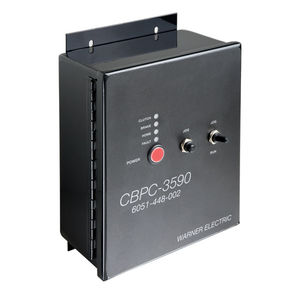

... The Clutch Brake Positioning Control (CBPC) is a dedicated control incorporating a counter system, control logic, and clutch brake power supply for closed loop control operation. The controller uses an incremental encoder ...


... distributed expansion. Advanced motion control Integrated with rich motion control functions; Implements synchronization control and advanced motion control ...


... availability as fully integrated handheld controllers for desktop usage, the control system is also available as an OEM single board controller for integration into your product. Compatible Stages ...
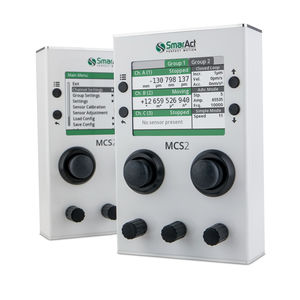
... perfect choice for all fields of application. To meet the specific requirements of each setup, product variants for three positioning stages up to variants with an EtherCAT® module for real-time control of the most complex ...

... other SmarAct positioning system. When used with the SmarPod GUI or Motion Control GUI application, it allows instant manual control of the positioning stages. A software development ...


... The UMX motion controller communicates through a standard USB port and is compatible with the PC78 and PCIx controller families with 2-4 axes of control. The UMX supports up to 12 general purpose TTL ...
OMS Motion, Inc.

... 9600 to 115.2k. In addition to the limits, home and motion control signals, the MAXnet includes 8 bi-directional I/O, 5-outputs, 2-analog inputs and 1-analog output (the 5 axis). OMS motion controllers ...
OMS Motion, Inc.
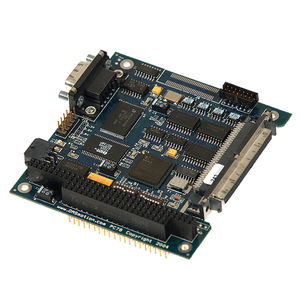
... The PC78 is both a PC/104 controller that supports the PC/104 ISA bus standard as well as a stand-alone controller via a high speed RS-232 communication port. The PC78 supports up to 24 general purpose TTL I/O. The step ...
OMS Motion, Inc.
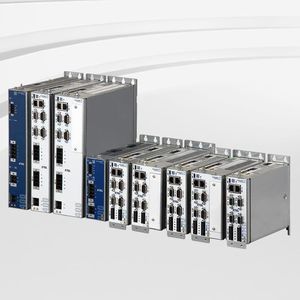

... High-performance controller platform engineered for semiconductor precision and scalable to any high-end positioning system. ACCURET+ is ETEL’s 4th generation position controller platform, designed to ...

... UltimET Light motion controller, part of our TransnET architecture, offers seamless synchronization and control of up to 63 axes, ensuring optimal performance in motion control applications. UltimET ...


... THESI 310 position controller can control shifting and positioning of one axis in 3 different operating modes: – MANUAL, by keyboard; – SEMI-AUTOMATIC, by keyboard; – AUTOMATIC, on the basis of a memorized program. Possibility ...
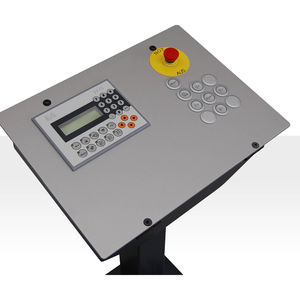

... electrical limit switches when changing the infeed is superfluous. Positioning of the bending axis takes place by means of line motion control through rapid feed – inching feed – stop. High precision ...


... control. The motion controller operates stand-alone or can be networked to a PC via Ethernet. Modes of motion include point-to-point positioning, position tracking, jogging, contouring, ...
Galil


... /S-curve acceleration and deceleration, positioning, and origin returning Carrying a motor control IC in the PCL6100 series from Nippon Pulse Motor Co., Ltd., capable of controlling jogging, positioning, ...
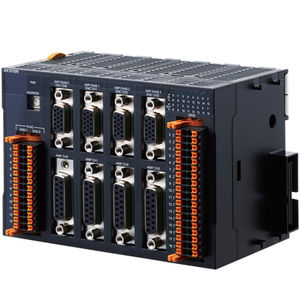

... and nanoscale positioning, the PMAC (Programmable Multi Axis Controller) has been appreciated by manufacturers of semiconductor manufacturing equipment and other leading-edge equipment. Omron now offers a next generation ...

... including motion controller MC2 and drives of the series SD2S – is the solution for machine manufacturers who develop a PC-based application software and look for a well-proven system for the motion tasks. ...
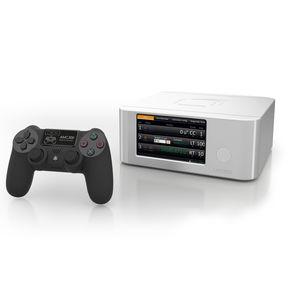

... piezo motion controller for AN* series positioners The AMC300 is attocube’s motion controller for the AN* series positioners. The integrated feedback loop for resistive encoders enables ...
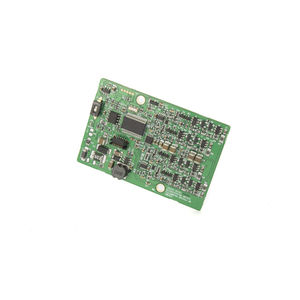

... PMD401 Controller •Nanometer resolution •Closed loop control •Open loop mode •Servo mode •Stackable boards for multi-axis •Small form factor •Slave amplifier to external motion controller via SPI ...


... The compact controller provides a very good control performance for small axis systems with low drive power. It achieves highly precise and dynamic movements. Because of its flexible and modular concept, it is particularly ...
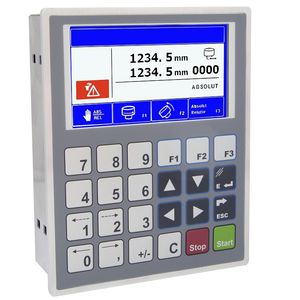

... The compact positioning controller for up to 2 axes with a wide range of options The universal compact controller in a high-quality panel- mounting housing • Easy operation thanks to clear 4.3" ...
HEJM Automatisierungstechnik GmbH
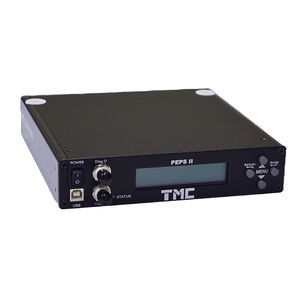

... height control systems •Pneumatic feedforward function minimizes Z-axis reaction to X-Y stage motion •May be tuned to rapidly settle motion induced by X-Y stages •Optional “VX” feature ...
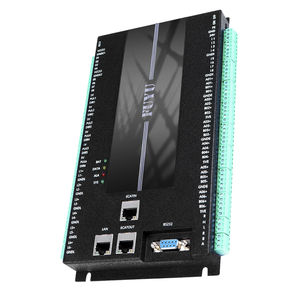

... FUYU Linear Motion 6-axis Intelligent Controller Support connection of 65,535 devices Support languages: C/C++,C#, Python, etc Support system: Windows,linux Support protocols: modbus/can/ethercat Provide customized ...

... purpose controllers satisfy customer's different requirements, we'll help you build your own controlling system with high quality motion controller, perfect after-sale service, high efficient technical ...

... PATENT REPORT The motion controller takes ARM as its CPU core controlling unit, provide more efficient motion controlling algorithm, make its controlling performance more excellent ADVANTAGES FSC-2A ...


... The controller is predestined for simple positioning applications in mechanical engineering and is designed for maximum efficiency. LCD display Manual operation Single record operation Relay outputs digital switching ...
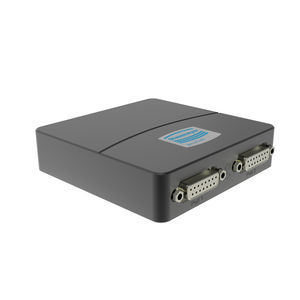

... The compact controller provides a very good control performance for small axis systems with low drive power. It achieves highly precise and dynamic movements. Because of its flexible and modular concept, it is particularly ...
Steinmeyer Mechatronik GmbH
the best suppliers