



- Company
- Products
- Catalogs
- News & Trends
- Exhibitions
Guy strain insulator FZSW

Add to favorites
Compare this product
Characteristics
- Applications
- guy strain
Description
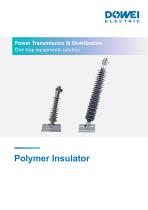
• IEC 61466, IEC 61109, IEC 61952, ANSI C29.13 <br>• ISO 9001, KEMA, CESI, CE, TUV, UL, ASTA<br>• Seismic design, ETGI-1.020, IEEE Std 693, NCh2369<br>• Structural design, ASTM A325, ANSI/AISC 360, AWS D1.1<br>• High altitude correction per IEC & IEEE, ~ 5000m<br>• Special corrosion-resistant high strength fiberglass<br>• Unique vacuumizing method-Bubble Free vulcanization<br>• High hydrophobicity and tracking resistance of the silicone rubber<br>• Line post insulator, Line suspension insulator, Railway polymer insulator<br><br>Polymer Line Post Insulator is a composite electrical insulator designed to support and electrically isolate overhead conductors in medium- and high-voltage distribution and transmission systems. It uses a fiberglass-reinforced polymer core with a silicone rubber housing and is mounted directly on poles or crossarms to provide mechanical support and insulation.<br><br>Compared with traditional porcelain line post insulators, polymer types offer lighter weight, superior pollution performance, and improved resistance to mechanical impact.<br><br>Main Functions<br>·Electrical Insulation: Prevents current leakage from energized conductors to poles, towers, or grounded structures.<br>·Mechanical Support: Supports overhead conductors and withstands vertical, horizontal, and cantilever loads.<br>·Line Stability: Maintains conductor position and required electrical clearances.<br>·Environmental Protection: Provides reliable insulation under rain, pollution, UV exposure, and harsh outdoor conditions.<br><br>Typical Applications<br>·Medium-voltage distribution lines<br>·Overhead power networks<br>·Compact distribution systems<br>·Urban power distribution<br>·Industrial power networks<br>·Renewable energy collection systems<br>·Railway electrification networks<br>·Pole-mounted switchgear installations<br><br>Typical Technical Specifications<br>·Rated Voltage: 11 kV – 230 kV<br>·Application Voltage: Medium and high voltage systems<br>·Insulation Material: Silicone rubber composite polymer<br>·Core Material: Fiberglass reinforced epoxy rod<br>·Installation: Outdoor<br>·Mounting Type: Pole / Crossarm mounted<br>·Frequency: 50 Hz / 60 Hz<br>·Mechanical Strength: Cantilever load rated<br>·Pollution Performance: High<br><br>Construction<br>A typical polymer line post insulator consists of:<br>1. Fiberglass Reinforced Polymer (FRP) Core Rod<br>·Provides mechanical strength<br>·Supports conductor loads<br>·Resistant to bending and tensile stress<br>2. Silicone Rubber Housing<br>·Provides external insulation<br>·Excellent hydrophobic performance<br>·Resistant to UV radiation<br>·Maintains insulation performance in polluted environments<br>3. Silicone Rubber Sheds<br>·Increase creepage distance<br>·Improve pollution resistance<br>·Reduce leakage current<br>4. Metal End Fittings<br>·Galvanized steel or aluminum alloy<br>·Used for conductor and structure mounting<br>·Designed for mechanical loading<br><br>Operating Principle<br>During normal operation:<br>·The energized conductor is mounted on the top fitting.<br>·The polymer insulator provides insulation between the conductor and the supporting structure.<br>·Leakage current remains extremely low.<br><br>Under abnormal conditions:<br>·The insulator withstands temporary overvoltage.<br>·The FRP core provides mechanical stability during wind, ice, and conductor movement.<br>·The silicone rubber housing prevents flashover caused by contamination and moisture.<br><br>Advantages<br>·Lightweight compared with porcelain designs<br>·Excellent hydrophobic properties<br>·Superior pollution resistance<br>·High mechanical strength-to-weight ratio<br>·Better impact resistance<br>·Reduced transportation and installation costs<br>·Good seismic performance<br>·Low maintenance requirement<br>·Suitable for coastal and industrial environments<br><br>Common Types<br>1. Distribution Class Polymer Line Post Insulator<br>·Used in 11 kV–36 kV networks<br>·Pole-mounted distribution applications<br>2. Transmission Class Polymer Line Post Insulator<br>·Used in higher voltage overhead lines<br>·Provides conductor support and insulation<br>3. Horizontal Line Post Insulator<br>·Mounted horizontally on poles or structures<br>·Common in compact distribution systems<br>4. Vertical Line Post Insulator<br>·Mounted vertically<br>·Used for standard overhead conductor support<br><br>Applicable Standards<br>·IEC 61952 – Insulators for overhead lines – Composite line post insulators<br>·IEC 61109 – Composite insulators for AC overhead lines<br>·ANSI C29.17 – Composite Line Post Insulators<br>·IEC 60815 – Selection and dimensioning of high-voltage insulators for polluted conditions<br><br>Typical Voltage Applications<br>·11–36 kV Distribution poles and compact networks<br>·66–110 kV Sub-transmission lines<br>·132–230 kV High-voltage overhead line applications<br><br>Typical Applications by Industry<br>·Electric Utilities: Overhead distribution networks<br>·Renewable Energy: Wind and solar collection lines<br>·Industrial Plants: Private distribution systems<br>·Railways: Electrification support systems<br>·Mining: Outdoor power distribution<br>·Infrastructure: Urban and rural electrical networks<br><br>Key Features<br>·Silicone rubber composite construction<br>·High mechanical strength with low weight<br>·Excellent pollution and moisture resistance<br>·Long creepage distance design<br>·UV-resistant outdoor performance<br>·Low leakage current<br>·Easy installation and replacement<br>·Maintenance-free operation<br>·Suitable for modern overhead distribution systems<br>·Compliant with IEC 61952, IEC 61109, and ANSI C29.17 standards<br>
Catalogs
Other Dowei Electric products
Insulator


Related Searches
- Electrical cable
- Copper cable
- Copper electrical cable
- Power cable
- Multi-strand cable
- Stranded electrical cable
- IEC electrical cable
- Industrial cable
- Flame-retardant cable
- Industry electrical cable
- Armored cable
- Flame-retardant electrical cable
- Black electrical cable
- Shielded electrical cable
- Oil-resistant cable
- Oil-resistant electrical cable
- DIN electrical cable
- Insulator
- UV-resistant electrical cable
- Aluminum cable
*Prices are pre-tax. They exclude delivery charges and customs duties and do not include additional charges for installation or activation options. Prices are indicative only and may vary by country, with changes to the cost of raw materials and exchange rates.
About DirectIndustry
DirectIndustry is a marketplace that offers B2B players a complete experience, from product sourcing to purchase. DirectIndustry is an entity of VirtualExpo Group.
Are you a buyer?
Are you a supplier?