



- Company
- Products
- Catalogs
- News & Trends
- Exhibitions
Guy strain insulator LXHY

Add to favorites
Compare this product
Characteristics
- Applications
- guy strain
Description
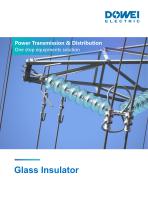
• IEC60383, IEC 60305, ANSI C29.2B<br>• ISO 9001, KEMA, CESI, CE, TUV, UL, ASTA<br>• Seismic design, ETGI-1.020, IEEE Std 693, NCh2369<br>• Structural design, ASTM A325, ANSI/AISC 360, AWS D1.1<br>• High altitude correction per IEC & IEEE, ~ 5000m<br>• High quality toughened glass for Superior mechanical, electrical and safety performance<br>• Optional to High-performance RTV Coating for heavy pollution area<br>• Galvanization & zinc sleeves prevent corrosion of metal fittings<br>• Standard Profile, Fog Type Profile, Open Type Profile, HVAC/HVDC<br><br>Glass Disc Insulator, also known as a Toughened Glass Suspension Insulator or Glass Cap-and-Pin Insulator, is a high-voltage insulator used for overhead transmission and distribution lines to electrically isolate conductors from towers and support structures while withstanding mechanical tensile loads.<br><br>It is manufactured from toughened (tempered) glass, combined with metal cap-and-pin fittings, and is commonly assembled into insulator strings for medium-, high-, and extra-high-voltage transmission systems.<br><br>Main Functions<br>·Electrical Insulation: Prevents current flow between energized conductors and grounded transmission structures.<br>·Mechanical Support: Supports overhead conductors and withstands conductor weight, wind loads, and tension forces.<br>·Voltage Distribution: Provides insulation over long transmission distances through multiple disc units.<br>·Fault Identification: Glass failure is visually detectable because damaged discs shatter completely.<br><br>Typical Applications<br>·High-voltage overhead transmission lines<br>·Extra-high-voltage (EHV) transmission systems<br>·Suspension towers<br>·Tension/dead-end towers<br>·Distribution networks<br>·Railway electrification systems<br>·Utility power transmission corridors<br><br>Typical Technical Specifications<br>·Rated Voltage: 11 kV – 1000 kV+<br>·Insulator Type: Suspension disc type<br>·Material : Toughened glass<br>·Insulation Structure: Cap-and-pin<br>·Installation: Outdoor<br>·Mechanical Strength: 40 kN – 530 kN+<br>·Frequency: 50 Hz / 60 Hz<br>·Mounting: String assembly<br>·Pollution Performance: According to creepage distance design<br><br>Construction<br>A typical glass disc insulator consists of:<br>1. Toughened Glass Disc Body<br>·Provides electrical insulation<br>·High dielectric strength<br>·Transparent structure allows visual inspection<br>·Designed to withstand mechanical and thermal stresses<br>2. Metal Cap<br>·Usually galvanized steel<br>·Connects the upper part of the insulator string<br>·Provides mechanical connection between units<br>3. Metal Pin<br>·Connects the lower part of the insulator unit<br>·Transfers mechanical tensile load<br>4. Cement Joint<br>·Bonds glass body with metal fittings<br>·Ensures mechanical stability<br>5. Protective Glaze Surface<br>·Improves weather resistance<br>·Reduces contamination adhesion<br><br>Operating Principle<br>During normal operation:<br>·The glass disc provides insulation between the conductor and tower.<br>·Multiple discs are connected in series to withstand the required system voltage.<br>·The mechanical load is carried through the cap-and-pin assembly.<br><br>During abnormal conditions:<br>·The insulator withstands lightning impulses and switching overvoltages.<br>·If a glass unit fails, the glass body shatters while the metal fittings remain attached, allowing easy detection and replacement.<br><br>Advantages<br>·Excellent electrical insulation performance<br>·Easy visual inspection of damaged units<br>·High mechanical strength<br>·Long service life<br>·Stable electrical characteristics<br>·Good resistance to aging<br>·Self-identifying failure mode<br>·Suitable for very high voltage transmission lines<br>·High resistance to temperature variations<br><br>Common Types<br>1. Standard Suspension Glass Disc Insulator<br>·Used for normal transmission applications<br>·Installed as vertical suspension strings<br>2. Anti-Pollution Glass Disc Insulator<br>·Increased creepage distance<br>·Used in coastal and industrial polluted areas<br>3. High Mechanical Strength Glass Disc Insulator<br>·Designed for heavy conductor loading<br>·Used in long-span transmission lines<br>4. Tension Glass Disc Insulator<br>·Used for angle towers and dead-end applications<br><br>Typical Voltage Applications<br>·11–33 kV Short suspension strings<br>·66–132 kV Multiple disc strings<br>·220 kV Approximately 12–16 discs<br>·330–500 kV Longer suspension strings<br>·765–1000 kV Extra-long EHV/UHV strings<br><br>Applicable Standards<br>·IEC 60383 – Insulators for overhead lines with nominal voltage above 1000 V<br>·IEC 60305 – Insulators for overhead lines – Ceramic or glass insulator units for AC systems<br>·IEC 61109 – Composite insulators for AC overhead lines<br>·ANSI C29.2 – Wet-Process Porcelain and Toughened Glass Suspension Insulators<br><br>Typical Applications by Industry<br>·Electric Utilities: Transmission line insulation<br>·Renewable Energy: Grid connection transmission lines<br>·Railway Systems : Overhead electrification<br>·Industrial Utilities : Private high-voltage networks<br>·Power Transmission Operators: EHV/UHV overhead lines<br><br>Key Features<br>·Toughened glass insulation body<br>·Cap-and-pin suspension design<br>·High mechanical tensile strength<br>·Excellent electrical insulation performance<br>·Visible failure indication<br>·Suitable for high-voltage and extra-high-voltage systems<br>·Long service life with low maintenance<br>·Widely used in global transmission networks<br>·Compliant with IEC 60305 and IEC 60383 standards<br>
Catalogs
Other Dowei Electric products
Insulator


Related Searches
- Electrical cable
- Copper cable
- Copper electrical cable
- Power cable
- Multi-strand cable
- Stranded electrical cable
- IEC electrical cable
- Industrial cable
- Flame-retardant cable
- Industry electrical cable
- Armored cable
- Flame-retardant electrical cable
- Black electrical cable
- Shielded electrical cable
- Oil-resistant cable
- Oil-resistant electrical cable
- DIN electrical cable
- Insulator
- UV-resistant electrical cable
- Aluminum cable
*Prices are pre-tax. They exclude delivery charges and customs duties and do not include additional charges for installation or activation options. Prices are indicative only and may vary by country, with changes to the cost of raw materials and exchange rates.
About DirectIndustry
DirectIndustry is a marketplace that offers B2B players a complete experience, from product sourcing to purchase. DirectIndustry is an entity of VirtualExpo Group.
Are you a buyer?
Are you a supplier?