



- Hydraulics - Pneumatics
- Pipe, Tube and Fitting
- Water rotary union
- DSTI - Dynamic Sealing Technologies
Water rotary union GP 3for oilfor vacuumfor chemicals

Add to favorites
Compare this product
Characteristics
- Medium
- for water, for air, for oil, for vacuum, for gas, for chemicals
- Number of passages
- 3-passage
- Applications
- hydraulic
- Material
- stainless steel, carbon steel
- Other characteristics
- with seal, with slip ring, with electrical slip ring
- Rotational speed
Min.: 0 rpm
(0 rad.min-1)Max.: 500 rpm
(3,141.59 rad.min-1)- Pressure
Min.: 0 bar
(0 psi)Max.: 515 bar
(7,469 psi)- Nominal size
Min.: 0.125 in
Max.: 1 in
Description
Description
The GP Series 3-passage rotary unions provide three independent fluid passages to transfer different media simultaneously, with sealing technology adapted for vacuum and bidirectional pressures. Standard construction uses carbon steel with a black oxide finish for air/gas, coolant and hydraulic services. Stainless steel (GPS Series option) is available for corrosion resistance and for water or corrosive media applications.
Key features
Maximum Pressure — Series (table)
200 PSI [15 BAR] — SPS, LT, SE, GP, GPS, SCS, HVH, HPS
600 PSI [40 BAR] — SPS, LT, SE, GP, GPS, HVH, HPS
5,000 PSI [345 BAR] — SE, GP, GPS, HVH, HPS
7,500 PSI [515 BAR] — SE, GP, GPS, HPS
20,000 PSI [1,375 BAR] — HPS
Other — Custom
Maximum Speed — Series (table)
20 RPM — SPS, LT, SE, GP, GPS, SCS, HVH, HPS
50 RPM — SPS, LT, SE, GP, GPS, SCS, HPS
75 RPM — SPS, LT, SE, GP, GPS, SCS
300 RPM — SPS, LT, SE, GP, GPS, SCS
500 RPM — SPS, LT, GP, GPS, SCS
Other — Custom
Connection Types — Series (table)
ASME-BPE — SCS
BSPP — SE, GP
BSPT — LT
NPT — SPS, LT, GP, GPS
SAE-ORB — SE, HVH
Medium Pressure — HPS
Other — Custom
Suitable Media — Series (table)
Air/Gas — SPS, LT, SE, GP, GPS, SCS, HVH, HPS
Chemical — GPS, SCS, HPS
Coolant — SE, GP, GPS, SCS, HPS
DI/Tap Water — GPS, SCS, HPS
Food-Grade — SCS
Oil/Hydraulic — SE, GP, GPS, SCS, HVH, HPS
Steam — Custom
Water/Glycol — SE, GP, GPS, SCS, HPS
Other — Custom
Notes / Warnings
* Water/glycol or coolant media must contain rust inhibitors. Oil/hydraulic media must be petroleum-based. All technical limits depend on combinations of application parameters; operational life depends on rotational speed and duty cycle. Applications exceeding 220°F (105°C) or using water above 212°F (100°C) may require alternative seal materials.
The GP Series 3-passage rotary unions provide three independent fluid passages to transfer different media simultaneously, with sealing technology adapted for vacuum and bidirectional pressures. Standard construction uses carbon steel with a black oxide finish for air/gas, coolant and hydraulic services. Stainless steel (GPS Series option) is available for corrosion resistance and for water or corrosive media applications.
Key features
- Three independent flow passages (3-passage)
- Sealing suitable for vacuum and bidirectional pressures
- Carbon steel housing and shaft (black oxide) standard; stainless steel options available
- Available with NPT or BSPP connections (NPT models can be fitted with O-ring face seal gland for flush mounting)
- Designed for integration with electrical slip rings for simultaneous fluid and electrical/data transfer
Maximum Pressure — Series (table)
200 PSI [15 BAR] — SPS, LT, SE, GP, GPS, SCS, HVH, HPS
600 PSI [40 BAR] — SPS, LT, SE, GP, GPS, HVH, HPS
5,000 PSI [345 BAR] — SE, GP, GPS, HVH, HPS
7,500 PSI [515 BAR] — SE, GP, GPS, HPS
20,000 PSI [1,375 BAR] — HPS
Other — Custom
Maximum Speed — Series (table)
20 RPM — SPS, LT, SE, GP, GPS, SCS, HVH, HPS
50 RPM — SPS, LT, SE, GP, GPS, SCS, HPS
75 RPM — SPS, LT, SE, GP, GPS, SCS
300 RPM — SPS, LT, SE, GP, GPS, SCS
500 RPM — SPS, LT, GP, GPS, SCS
Other — Custom
Connection Types — Series (table)
ASME-BPE — SCS
BSPP — SE, GP
BSPT — LT
NPT — SPS, LT, GP, GPS
SAE-ORB — SE, HVH
Medium Pressure — HPS
Other — Custom
Suitable Media — Series (table)
Air/Gas — SPS, LT, SE, GP, GPS, SCS, HVH, HPS
Chemical — GPS, SCS, HPS
Coolant — SE, GP, GPS, SCS, HPS
DI/Tap Water — GPS, SCS, HPS
Food-Grade — SCS
Oil/Hydraulic — SE, GP, GPS, SCS, HVH, HPS
Steam — Custom
Water/Glycol — SE, GP, GPS, SCS, HPS
Other — Custom
Notes / Warnings
* Water/glycol or coolant media must contain rust inhibitors. Oil/hydraulic media must be petroleum-based. All technical limits depend on combinations of application parameters; operational life depends on rotational speed and duty cycle. Applications exceeding 220°F (105°C) or using water above 212°F (100°C) may require alternative seal materials.
Catalogs
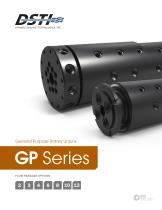
GP Series
30 Pages
Other DSTI - Dynamic Sealing Technologies products
GP Series Rotary Unions & Joints


Related Searches
- DSTI rotary union
- DSTI multi-passage rotary union
- DSTI steel rotary union
- DSTI stainless steel rotary union
- DSTI oil rotary union
- DSTI air rotary union
- DSTI water rotary union
- DSTI rotary union with seal
- DSTI hydraulic rotary union
- DSTI ball bearing rotary union
- Radial rotary joint
- DSTI gas rotary union
- DSTI flange rotary union
- DSTI industrial rotary union
- Screw-in rotary joint
- DSTI vacuum rotary union
- DSTI 2-passage rotary union
- DSTI chemical rotary union
- DSTI aluminium rotary union
- DSTI custom rotary union
*Prices are pre-tax. They exclude delivery charges and customs duties and do not include additional charges for installation or activation options. Prices are indicative only and may vary by country, with changes to the cost of raw materials and exchange rates.
About DirectIndustry
DirectIndustry is a marketplace that offers B2B players a complete experience, from product sourcing to purchase. DirectIndustry is an entity of VirtualExpo Group.
Are you a buyer?
Are you a supplier?