

- Materials - Tools - Components
- Standard Mechanical Component
- Push-to-close latch
- Weilong Intelligent Technology (Dongguan) Co., Ltd.


- Company
- Products
- Catalogs
- News & Trends
- Exhibitions
Push-to-close latch WL0726lockpull-to-openpush-to-open


Add to favorites
Compare this product
Characteristics
- Type
- lock, push-to-close, pull-to-open, push-to-open
- Material
- iron
- Other characteristics
- adjustable, compact, screw-in, battery-powered
- Applications
- for automotive applications, for cabinets, for medical applications, for storage systems, for vending machines
Description
Overview
The WL 0726 latching solenoid lock is a compact, energy-efficient bistable electromagnetic lock for automated systems and security applications. It maintains locked or unlocked state without continuous power and requires only a short pulse to change state. Suitable for smart lockers, vending machines, kiosks, ATMs, medical cabinets and various IoT and industrial devices. Available in DC 6V, 12V and 24V options, designed for long life, low heat and configurable force and stroke.
Construction and Operating Principle
The unit comprises a coil and a plunger with a bistable mechanism that uses a permanent magnet or mechanical latch to retain position without continuous excitation. Operation is by pulse control (typically 20–100 ms) or polarity reversal for bistable switching. Variants support fail-safe or fail-secure behaviour depending on application requirements.
Key Functional Features
Applications
Advantages
Drawbacks
Troubleshooting (summary)
Design & integration guidance
Identify application constraints (space, environment, fail-safe vs fail-secure, power source). Define electrical parameters (voltage: 6/12/24V DC, pulse 20–100 ms, current/power) and mechanical parameters (typical stroke 5–10 mm, required holding force, plunger type, mounting). Choose magnetic latching or mechanical latch per trade-offs. Consider thermal/duty-cycle limits and select coil wire with margin. Specify IP rating for outdoor use and corrosion protection as needed. Integrate with appropriate driver (MOSFET/driver), implement pulse or polarity-reversal control and optional feedback. Validate lifecycle with cycle, thermal, vibration and corrosion tests. Offer customization for voltage, stroke, force, mounting, connector and coatings.
Technical specifications
The WL 0726 latching solenoid lock is a compact, energy-efficient bistable electromagnetic lock for automated systems and security applications. It maintains locked or unlocked state without continuous power and requires only a short pulse to change state. Suitable for smart lockers, vending machines, kiosks, ATMs, medical cabinets and various IoT and industrial devices. Available in DC 6V, 12V and 24V options, designed for long life, low heat and configurable force and stroke.
Construction and Operating Principle
The unit comprises a coil and a plunger with a bistable mechanism that uses a permanent magnet or mechanical latch to retain position without continuous excitation. Operation is by pulse control (typically 20–100 ms) or polarity reversal for bistable switching. Variants support fail-safe or fail-secure behaviour depending on application requirements.
Key Functional Features
- Energy-saving bistable design: holds position without continuous current.
- Fast response and long service life (typ. 200,000 cycles).
- Adjustable holding force and stroke to suit mounting and locking needs.
- Voltage options: DC 6V / 12V / 24V.
- Push-pull linear working mode (push/pull plunger).
Applications
- Smart lockers, parcel lockers and self-service storage.
- Vending machines, ticketing systems, automated kiosks and ATMs.
- Medical storage cabinets and equipment compartments.
- Automotive compartment locks and access control systems.
- Industrial automation, IoT endpoints and smart building devices.
Advantages
- Very low energy consumption versus continuous-duty solenoids (suitable for battery-powered systems).
- Low heat generation and extended operational life.
- Compact, lightweight design for tight-space integration.
- Customizable voltage, stroke length and holding force.
- Configurable for fail-safe or fail-secure operation.
Drawbacks
- Requires accurate pulse-control electronics, increasing system complexity.
- Unit cost may be higher than simple non-latching solenoids.
- In some designs reset time and peak holding force differ from continuous-duty equivalents.
Troubleshooting (summary)
- Lock does not activate: verify supply voltage, pulse signal (20–100 ms), wiring and coil continuity.
- Lock engages but does not latch: increase pulse energy/length within spec; inspect latch/magnet and mechanical alignment.
- Insufficient locking force: confirm stable voltage; consider higher-force variant; check for wear/obstruction.
- Coil overheating: avoid continuous energizing; ensure correct voltage and reduce duty cycle.
- Intermittent operation: secure electrical connections; use stable driver circuit; consider IP-rated enclosure for environmental exposure.
- Vibration or noise: check mounting and alignment; replace worn components.
- Lock stuck: ensure reverse pulse is applied for bistable types; clear jams; replace defective unit.
Design & integration guidance
Identify application constraints (space, environment, fail-safe vs fail-secure, power source). Define electrical parameters (voltage: 6/12/24V DC, pulse 20–100 ms, current/power) and mechanical parameters (typical stroke 5–10 mm, required holding force, plunger type, mounting). Choose magnetic latching or mechanical latch per trade-offs. Consider thermal/duty-cycle limits and select coil wire with margin. Specify IP rating for outdoor use and corrosion protection as needed. Integrate with appropriate driver (MOSFET/driver), implement pulse or polarity-reversal control and optional feedback. Validate lifecycle with cycle, thermal, vibration and corrosion tests. Offer customization for voltage, stroke, force, mounting, connector and coatings.
Technical specifications
- Brand: Weilong Technology
- Model Number: WL 0726
- Rated Voltage (V): DC 6V, 12V, or 24V
- Rated Power (W): 14–25 W
- Work Mode: Push and Pull Linear
- Holding Force (N): 1–10 N
- Stroke (mm): 5–10 mm (customizable)
- Reset Time(s): 1 s ON, 9 s OFF
- Service Life: 200,000 cycles (typical)
- Certification: CE, ROHS, ISO9001
- Material: Superior magnet iron
- Lead Wire Length (mm): 200 mm
- Install Style: Screw mounting
- Tolerance of Dimension: +/- 0.1 mm
- Water-proof: None (standard)
- Insulation Class: B
- Hi-Pot Test: AC 600V 50/60Hz 2s
- Non-excitation Holding Force: 0 N
- Working Temperature: -10°C to 100°C
- Duty Cycle: 1–100%
- Payment Term: TT or LC At Sight
- Sample Order: Yes
- Warranty: 1 Year
- MOQ: 1000 pcs
- Supply Ability: 5000 pcs per week
- Delivery Time: 30 Days
- Port of Loading: Shenzhen
VIDEO
Catalogs
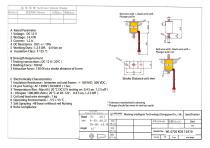
Other Weilong Intelligent Technology (Dongguan) Co., Ltd. products
Latching Solenoid


Related Searches
- Mechanical lock
- Door lock
- Steel lock
- Metal latch
- Cabinet lock
- Safety lock
- Lock latch
- Waterproof lock
- Electric panel lock
- Lock for industrial applications
- Electronic lock
- Adjustable latch
- Electrically-operated lock
- Push-to-close latch
- Compact lock
- Locker room lock
- Push-knob lock
- Compact latch
- Latch for automotive applications
- Cabinet latch
*Prices are pre-tax. They exclude delivery charges and customs duties and do not include additional charges for installation or activation options. Prices are indicative only and may vary by country, with changes to the cost of raw materials and exchange rates.
About DirectIndustry
DirectIndustry is a marketplace that offers B2B players a complete experience, from product sourcing to purchase. DirectIndustry is an entity of VirtualExpo Group.
Are you a buyer?
Are you a supplier?