

- Electricity - Electronics
- Electronic Component
- Wire-wound inductor
- Weilong Intelligent Technology (Dongguan) Co., Ltd.


- Company
- Products
- Catalogs
- News & Trends
- Exhibitions
Wire-wound inductor WL5058airair coreinductive

Add to favorites
Compare this product
Characteristics
- Technology
- wire-wound, air, air core
- Electrical characteristics
- inductive, high-frequency, insulated, EMI
- Configuration
- through-hole type
- Applications
- for automotive applications, for inverters, for circuits, for motors, for DC/DC converters, EMI suppression
- Other characteristics
- epoxy resin, rectangular copper wire, copper, encapsulated, copper wire
Description
Overview
The WL5058 flat wire coil is an air-core electromagnetic coil wound with enameled flat copper wire. The flat conductor increases copper fill and improves thermal dissipation, making it suitable for transformers, motors, inductors, relays and industrial electronics.
Product Feature Summary
A flat wire coil designed to save space and improve electromagnetic efficiency. Customizable parameters include wire dimension, inductance, DC resistance, rated current, operating temperature and mounting.
Company Flat Wire Coil Video Presentation
Embedded company video presenting flat wire coil technology, production process and typical applications.
Applications
Features of Flat Coils
Compact Flat Wire Coil Technical Data Sheet (summary)
Core material - Air (non-magnetic) with enameled copper flat winding
Wire diameter - 0.45 mm (AWG options available)
Winding type - Single-layer round or sectional winding
Footprint length - 5 mm
Encapsulation - Optional varnish, epoxy or coating
Mounting - Through-hole or custom
Electrical Specifications (Typical)
Inductance range - 0.1 µH – 100 µH (customizable)
Inductance tolerance - ±2%, ±5%, ±10%
DC resistance example - 25 Ω with 27 turns
Q factor - High, optimized per frequency range
Self-resonant frequency - High, application-dependent
Operating frequency - kHz to MHz range
Rated current - Custom per design
Insulation resistance - ≥100 MΩ
How Flat Coils Work
Current through flat conductive windings generates a magnetic field via electromagnetic induction. The flat profile increases contact area and reduces air gaps between layers, improving magnetic efficiency and lowering losses.
Advantages and Disadvantages
Pros
Cons
Troubleshooting
Selection & Usage Tips
Select flat coils according to operating voltage/current, required inductance/resistance, thermal performance, duty cycle, space constraints and environmental conditions. Prototype testing and specification verification are recommended.
Technical characteristics
The WL5058 flat wire coil is an air-core electromagnetic coil wound with enameled flat copper wire. The flat conductor increases copper fill and improves thermal dissipation, making it suitable for transformers, motors, inductors, relays and industrial electronics.
Product Feature Summary
A flat wire coil designed to save space and improve electromagnetic efficiency. Customizable parameters include wire dimension, inductance, DC resistance, rated current, operating temperature and mounting.
Company Flat Wire Coil Video Presentation
Embedded company video presenting flat wire coil technology, production process and typical applications.
Applications
- Electric motors, transformers, solenoids and inductors
- Automotive electronics: EV motors, charging systems, relays and actuators
- Industrial automation: valves, robotic actuators, sensors and control systems
- Energy systems: inverters, storage and wind/solar equipment
- Medical devices: imaging, laboratory instruments and precision control
- Telecommunications, aerospace, consumer electronics and high-frequency circuits
Features of Flat Coils
- Higher copper fill factor for improved efficiency
- Lower electrical resistance and reduced heating
- Compact form factor for limited installation space
- Improved heat dissipation
- Strong magnetic field generation
- Increased current carrying capacity
- Stable winding and mechanical durability
- Reduced electromagnetic noise and vibration
- Suitable for high-frequency applications
- Reliable for continuous operation
Compact Flat Wire Coil Technical Data Sheet (summary)
Core material - Air (non-magnetic) with enameled copper flat winding
Wire diameter - 0.45 mm (AWG options available)
Winding type - Single-layer round or sectional winding
Footprint length - 5 mm
Encapsulation - Optional varnish, epoxy or coating
Mounting - Through-hole or custom
Electrical Specifications (Typical)
Inductance range - 0.1 µH – 100 µH (customizable)
Inductance tolerance - ±2%, ±5%, ±10%
DC resistance example - 25 Ω with 27 turns
Q factor - High, optimized per frequency range
Self-resonant frequency - High, application-dependent
Operating frequency - kHz to MHz range
Rated current - Custom per design
Insulation resistance - ≥100 MΩ
How Flat Coils Work
Current through flat conductive windings generates a magnetic field via electromagnetic induction. The flat profile increases contact area and reduces air gaps between layers, improving magnetic efficiency and lowering losses.
Advantages and Disadvantages
Pros
- Better copper utilization and magnetic efficiency
- Lower resistance and reduced heating
- Compactness enables higher power density
- Improved thermal performance and service life
- Low vibration and electromagnetic noise
Cons
- Manufacturing requires specialized equipment
- Typically higher cost than round-wire coils
- Risk of insulation damage if bent or mishandled
- Compact design can complicate repairs
Troubleshooting
- Heating: check for overcurrent, cooling and correct voltage
- Insulation damage: inspect insulation and avoid excessive bending
- Reduced magnetic force: verify supply voltage, connections and winding condition
- Vibration/noise: secure mounting and stabilize supply
- Short circuits: inspect for contamination or damaged insulation
- Open circuits: check solder joints and continuity
Selection & Usage Tips
Select flat coils according to operating voltage/current, required inductance/resistance, thermal performance, duty cycle, space constraints and environmental conditions. Prototype testing and specification verification are recommended.
Technical characteristics
- Core material: air with enameled copper flat winding
- Wire diameter: 0.45 mm (AWG options available)
- Footprint length: 5 mm
- Winding: single-layer round or sectional
- Encapsulation options: varnish, epoxy or coating
- Mounting: through-hole or custom
- Inductance range: 0.1 µH – 100 µH
- Inductance tolerance: ±2%, ±5%, ±10%
- DC resistance example: 25 Ω with 27 turns
- Operating frequency: kHz to MHz
- Insulation resistance: ≥100 MΩ
Catalogs
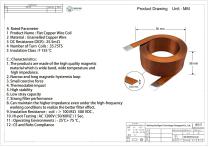
Other Weilong Intelligent Technology (Dongguan) Co., Ltd. products
Air Core Coil


Related Searches
- Transformer
- Dry transformer
- Encapsulated transformer
- Power transformer
- Isolation transformer
- Transformer for industrial applications
- Compact transformer
- Choke coil
- Electrical power supply transformer
- Transformer with copper windings
- Frequency inductor
- Wire-wound inductor
- Current inductor
- Electronic transformer
- Transformer for photovoltaic applications
- DC inductor
- Magnetic inductor
- Electronic inductor
- Power inductor
- Wire-wound choke
*Prices are pre-tax. They exclude delivery charges and customs duties and do not include additional charges for installation or activation options. Prices are indicative only and may vary by country, with changes to the cost of raw materials and exchange rates.
About DirectIndustry
DirectIndustry is a marketplace that offers B2B players a complete experience, from product sourcing to purchase. DirectIndustry is an entity of VirtualExpo Group.
Are you a buyer?
Are you a supplier?