


{{product.productLabel}} {{product.model}}
{{#if product.featureValues}}{{product.productPrice.formattedPrice}} {{#if product.productPrice.priceType === "PRICE_RANGE" }} - {{product.productPrice.formattedPriceMax}} {{/if}}
{{#each product.specData:i}}
{{name}}: {{value}}
{{#i!=(product.specData.length-1)}}
{{/end}}
{{/each}}
{{{product.idpText}}}
{{product.productLabel}} {{product.model}}
{{#if product.featureValues}}{{product.productPrice.formattedPrice}} {{#if product.productPrice.priceType === "PRICE_RANGE" }} - {{product.productPrice.formattedPriceMax}} {{/if}}
{{#each product.specData:i}}
{{name}}: {{value}}
{{#i!=(product.specData.length-1)}}
{{/end}}
{{/each}}
{{{product.idpText}}}
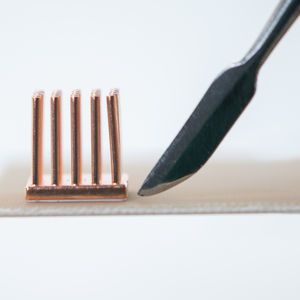

Working temperature: -73 °C - 204 °C
Polymerization time: 1 h - 6 h
... electrical insulation, low shrinkage and dimensional stability. It bonds to metals, composites, glass, ceramics and many plastics and resists water, fuels, oils and many acids and bases. Part A is gray; Part B is amber clear. Thermal ...
Master Bond
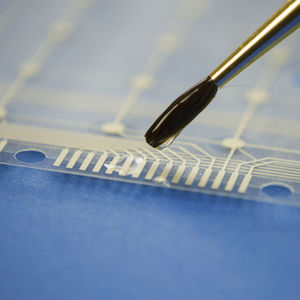
... has a low Shore A hardness. MasterSil 773 has excellent adhesion to a wide variety of substrates, including metals, many plastics and rubbers, along with electronic circuitry materials. Another noteworthy attribute is its electronic ...
Master Bond
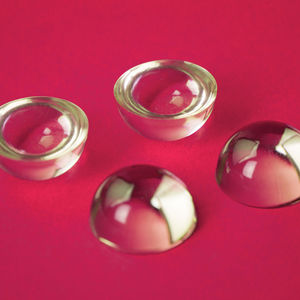
... milliwatts per cm². The rate of cure depends upon the distance of the light from the material being cured, the thickness of the section and the intensity of the light source. It typically cures in thicknesses of a micron or less up to ...
Master Bond
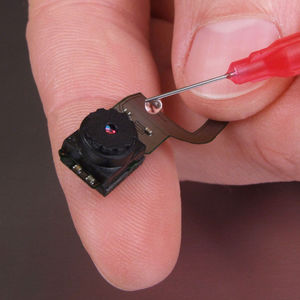
... to UV light. The rate of cure depends upon the distance of the light from the material being cured, the thickness of the section and the intensity of the light source. It typically cures in thicknesses of 0.001-0.002 inches up to 0.120 ...
Master Bond
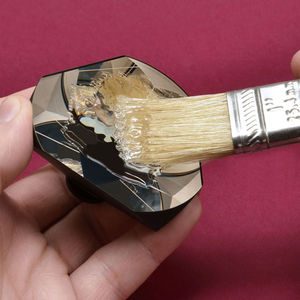
... Key Features • Meets NASA low outgassing requirements • Superior chemical resistance • Moderate viscosity • High dimensional stability Master Bond UV24TKLO is a one part UV curable epoxy modified formulation for bonding, sealing and encapsulation. ...
Master Bond

... As alluded to above, a secondary cure at 80°C is not very common and highly desirable because of the sensitivity of many plastics to elevated temperatures. Also, the decrease of fixturing time to seconds is highly advantageous in a production ...
Master Bond

... -40 milliwatts per cm². The rate of cure depends upon the compound’s distance from the light source, the thickness of the section and of course the intensity of the light source. It should be noted that the system can cure in sections ...
Master Bond

... cyanoacrylate type adhesive. This high strength, rapid curing system is used primarily for medical device assembly. MB297Med is a higher viscosity (2,200-2,400 cps) cyanoacrylate. This kind of system, which is commonly referred to as ...
Master Bond

... than 0.01%. EP30LTE-LO bonds well to a wide variety of substrates including metals, glass, ceramics and many rubbers and plastics. It is 100% reactive and does not contain any solvents or diluents. This system offers excellent resistance ...
Master Bond

... a bonding promoter, allowing adhesion to this low energy type of plastic (polyolefin) in a process that is relatively simple and straightforward. X21 can also be used as an adhesive for bonding one polyolefin to another ...
Master Bond